
Fans with Loungefly bags, comic speech bubble shirts and Jedi jerseys poured into the Lucas Museum of Narrative Art on September 22, as the museum opened its doors to the public for the first time. Visitors of all ages gasped as they entered the galleries, filling the halls with “oohs,” “aahs,” and “oh my gosh-es.”
Their very audible, palpable engagement was unlike anything I — who worked in museum research and exhibition content development for four years — have seen in an art museum.
As you step inside, it’s not hard to understand why.
The museum’s building, designed by architect Ma Yansong, features futuristic, cylindrical glass elevators, windows with panoramic views and so much art. The permanent collection — the result of over 50 years of collecting — consists of over 40,000 objects and artworks, according to the Los Angeles Times. Currently on display, over 1,200 works are split between 18 exhibitions grouped together based on artists, like illustrator Jessie Willcox Smith or fantasy artist Frank Frazetta, or categories like Manga, Cinema, Comics, Photography, and History.


Paintings by traditionally recognized artists hang just a few galleries away from Peanuts comics, fan art and of course, set pieces from co-founder George Lucas’s own “Star Wars” films.
Many pop cultural museums — think L.A.’s Academy Museum of Motion Pictures, Seattle’s Museum of Pop Culture (MOPOP) or New York City’s Museum of the Moving Image — meet their audiences where they are, by focusing on the popular movies, music, video games and other media that resonate with them.
Few museums, however, present these popular media alongside artworks by the likes of Frida Kahlo or Norman Rockwell. The result is a unique art museum experience that delivers a very specific message about what qualifies as art and who has the power to define it.
According to the museum’s founders and curatorial team, this was exactly the point.
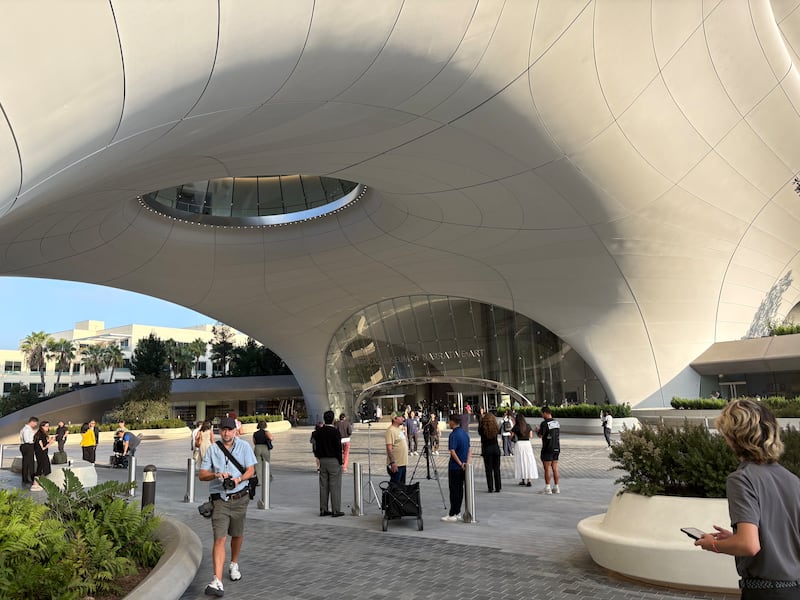
Opening day began with speeches to a group of lucky L.A. university students and press members ahead of the doors opening to the public.
Multiple representatives spoke, including museum CEO Tracey Bates, architect Yonsong and co-founders Lucas and Mellody Hobson. Together, they emphasized the museum’s mission to display “the peoples’ art” — works showing the stories and experiences that shape them.
“We hope that you and the thousands of visitors joining us today will see themselves reflected back from the images and stories on our walls,” Bates said.
Hobson added, “It is called the Lucas Museum of Narrative Art [but] it is not our building. It is our gift to you because it belongs to all of us.”
In a statement at the museum’s star-studded VIP opening on September 19, Lucas said, “You can’t say this is art and this is not art. Art is in the eye of the beholder. You get to decide what art is.”
This democratized concept of who gets to define art isn’t common in museums. In a traditional visitor-museum relationship, the museum assumes the role of “expert” that defines art for its audience. But visitors can be left staring at art pieces and scratching their heads, wondering why they should care. All of us have looked at a piece of art and thought, “This is art? You sure?”
Lucas’s collection defies the traditional approach, cheekily telling audiences: “we don’t have to tell you, because you already know.”
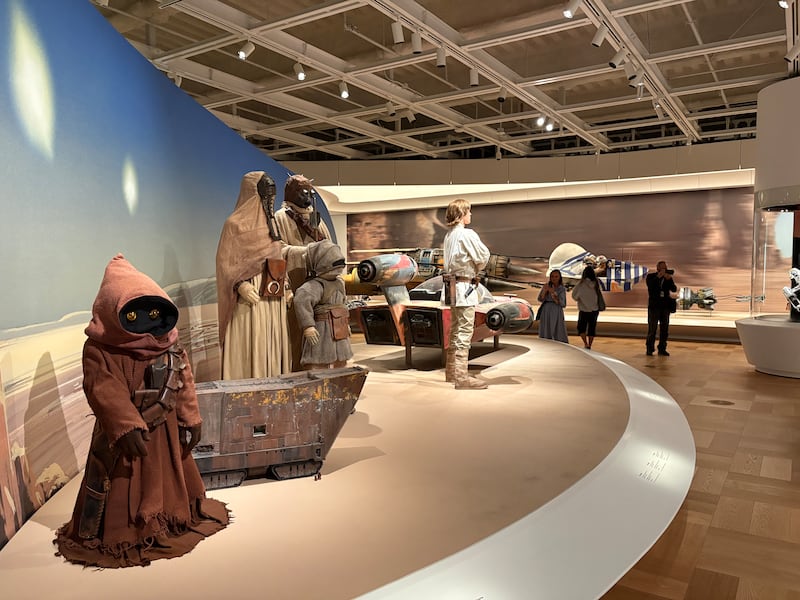
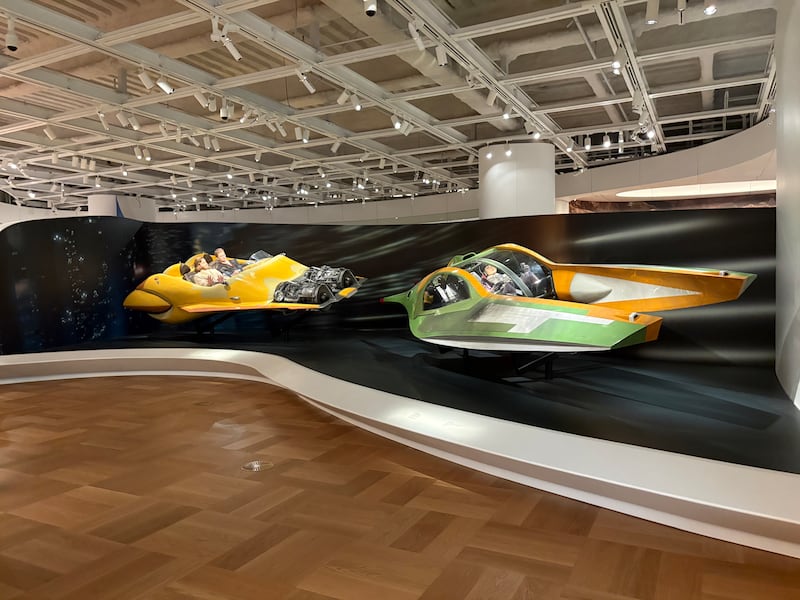
The museum’s Cinema exhibition features costumes, models and pre-production sketches from Lucas’s “Star Wars” films. For fans like Rodrigo Santiago, a junior at USC Marshall School of Business who inherited the love of the franchise from his Dad, this is a dream come true.
“He probably played me “Star Wars” songs in the womb, if I’m being honest,” he said.
He grew up with Millennium Falcon sheets and movie poster-covered bedroom walls and his love has never faded. Visiting the museum — and hearing Lucas speak specifically to the USC community during the pre-opening address — was an emotional experience for him.
“It meant a lot to see a person like [Lucas]. Just seeing that he’s such a sensible, tactful person that has a real passion and love behind the work he does genuinely just made me so happy to be able to be in his presence,” Santiago said. “You can see where he drew inspiration from. I can see that he genuinely has a love for the medium and for telling stories.
In the museum’s outdoor gardens, a statue of Princess Leia defeating Jabba the Hutt is alongside another of Padme fighting alien monster Nexu. But, just like the rest of the museum, it’s presented alongside unrelated art.
The “Star Wars” garden statues are steps away from a statue of WWII icon Rosie the Riveter, the three strong women presented in conversation across time and mediums.
The result shows how at the museum, there’s truly something for everyone.
South L.A. native Brenda Chambliss is not a fan of the franchise. But she was still one of the first visitors to set foot in the museum.
“It’s amazing,” she said. “It’s like walking into history.”
Her visit was a long time coming; she’s been tracking the Lucas for nearly a decade, documenting its development through photos. She was especially moved by Norman Rockwell’s painting of Ruby Bridges, “The Problem We All Live With,” and by the fact that the museum is bringing works like this one to her hometown.

The Lucas Museum team made community engagement a priority throughout the museum’s development, particularly given its location in South L.A.. According to L.A. Sentinel, 76% of the museum’s construction workers live in L.A. County, with many hired through community construction outreach events.
In addition, they organized special previews for community members and are giving free admission to individuals living in the surrounding area, according to ABC7 .
“There’s something about this museum and the location being in South L.A.,” Chambliss said. “To be able to see a place that’s been stigmatized to be, now, a world-renowned place, it’s beautiful. The world needs to come see it.”
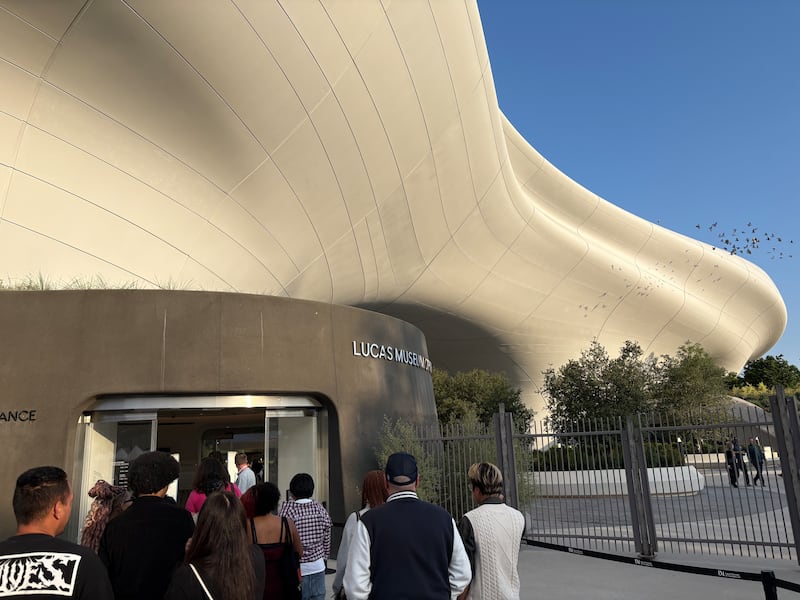
Around 11 a.m., the line to the museum gift shop was out of the building. Upon walking inside, it felt like a museum equivalent of Disneyland. Visitors walked through the gift shop with Grogu (a.k.a. Baby Yoda) magnet shoulder pals, looking at books about “Star Wars”, but also about Andy Warhol, comics and architecture.
Somehow, only an hour after the opening, people were already donning “LMNA” crewnecks. It wouldn’t be surprising to see Lucas Museum spirit jerseys soon, which I would probably buy.
Many of us have had the experience of feeling out of place in museums, not seeing ourselves in the artworks on the walls. After having too many of these experiences myself — and after my 4-year stint working in an art museum — I decided that I was a pop culture museum person.
But as I left the Lucas museum, tired from my thousands of steps, I was energized by the feeling of being seen. I love the Peanuts cartoons and when I saw Snoopy in a gallery, I audibly gasped. When I saw “DuckTales” on a wall, I remembered little-me watching VHS tapes on my grandparents’ kitchen TV. Maybe I am an art museum person after all — and those terms never had to be mutually exclusive.
Only time will tell if The Lucas Museum of Narrative Art will continue to attract and dazzle visitors in droves. But in its first week since opening, it’s obvious that it’s an institution to look out for. By activating art enthusiasts, fandoms and museum lovers with their collection, they’re proving that these audiences have really been the same all along. Clearly, founders Lucas and Hobson had something to say.