
On May 22-24, STC Rowland Legacy, a shopping mall in Rowland Heights, hosted Natsu Festival, a community event featuring a wide variety of well-known food vendors, small local businesses, artists, cosplayers and influencers. While Natsu Festival is a Japanese-themed night market, the event featured food and art from many other cultures. The event allowed guests to freely explore a diverse selection of dishes, street food and dessert in one place.
The Orange County Los Angeles Night Market is under the STC Management, which has hosted events in the community for 20 years. The night market started under the name Taste of Japan, and has been a response to the isolation caused by the COVID-19 lockdowns, according to Anne Ma, CEO and Event Director of Team OCLA Night Market.
“We realize nowadays, with the new lifestyle, people do need these types of activities besides the busy work,” said Ma. “So that’s why we try a lot of event hosts to reach out to us and collaborate with us.”

Asian night markets, such as 626 Night Market and DS (Damnoen Saduak) Night Market have become popular in the community. The Natsu Festival was a way to start something new. STC curated an event that was Japanese themed, but also invited Taiwanese, Chinese, Thai and many other types of businesses and people to be part of the market.
A Thai-owned Thai tea booth, Eastern Tales, offered a menu of Thai desserts and drinks, including their signature flavors, Phuket Thai tea, Bangkok Thai tea and the Bangkok Breeze.
“I moved here when I was in high school, and I drink a lot of Thai tea. That’s like my favorite tea. And a lot of the Thai tea that I drink here is always really sweet and really not a lot of the tea flavor,” said Supanut Saru, owner of Eastern Tales. “So that’s why I see that it’s popular out here, but I want to, you know, bring the authentic Thai tea flavor that we have back at home too, like out here in Southern California.”

Another business at the event, Sunday Cafe, is Chinese and Mexican-owned. Its booth offered agua frescas (translates to “fresh water,” mostly made with fresh fruit, water and some sweetener) and Chinese cuisine.
“It’s really cool, people are kind of like ‘wait, what? There’s Mexican food and drinks,’” said Kristal Espinoza, who works at her parents’ business and helped them out at the Natsu Festival. “So it’s nice that they come to one booth but get to try different cultures right here. And then we also do free refills on our drinks, we get them to come back and try to taste a lot of stuff.”

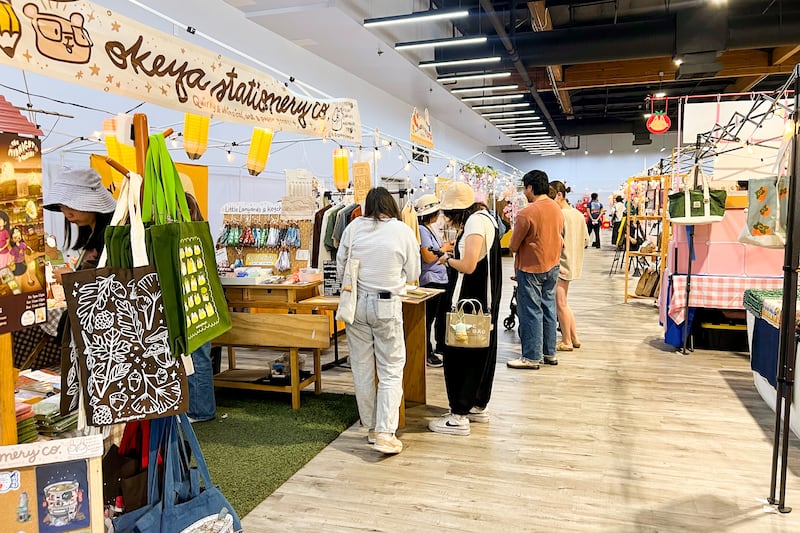
There were two main areas at the Natsu Festival. The first was an outdoor food market that also had a stage for performers and entertainers, carnival-style games and bouncy castles for children. The second was an indoor area for the “Takumi Alley,” which is another organized event for an artist alley. The indoor section also had an Izakaya-themed area with food, drinks and a well-lit space for guests to eat.
Takumi Alley housed many artists and had the 818 String Quartet performing songs in the middle of the artist alley. Many artists showcased their original and inspired artwork through unique prints, totes, keychains, pins and handcrafted goods like bags and pottery.

Takumi Alley holds events in different locations and seasonally with different themes. It is run by a husband and wife illustrator duo, Jon Kenzo and Audrey Okeya, who also create their own merchandise and stationery. At Natsu Festival, Takumi Alley’s theme was “The Midnight Konbini,” combining the aesthetic of Japanese convenience stores with ghosts.
The Midnight Konbini featured several Asian-owned small businesses. Much of the artwork featured had influences in Asian culture, not just Japanese or anime-inspired art.
Megan Kim, the Korean business owner and artist behind Megguran Studio, tabled in the Takumi alley area. She sold prints, with her original artwork and fan art, and stationery items such as memo pads, stickers and washi-tape. A lot of Kim’s artwork was inspired by Asian food packaging and vintage Asian food packaging. Kim said she was inspired by Anime, but she wanted to create something more original that resonated with her.
“I think there’s a lot of popularity, like early on, [for an] Asian type of artwork being associated with maybe some stereotypical things people have seen, or really heavy in the anime sector,” said Kim. “So, I wanted to create something that resonated more with me and things that I was more interested in, that was maybe just more than fan art or anime.”

While many guests attended the Natsu Festival for either the food or the artist alley, the event encouraged them to explore both options.
“I like these kinds of events because it’s all different ethnicities coming together. So we’re learning different foods and cultures,” said Amanda Tieu, an attendee at Natsu Festival. “So I do appreciate it because it is Asian American month too.”