
Spring is a strange season. It promises transformation — longer days, new beginnings and the sense that you’re supposed to be blooming into something.
But change is uncomfortable. It’s restless and uncertain, and sometimes it looks less like growth and more like wanting. These are books for that feeling: stories about people in motion, drifting through cities and summers and obsessions, trying to figure out what they’re moving toward. These 10 books won’t tell you what you’re becoming, but they’ll make the not-knowing feel less lonely.
“My Brilliant Friend” by Elena Ferrante

Elena and Lila grow up together in postwar Naples, and their friendship is one of the most honest depictions of female ambition I’ve ever read. It’s not ambition as inspiration, but ambition as competition, as hunger, as the complicated engine that drives two people to simultaneously build each other up and tear each other apart. It’s the first of four books. You will not stop. (This is also a great summertime beach read, so if you start now, Lila and Elena will keep you company then too!)
“Less Than Zero” by Bret Easton Ellis
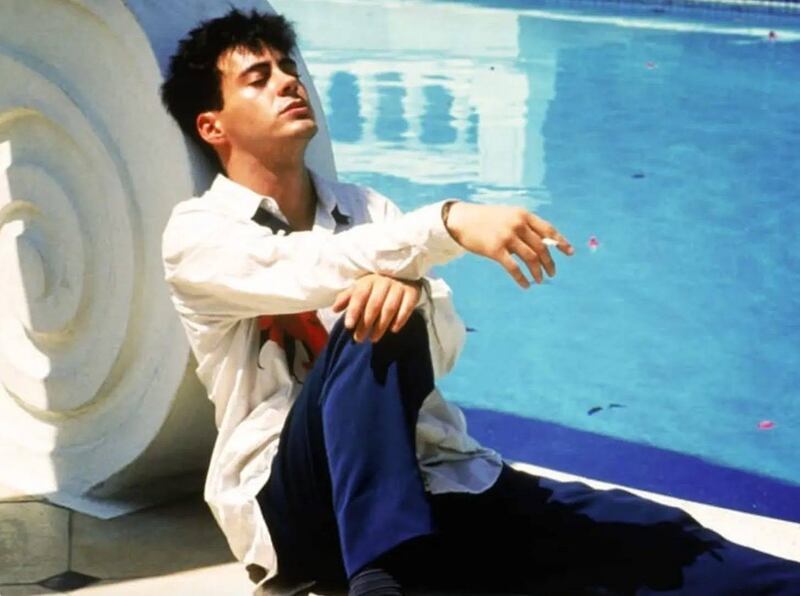
Clay returns to Los Angeles after his first semester at college and finds his friends suspended in a kind of beautiful, terrible stasis — rich and hollow and going nowhere fast. It’s a novel about the seduction of passivity, about how easy it is to drift into a life that looks fine from the outside but means nothing from the inside.
“A Simple Passion” by Annie Ernaux
For months, Ernaux’s narrator structures her entire existence around waiting for a married man to call. That’s the whole plot of “A Simple Passion.” What Ernaux does with that premise is extraordinary — she refuses to editorialize, to position herself as either victim or fool and instead examines obsession with the cold precision of a scientist studying something under glass. The result is one of the most unsettling and truthful accounts of desire I’ve read. You will finish it in an afternoon and think about it for weeks.
“Bonjour Tristesse” by Françoise Sagan
Cécile is 17, it’s summer, the French Riviera is beautiful and she is about to ruin everything — not out of malice exactly, but out of a kind of restless self-interest. What makes this book extraordinary is Sagan’s refusal to punish her narrator, instead exploring the moral ambiguity of her motives and actions.
“It Girl: The Legacy and Life of Jane Birkin” by Marisa Meltzer

“It Girl” is less a biography than a meditation on what it means to be looked at, on the particular cultural moment Jane Birkin represented, on how youth becomes mythology becomes elegy. Meltzer is interested in Birkin not just as a person but as an idea, and the book is at its best when it uses her as a lens for thinking about femininity, image and the strange way certain women become symbols.
“Slow Days, Fast Company: The World, The Flesh, and L.A.” by Eve Babitz
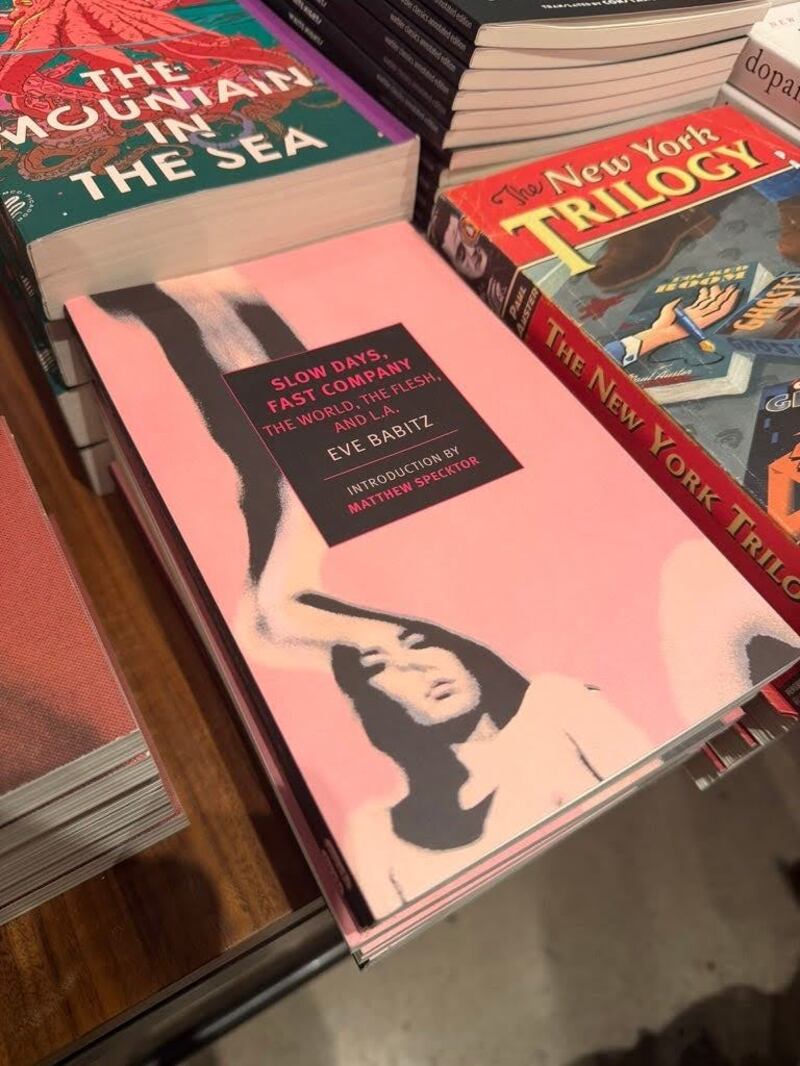
Babitz drifts through 1970s California, and the book drifts with her — through parties and afternoons and men and the particular quality of light on the Pacific Coast Highway. It is this distracted, ever-changing style, the hedonistic mirror to Joan Didion, that brings Babitz’s stories to life. What Babitz understood about California was that its mythology was inseparable from its geography: the sprawl, the heat and the sense that you could reinvent yourself every few miles.
“Slouching Towards Bethlehem” by Joan Didion
Didion goes to San Francisco in 1967, expecting to find a revolution and instead finds a kind of beautiful, self-defeating chaos — runaways, acid and people who wanted to burn everything down without knowing what to build in its place. Didion writes about California and Hollywood and what happens when the dream doesn’t deliver. She is always writing about the gap between what America promises and what it is.
“Invisible Cities” by Italo Calvino

A love letter to imagination. Marco Polo describes 55 cities to Kublai Khan, who is unaware of the extent of his vast empire. Except the cities are impossible, dreamlike, each one a different way of thinking about memory or desire or loss. Calvino asks us what it means to long for a place, to remember a place, to understand that you can never really return anywhere.
“Bluets” by Maggie Nelson
Two hundred and forty numbered propositions about the color blue. Except really about heartbreak, about the body, about what happens to desire when it has nowhere to go. Nelson borrows the form of philosophy to examine something that resists philosophical treatment — the irrational, consuming nature of grief and longing — and the collision between form and content is where the book’s power lives. Strange and devastating and unlike anything else I’ve read.
“A Moveable Feast” by Ernest Hemingway
Hemingway writes about being young and broke in Paris in the 1920s, and what he captures — almost accidentally, or maybe very deliberately — is the specific feeling of a time in your life when everything is hard and unresolved, and somehow that’s exactly right. It’s a book about what it means to be at the beginning of something, before you know how it turns out, when the work itself is enough. Perfect for spring.