
The International Dance League (IDL) hosted the season’s Los Angeles series competition and final championship to end the season on September 19-20 at the Shrine Auditorium, drawing fans from across the U.S. and the globe. From glowing lightsticks, fans lining up over an hour before doors open and fan chants vibrating through audiences, the International Dance League is building competitive dance into a sport and a fandom.

IDL is the world’s first international dance league, uniting teams from Canada, the U.S., Southeast Asia, South Korea, New Zealand and Norway. According to the league’s schedule, the season kicked off in New York on May 2 and featured five other competitions in various cities across the world, from Vancouver to Seoul, ending in L.A.
The league comprises six teams–Brotherhood, Brotherhood, GRV, Jam Republic, 1Million, Royal Family and Quick Style–that each compete in two rounds per series. In the first round, teams participate in three one-on-one competitions.
The three winners from the first round then go on to compete in the second round, where champions are chosen based on the highest score sheet number. This number counts elements like creativity, cleanliness, spacing and a fan vote. The fan vote is unique to IDL, allowing an advantage for teams competing in their own city. This vote was not considered in the championship series.

Across the season, the league has grown enormously, both in sponsorships and fanbase.
The Hollywood Reporter announced on July 27 that IDL struck its first media rights deal with ESPN, leading to competition streaming on ESPN2 for the remainder of the season. The competitions are also available on ESPN+ and the ESPN app.
In a press conference on September 18, Co-Founder and IDL Commissioner Connor Lim reported that the league has already surpassed 1 billion views, and he predicts that the viewership will only grow in the next 2027 season.
“We had this vision for what dance could be as a sport. . .We’re just extremely grateful for the fans that have really believed in us. They truly love the dancers and these teams the way that we personally did,” Lim said.
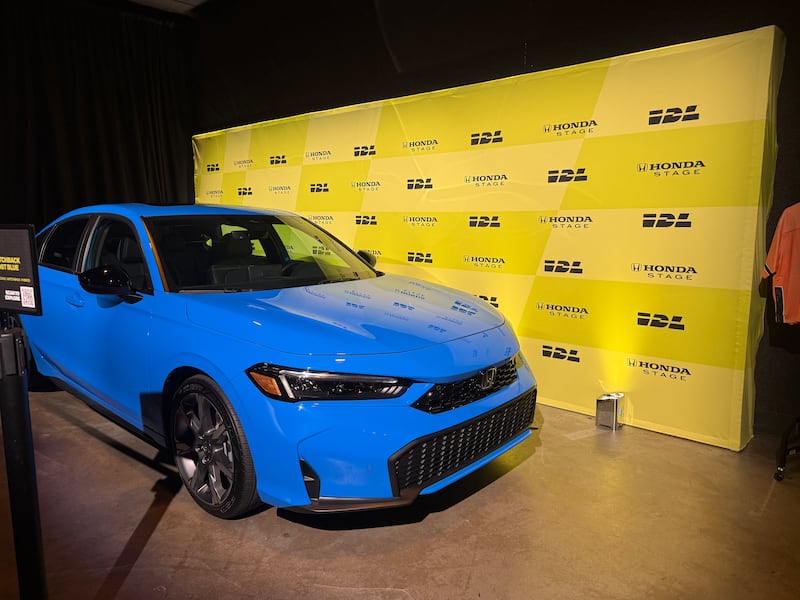
IDL garnered numerous brand deals, attracting attention to its teams as well. At the championship and L.A. series, Shopify, Honda Stage and e.l.f. held activations for fans and dancers.
The IDL team based out of Oslo, Norway — Quick Style — is entirely composed of women this season. Nasir Sirikhan, founder and team leader of Quick Style, said that girls have increasingly visited the studio, hoping to join the team in the future, and IDL was able to give the team a public platform to attract female dancers.
For some audience members, IDL serves as a gateway to reentering dance, or even bonding with friends and family who are dancers. It’s the uniting force between all fans of competition and die-hard dancers.
“IDL has definitely brought me back in. I kind of feel off of watching competitive dance for a long time, and this has thrown me back into it and made me more excited about it,” said Melanie Weed, a recent graduate of UC Davis’ master’s degree program in forensic science.
Though Weed has a background in theatre, her sister competitively danced, and supporting Brotherhood attracted her back to the competitive world. Now, she shows her appreciation by making black and red beaded charms to exchange with Brotherhood fans.
Kai Grecia, a third-year studying mechanical engineering at San José State University, said that her friend group has been watching IDL since the event launched. Her friend group met while dancing in a K-pop cover team at SJSU, and they watched the IDL events together in her apartment. Her 11-person group all came to IDL together and purchased general admission tickets, which had no assigned seating.
Fans lined up over an hour before the event doors opened at 4:30 p.m. on Saturday and 5 p.m. on Sunday. Despite long wait times and challenges purchasing tickets, IDL fans still brought energy and support to both the L.A. series and L.A. championship.
Before taking the stage, each team enters on a strip with fans seated on the floor on either end. In these moments, fans rush to line up, with the hope of high-fiving a team member before they perform their set. Passing white roses to dancers, holding signs with individual members’ faces and even chanting in the darkness before the lights illuminate the teams’ starting positions on stage, the Shrine auditorium comes alive.

The difficulty with IDL comes down to sustainability. Brotherhood, the top-scoring team of the season, performed four unique sets two days straight in the L.A. series and L.A. championship. That being said, Lim said that the league is specifically organized to avoid a “reality TV” structure where teams are eliminated from the season after a single loss.
“We think a lot about dance and its ability to grow over time. . .I think what we’re seeing in this league now is the compounding effects of what happens when you have the opportunity to come back month after month and grow over time,” Lim said.
In the final championship, GRV took home the inaugural title, generating controversy over IDL scoring across the season. Brotherhood ended the season with 82 points in the 1st-place overall seat, while GRV ended in the 2nd-place seat with 37 points, according to the IDL results page.
Despite Brotherhood’s consistent domination across the season, they did not win the final L.A. championship event. Fans commented on IDL’s Instagram announcement with phrases like: “What’s the point of showing the scores after every series if none of those points actually matter in the championship round?” (@jajastares, with 943 likes). For their final standing, the team won $200,000.
Even with the competitive nature and fan backlash, the teams remain friendly and collaborative across stage boundaries, with IDL condemning discrimination and hate. Exchanging hugs before match results are revealed or commenting in support on social media posts of other teams, the league remains one that promotes the beauty and love of dance.
“I think motivation-wise, we just want to make our country, our city, our family, our friends, and our supporters proud,” Scott Forsyth, founder of Brotherhood, said. “I think as long as we put on a good show for them, we leave the rest to the judges.”
Edited by Andriana Yatsyshyn and Sammie Yen