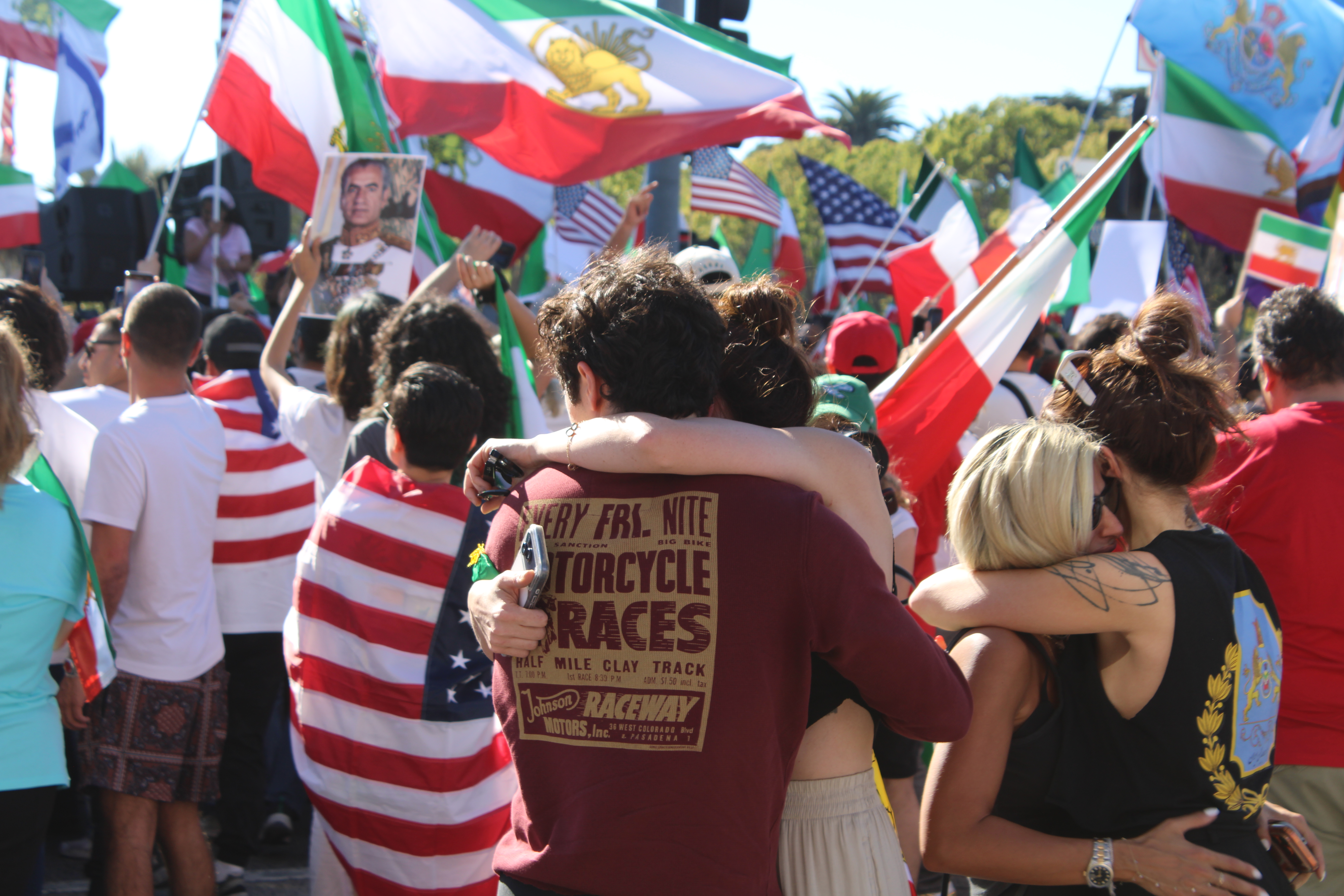
Hundreds of local residents took to the streets in Westwood on Saturday afternoon to celebrate a joint U.S.-Israeli military operation in Iran, which President Donald Trump said killed Supreme Leader Ayatollah Ali Khamenei.
The crowd gathered near the Wilshire Federal Building, where community members distributed signs printed with slogans including “Reza Pahlavi for Iran” and a quote attributed to President Trump: “All I want is freedom for the people.”
While no anti-war demonstrators appeared to be present at the celebration, the event coincided with a demonstration at City Hall in Downtown Los Angeles, where locals condemned the attack and voiced opposition to a new war with Iran.

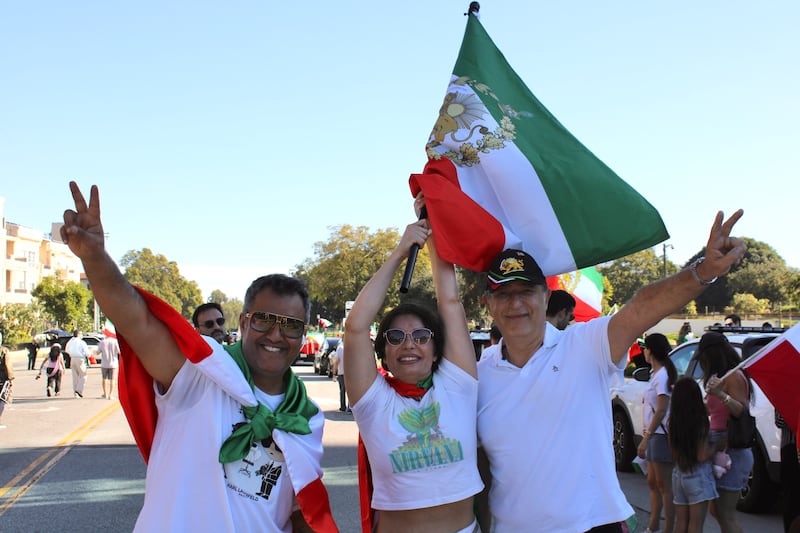
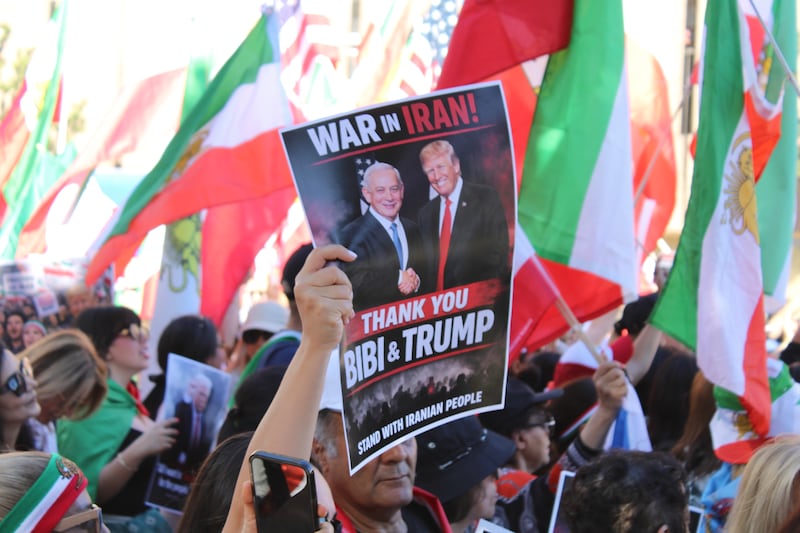
In Westwood, participants marched down Wilshire Boulevard, chanting slogans in English and Farsi, including “Trump, Trump, thank you.” Attendees carried photos of Trump and Reza Pahlavi, an Iranian political activist and eldest son of Mohammad Reza Pahlavi, the last shah of Iran. The crowd waved a mix of flags, including the Israeli and American flags, as well as the Lion and Sun flag — a symbol of Iran from 1907 until the 1979 Islamic Revolution, after which it was banned. Today, the Lion and Sun flag is often used as a symbol of Iranian heritage and resistance to the Islamic Republic.
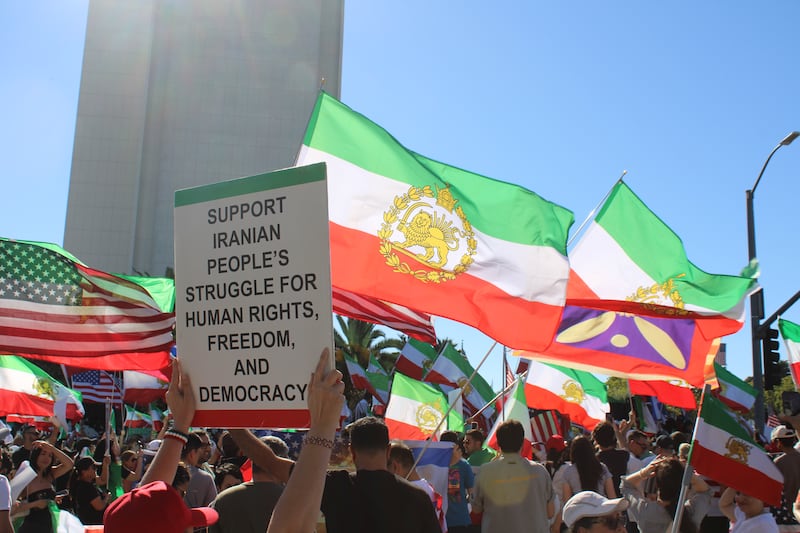
Before reaching the Hammer Museum, participants turned onto Ashton Avenue, eventually looping back to the Wilshire Federal Building. There, the crowd played Persian music on speakers as participants danced, hugged and cheered.
Pani Gol, a local Iranian American resident whose entire family still lives in Iran, said she hopes Khamenei’s death will bring an end to the latest period of suffering Iranians have endured since early January.
“My mother literally called me for me to hear the sound of all the neighbors celebrating on the street after they heard that he’s down,” Gol said. “So everybody’s happy.”
The joint strikes follow a large-scale crackdown on anti-government protesters that began in early January and an internet blackout that lasted more than two weeks. While estimates of the death toll vary widely, activists say at least 7,000 people were killed, many during an especially violent night between Jan. 8 and 9. Two senior officials from the country’s Ministry of Health told TIME that as many as 30,000 people may have been killed in the streets of Iran on those two days alone.
Trump urged Iranians to “keep protesting,” claiming that “help is on the way.” For weeks, Trump has bolstered U.S. military forces across the Middle East and warned that he may strike Iran if it did not agree to his demands, which included ending its nuclear activities and accepting limits on its ballistic missile program.
Gol described the joint strikes as a pivotal moment for Iran’s leadership and the start of a new direction for the country.
“We needed some sort of intervention to stop these people. And today is a celebration because it’s all over now,” Gol said.
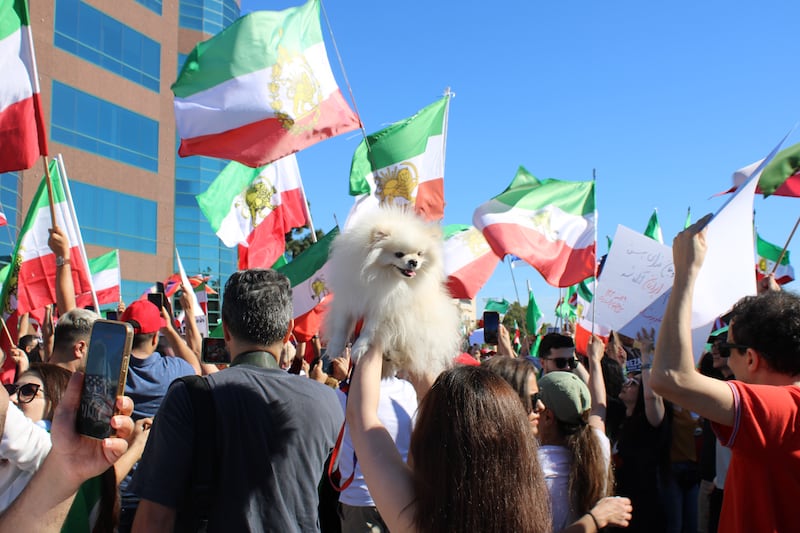
The Los Angeles region is home to the largest community of Iranians outside of Iran. Neighborhoods in west Los Angeles — including Westwood, Beverly Hills and Century City — are considered part of a broader Iranian American enclave commonly known as ‘Tehrangeles,’ named for the thousands of Iranian exiles and their descendants who have settled in the area.
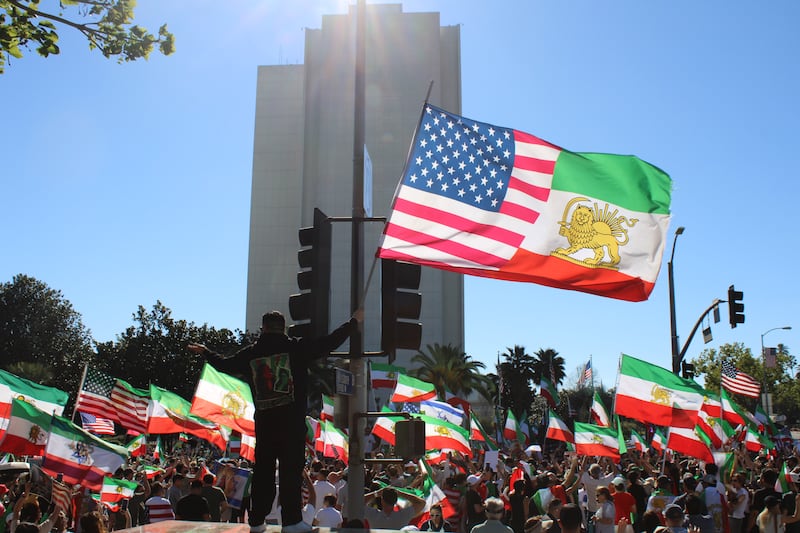
Benjamin Basire, a local resident who is both Iranian American and Jewish, said he was “thrilled” by the intervention and the leadership of Trump and Netanyahu. He added that he had been awake for more than 24 hours after hearing the news from Iran.
“I’m proud to be American, and this country gave me everything … but the reason that we are all here was Khamenei and his brutal Islamic regime, Basire said. “And now he’s gone.”

After becoming the country’s supreme leader in 1989, Khamenei oversaw the steady growth of the Islamic Revolutionary Guard Corps’ political influence, economic power and regional operations. As Iran’s top authority, he had the final say on major state decisions — including the country’s nuclear program and its approach to the West — and served as commander-in-chief of both the regular military and the IRGC.
Khamenei also led the “axis of resistance,” an anti-Western, anti-Israel alliance that includes groups such as Hezbollah and Hamas. During his tenure, Iran was repeatedly designated by Western governments as a leading state sponsor of terrorism.
After learning that Khamenei had been killed in the joint attack, another local resident, Yekta Pakzad, expressed a similar sense of hope, and called on American and Israeli leaders to remain involved until new leadership is established.
“It’s not our right government. There is a dictatorship,” Pakzad said. “Until the regime changes, we need their help.”
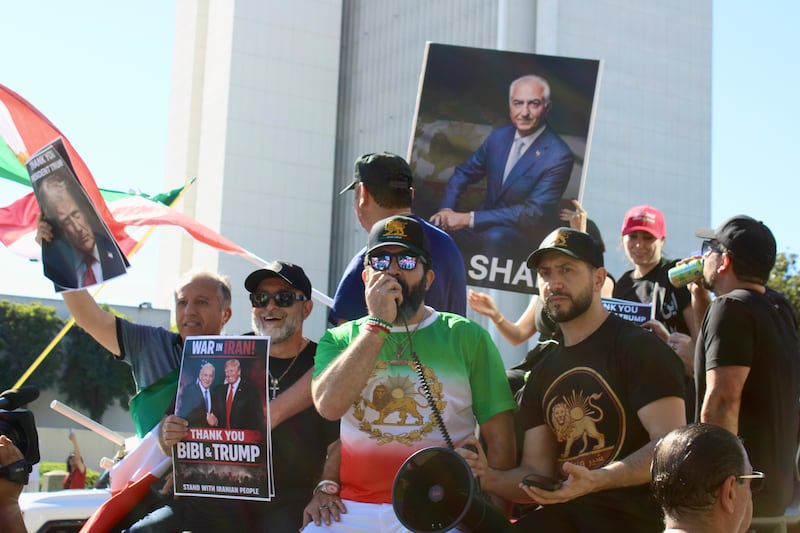
Bahman Mohammadi, a resident of the Tehrangeles area, said the events represent not only a chance for political change, but also an opportunity to reunite with his family in Iran after several years away due to safety concerns.
“I’m so happy, everybody’s happy, because the Ayatollah is finished,” Mohammadi said. “I hope for regime change and to be going back home. It’s been a long time out of my home, and I really miss it.”
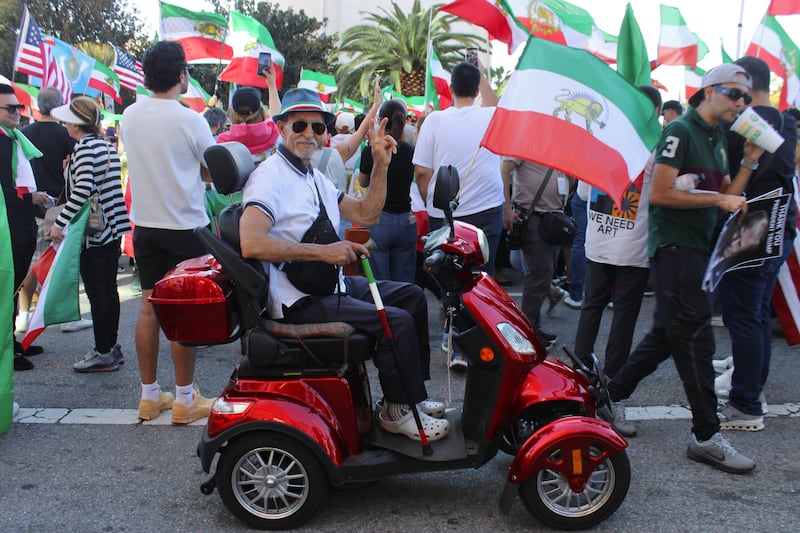
Basire added that, for many Iranian Americans, the moment meant more than just relief from the conditions their family members and fellow citizens have experienced inside Iran in recent months — it also represented a break from over three decades of authoritarian rule and repression under Khamenei, he explained.
“This is Iran, this is us,” Basire said. “And we are reclaiming our country.”