
Editor’s note: This article is a joint publication between Annenberg Media and The UCSD Guardian.
In 2021, Jeanette Volpin felt she had lost control of her life. At 101 years old, having recently lost the ability to read and drive, she told her relatives she wanted to leave the Earth on her own terms. After choosing medically assisted suicide, she donated her body to the University of Southern California’s Anatomical Gift Program. She made the decision following a career in medicine and a long life spent deeply involved in world affairs, according to her daughter, Miriam Volpin.
“She was someone who was very engaged with the world, and very generous in a lot of ways,” Miriam said. “That was one last way of being generous.”
In 2019, doctors placed 36-year-old Jamie Beecher on life support after he suffered a stroke. His family waited a week, hoping for any signs of life, but he never opened his eyes. Jamie’s brain remained inactive; he was pronounced dead.
His father Michael Beecher and sister — Brittany Beecher — donated Jamie’s body to the University of California San Diego’s Body Donation Program.
“I thought I would be giving Jamie a legacy that, at least in his death, he could help teach young medical students how to become doctors by learning the anatomy from him,” Michael said.
Neither family knew that their loved one’s body could potentially be used to train soldiers in a foreign military — something each program neglected to advertise.
However, bodies donated to USC and UCSD have wound up on operating tables in front of Israeli military medical personnel.
Donors’ families only found out earlier this year from reports in Annenberg Media and The UCSD Guardian. The news sent donors’ families reeling.
After Brittany Beecher read the story, she was so shaken that she removed herself from the organ donor registry.
“I was devastated to see that such a vulnerable situation was taken advantage of. It felt like a breach of trust,” Brittany said. “I wouldn’t have agreed.”
Brittany, who is a 30-year-old regenerative medicine researcher, said her trust in UCSD and USC has been lost.
The Program
The U.S. Navy uses cadavers in its Joint Training Exercise program with the Israeli military. Since November 2013, Israeli military medical personnel have come four times a year to the Navy Trauma Training Center at Los Angeles General Medical Center.
The USC and UC anatomical donation programs provide the bodies used for training. UCSD transfers most of the bodies used to USC, which then sells them to the Navy alongside their own cadavers.
This January, Annenberg Media linked UCSD to the program through a brief mention in a 2021 Navy document. New documents obtained by Annenberg Media and The Guardian confirm that the UC Regents have approved transferring bodies from UCSD to USC since at least 2016.
According to systemwide UC data, USC received 124 “allocations” from the UC system from Jan. 20, 2024, to Feb. 23, 2026. The data includes a statement from the UC Office of the President that reads: “It appears that UCSD is the only location to have made allocations to USC during this period.”
UCSD’s Body Donation Program receives between 450 and 500 donations per year, according to 2021 reporting from The San Diego Union-Tribune. If every UC allocation in the last two years came from UCSD, the school would have provided about 13% of its total body donations to USC.
Donation agreements with UCSD and USC provide little detail to the donating parties about what will happen once a body is received, including how long a university will keep it.
Several relatives who spoke to Annenberg Media and The Guardian said they had no idea what their loved one’s body would be used for once the donation occurred, trusting their donation would be used solely for medical training at each institution.
Private companies are known to use cadavers for military purposes. However, because their loved ones donated to academic institutions, the families never conceived of the possibility of the bodies being used for military training.
Jeanette Volpin donated to USC specifically because it was a research institution, not a private company. Miriam cautioned her mother based on a conversation she had with someone from another university, warning her what a private entity could do.
“Don’t use one of these companies,” the representative had told Miriam, “because they’ll probably just sell your mom for parts.”
The Money
USC earned over $1 million in the last decade from these contracts. None of the donors or their surviving family members received any portion of this money. Neither university notified donors’ families that their loved ones’ bodies may have been sold to a third party.
UC Health wrote that body donation programs are not intended to generate profit and often run a deficit in a Feb. 27 email.
Under the 2016 contract, USC agreed to pay UCSD a $2,900 “allocation fee” for each body. USC also agreed to cover the cost of paying California Transportation Solutions to deliver and retrieve the cadavers. USC and the UC Regents agreed to similar terms under the 2024 contract; however, the UC Regents did not disclose the new allocation fee amount, stating that it would only be made available “upon request.”
UC Health did not provide the current fee allocation amount upon request.
“Costs may vary based on the location and exact details of the lending arrangements,” UC Health wrote in a March 26 email to Annenberg Media and The Guardian.
The Families

Retired gynecologist Michael Beecher remembers how medical cadavers helped him master human anatomy. Over his career, Michael delivered over 6,000 babies.
“It’s one thing to read about anatomy,” Michael said. “You never forget that stuff when you deal with it hands-on.”
Michael explained that the way UCSD described its Body Donation Program support of medical training, the possibility that his son Jamie’s body could be used for anything else never crossed his mind.
UCSD’s body donation program website reads: “Your donation will play a critical role in helping medical students to master the complex anatomy of the human body and will provide researchers with the essential tools to help our patients of tomorrow.”
When the Beechers first decided to donate Jamie’s body, Michael reached out to the director of UCSD’s Body Donation Program, Dr. Scott Barton, to coordinate. Michael asked specifically that the body be used for “UCSD education.”
The family said they were never told about the possibility of Jamie’s body being used to train members of the military, let alone soldiers in the Israeli military.
After learning the news, Michael said he still thought that it would still benefit up-and-coming physicians.
“Cadavers could go to a medical school or trauma repair program,” Michael said. “No matter where they go, they will be used to advance the knowledge and skills of those involved.”
His daughter is more skeptical.

“I just don’t trust it,” Brittany said. “If it were an honest, genuine exchange, it would have been made clear to us at the very start. The fact that it wasn’t suggests to me that there are ill intentions and that there are things that are still being concealed about the true nature of this.”
While the two disagree, they are united by their memories of Jamie.
Michael used to bond with the family by going out to watch the San Diego Padres play. The siblings frequented Ruby’s Diner for milkshakes. When it closed, Brittany lost one of the few connections she had left to Jamie. Every year she remembers him with the best shake she can find — but it will never be the same.
Other families with medical experience cited that as the reason for donation, knowing what training they had and what others could benefit from.
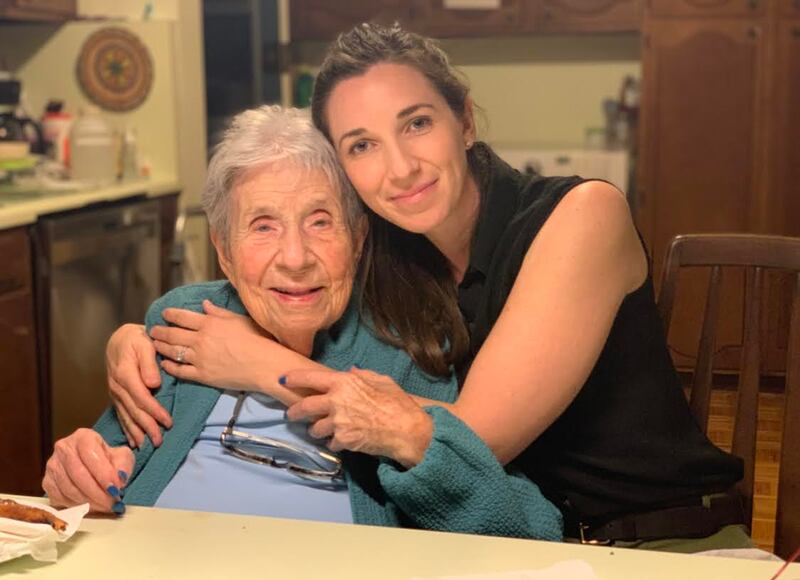
Jeanette Volpin was an air evacuation nurse during World War II and, according to her granddaughter, was always on the “right side of history.”
Miriam Volpin and Sarah Penna, Jeanette’s granddaughter, described the possibility that Jeanette’s body could have been used to train the Israeli military amid its ongoing hostility towards Palestinians as a “betrayal.”
Both said Jeanette was “a staunch and unwavering supporter of Israel,” but that she also supported Palestinian statehood and “very much did not support war.”
“Having her body go to something that was, at least on the surface, positive, was important to her,” Penna said. “So I do think her values would bump up against each other in making that decision. I certainly don’t think she would be thrilled.”
Other families also viewed body donation as an altruistic act, dedicating a person’s life to a future they won’t get to see. This choice is often made with the desire to give back, in their eyes.
Jean McNeil Sargent passed away in 2012. In her final days, her profound appreciation for the doctors and nurses charged with her care at UCSD’s Thornton Hospital led her to the decision to donate her body to science.
Her granddaughter, Jennifer Gomez, is a UCSD alumna who works at UC Irvine as the assistant director of their prison education program. She remembers being in the hospital while Sargent received open-heart surgery, saying Sargent adored the staff who treated her.
“It is a betrayal of people’s trust,” Gomez said. “I feel betrayal, disgust; disgust that part of my family could be used in such a horrendous way, that we could be supporting an agenda that we don’t fully support.”
Sargent taught at Mira Costa College and founded the Sargent Art Group, a San Diego artist community that strives to honor Jean’s legacy — their teacher and inspiration — through their art.
“The fact that my grandma’s body, a very loving, liberal artist, whose body was intended to support students’ studies and the advancement of science, could be used to train military personnel or support an institution that is literally carrying on a genocide blows my mind,” Gomez said.
The idea that UCSD may have profited from the cadavers donated to their program further troubles Gomez.
“It makes you lose trust in an institution you want to hold highly,” Gomez said. “You spend your time there, you’re educated there. My grandma had no intention of her body being used to generate any monetary or physical benefit for the military industrial complex.”
The Choice
This news has also impacted potential donors.
Kevin Grant has beaten every single estimate doctors have given him. Born with a rare, enlarged, two-chambered heart, his life has been constant medical battles — going under the surgeon’s knife over a dozen times.
“As a kid, when they crack you open, you swell up for weeks,” Kevin said. “You can’t move; you’re put in a cage. I’ve been on bypass machines. I’ve had four stents put in. My plumbing is backwards.”
His life is a medical marvel. Kevin, at 47, is one of the longest living people with his condition; Doctors didn’t believe he would live to see 20. He believes this would make his body valuable for medical research.
Kevin began hospice in November 2024. Since then, his wife and primary caregiver, Courtney Grant, has taken on the process of donating his body to science. After learning that cadavers donated to UCSD are being used in Israeli military training, the family felt shaken and lost confidence in the school’s donation program.
“Normal people aren’t going to sit there and read or have a lawyer look over the contract; they’re taking their word,” Courtney said. “You’re trusting this hospital, you’re trusting UCSD. It’s a learning institution, of course, we’re going to trust that they’re taking this body for something good, not for something evil.”
Before UCSD, Courtney tried Science Care Body Donation, a for-profit organization that brokers donated bodies to training and research programs. Reuters reported in 2017 that the company makes $27 million in annual revenue. A spokesperson told Grant that the company would cover all transportation costs and return one-and-a-half cups of Kevin’s ashes after the body was used in one of the available programs.
“I asked, ‘Are they medical programs, or are they programs with our government?’ That’s when the conversation turned; you could feel the defensiveness in her voice,” Courtney said. “‘It’s a ballistics simulation.’ Ballistics are weapons; a simulation means, instead of a live body, you’re going to use my husband’s dead body. She was silent at that point; I think she realized that it wasn’t going to go any further.”
Other donation options are too far away or require the family to pay large sums for transportation. The Grants now feel their donation options are significantly limited.
The Simulations

Since the Navy Trauma Training Center was established in 2002, instructors have been candid that the program’s primary goal is desensitizing military medical personnel to trauma. A 2009 article published by the Department of Defense explains why.
“We bring them here to see a lot of blood on the floor,” David Dromsky, a Navy orthopedic surgeon instructor, said in the piece. “If they don’t do something very quickly [the patient] is going to die.”
By exposing participants to “trauma of all types, mild and severe,” the program aims to “eliminate the deer-in-the-headlight effect” before inexperienced medical personnel deploy.
“The trauma the corpsmen see here is as close to the battlefield as we can get our healthcare providers before seeing it in combat,” said Christopher Jack, one of the center’s Burn Unit instructors, in the same article.
Using cadavers, instructors said, is a way to ensure that a military clinician’s first time working on real human tissue does not occur during combat.
In a 2022 press release, the Navy wrote that inviting Israeli military surgical teams to train at the center was an “exceptionally useful” opportunity to improve their skills.
The Navy, USC, UC system, and the Israeli military itself have not responded to numerous requests for comment on what the Joint Training Exercise entails and how it differs from the center’s standard trauma surgery courses, ASSET and ASSET+, on which the program is based.
In February, Annenberg Media and The Guardian reached out to UC Health for clarification on the nature of the Israeli military’s use of donated cadavers.
UC Health wrote that “human remains are not subjected to any type of injury to simulate the impact of a traumatic event” in a Feb. 27 email to The Guardian.
However, a 2020 report written by the program’s instructors about the Israeli military training at USC casts doubt on UC Health’s claim.
Commenting on the report, UC Health wrote Mar. 18 that course instructors prepare cadavers to “imitate the types of damage that has been documented as occurring in traumatic injuries.” Neither the 2020 report nor UC Health clarified how these injuries are inflicted upon the cadavers before simulations.
According to the report, Israeli military surgeons go through a four-day combat surgery skills course, using a “perfused human cadaver” — a recently deceased body that is pumped with red paint and a saltwater mixture to simulate blood flow.
Instructors from USC and the Navy Trauma Training Center lead a four-day combat surgery skills course for Israeli military medical personnel from forward surgical teams, which are mobile units that often operate on the battlefield.
The course consists of half-day simulations where surgeons respond to traumatic injuries on a perfused human cadaver. Researchers measured, among other things, how long it took surgical teams to repair cardiac injuries and vascular damage consistent with blast wounds.
In the first simulation, the team faces a gunshot wound with a cardiac injury. The second and third involve an improvised explosive device blast to the face and torso. The fourth is a gunshot wound to the leg with arterial vascular damage.
On Jan. 16, L.A. County Health Services wrote in an email to Annenberg Media that the report was “incorrect and false” for naming the Office of Decedent Affairs as the source of the cadavers used by Israeli personnel. No other aspect of the report has been called into question.
The study’s authors have not responded to repeated requests for comment.
The Response
Reporting by Annenberg Media reveals that members of the Golani Brigade, an infantry unit that killed 15 medics in Rafah in March 2025, recently trained at the Navy Trauma Training Center. USC, the Navy and the Israeli military have all declined to comment on the sighting. UC Health did not address the Golani Brigade’s involvement in the joint training exercise.
UC Health stated that “referring to medical training programs as ‘military training’ or ‘military use’ is misleading and mischaracterizes the nature of these types of programs.”
When asked to clarify why the terminology was misleading, UC Health did not respond with further explanation.
USC and the Navy have maintained that the main objective of the course is to test Israeli military personnel on their ability to repair traumatic injuries, similar to those they would see on the battlefield.
On Feb. 27, the UC Office of the President and UC San Diego stated that bodies used in the Israeli military training program are not subjected to any type of injury to simulate the impact of a traumatic event.
UC Health stated March 18 that these kinds of programs use surgical tools and techniques to “imitate the types of damage that has been documented as occurring in traumatic injuries.” The specific tools and methods used were not explained, despite a request for clarification.
In February, the UC executive director of Anatomical Services told The Daily Californian that only UCSD provides bodies to USC.
However, a 2024 contract reveals that the UC Regents expanded their supply network to the entire UC body donation system.
Of the 10 UC campuses, five have their own body donation programs: UC Davis, UC Irvine, UCLA, UC San Diego and UC San Francisco. All five campuses can transfer donated human remains to USC from May 2024 through March 2027.
When asked for comment on the campuses’ involvement, the UC Office of the President wrote: “It is UC practice to include all UC body donation programs, centralizing UC’s lending agreements.”
The spokesperson also asserted that, as of March, only bodies from UCSD had been provided to USC for use in the Navy’s Israeli military training course.
To verify the details of the director’s statements, Annenberg Media and The Guardian requested records related to any cadavers sold to USC from the five UC campuses named in the agreement between May 2024 and early March 2026.
UCSF denied providing any bodies to USC. UC Irvine also denied having any records related to any body transfers to USC. Over the past month, the responses from the three remaining campuses have not ruled out involvement.
UCSD, UC Davis and UCLA stated that they needed additional time to gather documentation on the details of any body exchanges.
No individual school provided responsive documents by the time of publication.
The Absence
Despite program materials alerting families that they likely will not know what their loved ones’ bodies will be used for, donor families said they are still struggling with the absence of information after the donations occurred.
Brittany Beecher takes issue with the ambiguity surrounding the use of bodies and UCSD’s unclear regulations about where donated bodies could go, not trusting a program with “zero oversight.”
UC Health said all body transfer requests are vetted “for scientific and educational merit.” Then, they are approved by university-specific review boards to ensure recipients “treat all anatomical donations with respect and follow ethical guidelines for use.” When asked about those specific guidelines, UC Health did not share them.
“I don’t like that there are so many unknowns and the lack of accountability here,” Brittany said.
Jeanette Volpin’s family said she handled everything herself when it came to arranging her donation. They were stunned to learn USC would keep Jeanette’s body for up to five years. Neither Miriam Volpin nor Penna knows if USC told this to Jeanette before her death.
“If I’d known that, I would’ve probably talked her out of it,” Miriam said.
For Penna, the time it took for USC to return her grandmother’s remains held an extra pain: Her son, Jonah, kept asking to visit a grave that did not yet exist.
“Jonah and my grandma had such a special relationship,” she said. “[They] were really, really close, and he misses her a lot, and talks about her all the time.”
Jeanette passed away when Jonah was 7, but he never stopped asking when he could again see his “Gigi,” even if it took five years to do so.
The lack of communication from USC about Jeanette’s status and when exactly she would be returned to the family distressed both her and Jonah.
“I never heard from them,” Penna said.
In 2004, NBC broke the news that Tulane University sold donated cadavers to a body broker who transferred them to the U.S. Army for use in land mine testing. Families of body donors filed a class-action lawsuit against the university, which settled the case in 2006 with an $8.3 million total payout.
The families said Tulane never told them that their loved ones’ bodies could be sold or used for purposes other than medical training at the university itself. USC’s donation agreements, like Tulane’s at the time, do not specify military training as a possible use for donated remains.
The Future

USC has not answered Annenberg Media’s repeated questions about whether it will renew or terminate the Israeli military training program when its current contract ends.
If the program continues, Courtney Grant thinks it should use donations from willing servicemembers. Donors could have full knowledge of the program and continue serving their country after their death.
“The military should use their own bodies,” she said. “It shouldn’t just be civilians with the wool pulled over their eyes.”
The Navy has already taken steps to renew the contract as it stands. On March 10, the Navy published a notice of intent stating that it plans to renew the cadavers program with USC and the Israeli military, starting directly after the current contract concludes in September 2026.
The Navy wrote that the “period of performance” would add one base year and two optional additional years. If USC accepts the extension, it would permit the Navy to continue the program through 2029.