
We live in a viciously divided country. Sometimes it’s hard, if not impossible to engage in a rational discussion with someone who disagrees with us on key issues of human rights and the course of our nation. That is, if we attempt it at all. What will it take for us to regain the courage to talk with one another about important issues facing our democracy? In “Rebuilding America,” we tapped into the lives of people around the country in search of answers to how we can bridge our differences. All with the goal of improving our democracy.
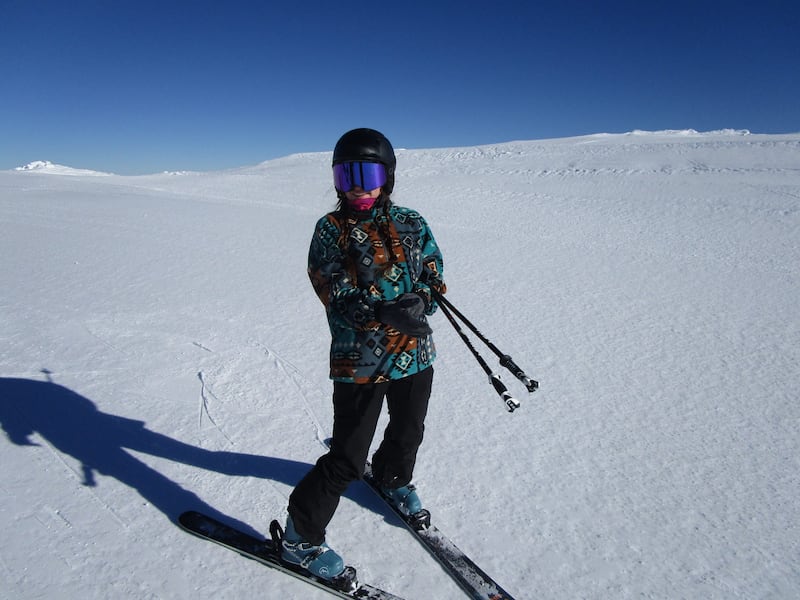
On brisk winter mornings, Logan Falkel loads the chairlift before the mountain even opens. Her job on Ski Patrol at Mammoth Mountain means making the sport she loves possible –– and safe –– for everyone else on the snow, primarily through avalanche mitigation. But skiing isn’t just a means of carefree fun or newfound employment for her –– it’s a lifestyle. One that lets Falkel forget about the onslaught of threatening political headlines threatening to destroy her peace.
Falkel has come to realize that the peace she finds in nature has become inherently political, given the current state of American democracy.
“As a skier, watching the snow come later and later every year and go faster and faster is absolutely horrifying,” said Falkel. “The snow right now provides my job. It provides my sanity. It is the source of my passion. I live for it, and right now, I might be out of a job in a month because it hasn’t really snowed yet. It makes me so mad and horrified that one person –– one perspective –– can take everything away from us.”
That “one person” is Donald Trump.
Since President Trump took office for his second term in January 2025, he once again backed out of the Paris Climate Agreement, signed off on a bill that proposed selling up to 250 million acres of public lands and called climate change a “hoax” during a tirade at the United Nations General Assembly.
His administration has come to embody the anti-environment stance in the United States.
Whatever lingering hopes that environmentalists had in remaining apolitical have been squandered by these actions.

Though the threats of climate change are dire, they aren’t universally accepted.
The common thread between outdoor enthusiasts often ends at politics. Rural areas are overwhelmingly dominated by conservative ideologies, as shown in California’s 3rd congressional district, which covers Falkel’s home in Mammoth Lakes. The district elected the Trump-endorsed Republican Kevin Kiley in 2024, who has accepted money from PACs advocating for energy independence and oil protection –– not exactly the environmentalist who represents the hopes of diehard outdoor advocates like Falkel.
But this discrepancy between the politics of those who live in rural, nature-surrounded lands and those who fight to protect them is only a microcosm of what’s happening on a national scale.
The U.S. is in the midst of extreme political polarization, with over 60% of Americans feeling more stressed than interested in discussing politics, according to a 2023 Pew Research Poll. There are a litany of reasons to blame for this, stretching from nationalized media coverage and the 24-hour news cycle to congressional gridlock and federalist power dynamics, but no sole impetus can be pinned.
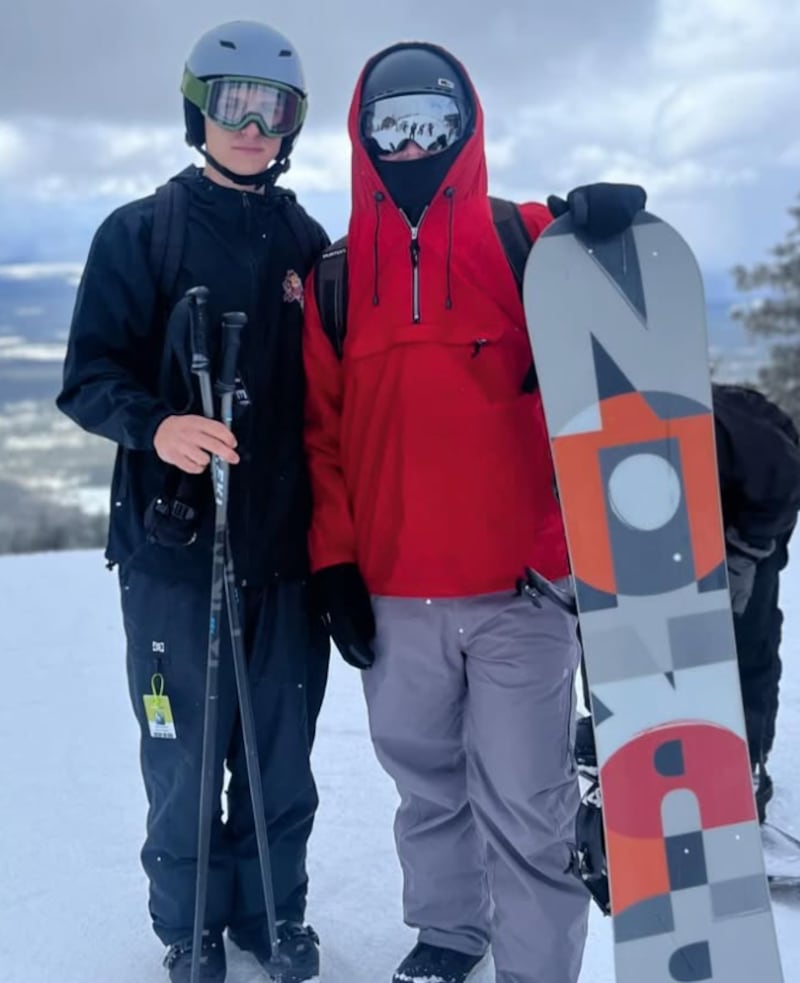
Jake Murphy, a 20-year-old former Arizona State University student, speculates about the role extremism has played in this societal rift.
“If you’re in the extreme, extreme right wing or extreme left wing, I probably won’t get along with you,” said Murphy. “When extremists argue against each other, there’s no agreement at all.”
Murphy enjoys many of Arizona’s outdoor traditions, including hiking, golfing and even skiing in the northern town of Flagstaff. A reluctant Trump voter in 2024, Murphy would prefer a more traditional conservative candidate who isn’t as “contradicting” as the current president.
One thing Trump hasn’t been contradicting about, though, is his view on climate change. Both in speech and in action, the president has made it clear that he’s staunchly against climate policy.
Environmentalism, long storied for its bipartisan backing of Republicans like Theodore Roosevelt and Democrats such as Jimmy Carter, might be too niche of an issue to be the source of America’s polarization, but it faces repercussions because of it.
A study published by NPJ Climate Action Journal in 2024 found that since the mid-2010s, the percentage of Democrats who believe government spending on the environment is ‘too little’ grew from 70% to 85% while the percentage of Republicans with the same response fell from 45% to 34%.
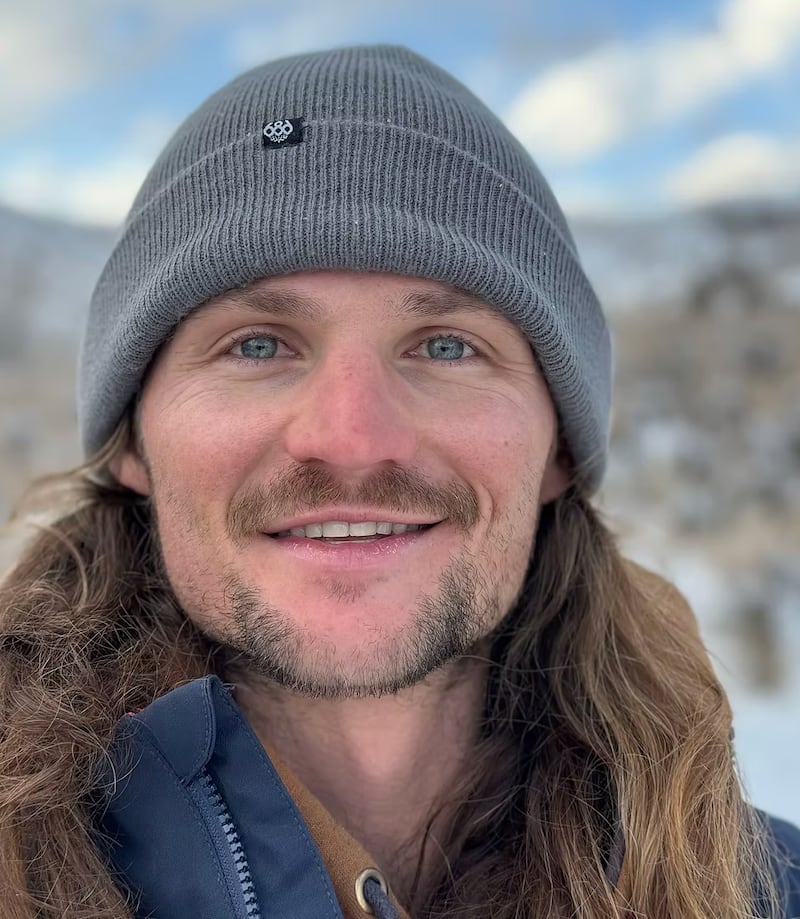
Colorado local Henry Passerini recently felt compelled to advocate on behalf of public lands after spending years living on them as a nomad. Unlike most of his conservationist peers, he doesn’t see solutions only by means of climate policy and blames both parties equally for their failure to uphold ecological justice.
“If the masses turned their awareness towards free energy and demanded it as hard as they demand action around climate policy, we’d be trotting down a much different timeline,” said Passerini.
He’s turned his outdoor enthusiasm into a job as a tour guide of the Rocky Mountain backcountry and founded a non-profit called Restored Lands, which is currently petitioning signatures to hold Vail Resorts –a ski resort monolith –accountable for its detrimental impact on local ecosystems.
Many of these regulations guiding big business actions towards the environment are issued by the Environmental Protection Agency, but that could soon change.
The power of the EPA is projected to diminish following the 2024 ruling of Loper Bright Enterprises v. Raimondo, in which the conservative U.S. Supreme Court curtailed any authority the EPA does not specifically grant by legislation.
The court tossed aside the doctrine of Chevron Deference, a court precedent that had been cited over 18,000 times in the last 40 years, which told judges to let federal agencies interpret unclear laws they administer. Its reversal calls into question EPA jurisdiction over enforcing landmark laws such as the Clean Air Act, which regulates toxic air pollutants, and the National Environmental Policy Act, which requires federal agencies to take environmental impacts into account for all actions.
Though many across the political spectrum might have differing opinions on how best to achieve environmental protections, the act of conservation still remains an area of bipartisan coalescence.
AJ Hardie, director of Asheville GreenWorks, noticed the power that collective action can have in politically mixed communities. Working at a civilian conservation organization based in the battleground state of North Carolina, Hardie sees his small mountain city of Asheville’s universal love for nature on a daily basis.
“One of the things that’s pretty true for a lot of folks in Western North Carolina is that we all see the value of our natural spaces,” said Hardie. “It’s not hard to get people from all across the political spectrum to work together on environmental issues.”
Whether an environmentalist falls under the guise of a hunter or a marine biologist, there is a preserved understanding that the natural world deserves protections against human exploitation.
“It’s the experience as much as the animal that we’re in pursuit of,” Clarence Rushing, co-chair of Backcountry Hunters and Anglers’ Washington chapter, said. “We’re not just out there to fill a tag. Everybody in this sphere understands that the main priority is habitat.”
Talking about these public lands, which are habitats to millions of animal species, he quoted legendary environmentalist Doug Duren saying, “it’s not ours, it’s just our turn.”
Backcountry Hunters and Anglers is a nonprofit that preserves the traditions of hunting and fishing not just through short-sighted policy, but through long-term environmental respect. They helped Montana Republican Ryan Zinke introduce the bipartisan Public Lands in Public Hands Act to ban the sale of almost 30 million acres of public land and were major proponents of the Senate Stewardship Caucus, led by Republican Tim Sheehy of Montana and Democrat Martin Heinrich of New Mexico.
“This isn’t an issue that falls along party lines,” said Rushing. “We support the act, not the individual.”
The threat of public lands either losing the funding and regulations required for their maintenance or being sold off underscores the importance of conservation work to the broader American public, not just those in office.
“You’re telling me that we’re gonna change the last remnants of our natural landscape? That’s scary,” said Falkel –– an expletive punctuating her fear.
Moving forward, this fear can be crucial to sparking action.
“Because people are understanding, there’s more engagement on higher levels to ensure that future and current generations have the opportunity to enjoy public lands,” said Rushing. “People from all parties are able to understand what’s at risk of being lost, and once it’s lost, it’s gone forever.”