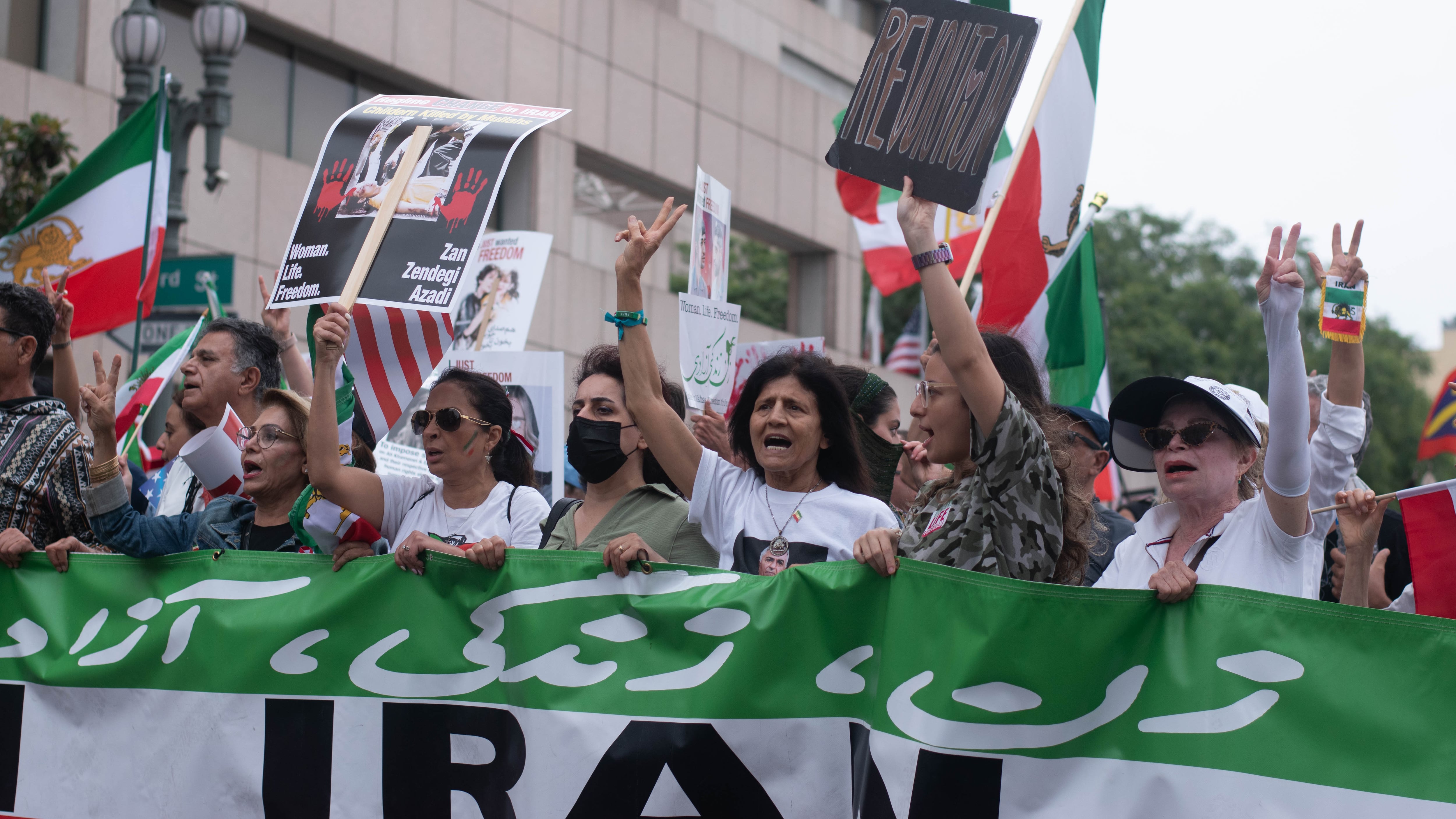
International Women’s Day was celebrated this Sunday, exactly one week after the Shajareh Tayyebeh girls’ school in Minab, southern Iran, was hit by a missile strike that killed 165 schoolgirls and staff members.
The strike was one of several reported across Iran last weekend, continuing the war that has now endured for over two weeks. Tensions in the Middle East have intensified as the deaths of women and children have stirred debate surrounding how an abrupt shift in Iranian leadership could shape the rights and futures of women living in the region.
Responsibility for the strike on Shajareh Tayyebeh is still officially contested, but mounting analyses by experts at The New York Times and the BBC have found that a United States missile hit a neighboring military base around the same time as the attack and may have also hit the elementary school. American military investigators, speaking on the condition of anonymity, told Reuters that the U.S. was likely responsible, but said it was still possible for new evidence to absolve the Trump administration.
In a news conference on March 2, U.S. Secretary of State Marco Rubio denied allegations that the missile belonged to the United States.
“The United States would not deliberately target a school,” Rubio said.
The attack has been condemned by the United Nations, adding it to a list of similar targets that the American government has declined to acknowledge as their own.
The attack has also led to charged discussions across the internet, grounded in questions surrounding the role of women in the future of Iran.
Matt Schlapp, chairman of the American Conservative Union, addressed the issue during an appearance on “Piers Morgan Uncensored” on Wednesday, appearing to equate Iranian women and children’s deaths to their freedom.
“It’s hypocritical to say that these attacks harmed women and children when those women and children — the young girls that you reference — would live a life in a barbaric, unequal society behind a burqa, with no ability to make career choices,” Schlapp said, claiming Iranian women have more rights while dead than under a theocracy.
Laurie Brand, professor emerita of political science and international relations and Middle East studies at USC, said wars disproportionately impact women, children and the elderly.
“I think for a lot of women across the region, there would be a concern about the future — concern that the violence that they are currently experiencing or the violence that they’re seeing beyond their own borders could actually affect them,” Brand said.
Comments like Schlapp’s have intensified debate about how the conflict is being framed.
“The idea that anyone is better off dead than alive, as determined by the judgement of somebody who knows nothing really about their society, is just horrific,” Brand said, responding to Schlapp’s statement.
While Iranian women and youth campaigners have long been at the forefront of calls for a regime change, Brand stresses that the perspectives of those directly experiencing the situation should remain central.
“Growing up seeing strong Iranian women inspired me to work hard and see how strong they are,” said Sophie Ghezelayagh, a sophomore communications major whose parents are from Iran.
Ghezelayagh said it can be difficult to strongly identify with a culture while being geographically separate from the dangers and conflicts that are directly impacting its people. Some of the women in her own family have endured long struggles to leave Iran and make a life for themselves abroad, taking great lengths to persevere, she added. She hopes that Iran could some day be a safer place for them, possibly with the opportunity presented by the country’s rare change of leadership.
“I hope we don’t have to live in fear,” Ghezelayagh said. “I hope there’s full liberation for all Iranian women, and just women in general across the world.”
Hannah Dean contributed to the reporting of this article.
This article was updated on March 9, 2026, with further clarification that the source of the attack on Shajareh Tayyebeh remains unconfirmed.