Before the sun rose over the Mississippi Delta in the late 1970s, Clem — then just a girl with calloused hands and a quiet determination — began her day in the cotton fields.
She pulled and prodded at thorny stalks, picking white bulbs under a humid southern sky. For $1.57 an hour, she worked with the hope that each dollar might inch her closer towards an education. By noon, she would climb onto the trucks with her family, ridiculed by other children who laughed at the idea of scraping by for so little as sharecroppers. But her workday didn’t end there.
When night fell in Yazoo City, she scrubbed baseboards with a toothbrush and cleaned toilets as an indentured domestic worker. One afternoon, the woman she worked for accused her of stealing silverware — silverware later found in the woman’s own bedroom.
Still, the message was clear.
She was seen as a servant.
And she should never forget her place as a Black girl in Mississippi.
“That was my introduction to being Black,” Clem says now.
But that was only the beginning.
Clem grew up in a shotgun home — so narrow, she says, “a shotgun could fire straight from the front door through to the back.” Eight people lived inside: her six siblings and her parents, neither of whom had finished junior high school.
Opportunity did not knock loudly in Yazoo City. It arrived quietly one day in the form of a set of encyclopedias dropped off at her house.
Clem began with “A.”
Alaska. Arizona. Alabama.
She realized, page by page, how large the world truly was. Those books became her passport beyond cotton fields and survival wages. Education, she understood, could carry her somewhere else.

At 13, she found another pathway: civic engagement. Volunteering for Justice Court Judge A.J. Peyton’s campaign, she went door-to-door with a bullhorn, urging neighbors to vote.
“We used a bullhorn walking the streets to get that judge elected,” she recalls with a smile. “And we were fearless.”
That campaign changed her life. Her father, Mr. Clarence Howard had always told her to effectively advocate for change. Now she knew how.
“My political engagement and advocacy is deep,” she says. “I pinch myself because it is so surreal.”
Clem attended Mississippi Valley State University — the only college that admitted her. As a freshman, she enrolled in a reading comprehension course and endured ridicule for seeking academic help.
But one professor, Dr. Dorothy Smith, offered words that Clem still carries with her: “Let them laugh. You are going to get the last laugh.”
She did.
Clem earned an academic scholarship and graduated second in her class. From there, she attended Southern Illinois University for graduate school, then moved to Austin, Texas, where she became active in the professional Black Caucus.
Her commitment to her community remained constant. She founded a nonprofit called The Vision Tour, mentoring youth ages 12 to 17 — many who, like her, had grown up with limited means. She taught leadership through volunteerism and civic engagement.
“Give back to your community,” she says. “Always.”
Her volunteer work on Al Gore’s presidential campaign eventually led her to San Francisco, where she would later become director of the San Francisco Democratic Party. Over the past 26 years, she has contributed to campaigns for Kamala Harris, Barack Obama and Fiona Ma, helping shape political landscapes far from the cotton rows where she began.
“I am fearless,” she says simply.
Success did not shield her from hardship.
After blowing the whistle on issues at the Hunters Point Naval Shipyard, Clem was blacklisted. For six years, she could not find work.

Friends told her to leave San Francisco. Start over somewhere else.
But she stayed.
“The Lord told me to be still and be quiet,” she says. “And I listened.”
It was another test of endurance — one she met the only way she knew how: with faith and resolve.
“If they don’t give you a seat at the table, you bring your own chair,” Clem says. “You don’t wait for somebody to give you something. You create that opportunity. And always remember to bring others along with you.”
Today, Clem lives a life that she once only read about in encyclopedias. She stands boldly in her Blackness, mentoring others and offering her hard-earned wisdom.
“I am a walking encyclopedia of what to do and what not to do,” she states with a laugh. “I want to mentor and give back.”
Reflecting on her roots, she shakes her head in disbelief.
“I could not have written this script.”
For International Women’s Day and the commemoration of Black History Month, Clem’s story is more than one of resilience. It is a reminder that history is found beyond textbooks and monuments. It is carried in the lives of those who refuse to accept the limits placed upon them.
From a shotgun house in Mississippi to the political corridors of San Francisco, Clem’s journey is proof that beginnings do not dictate endings.

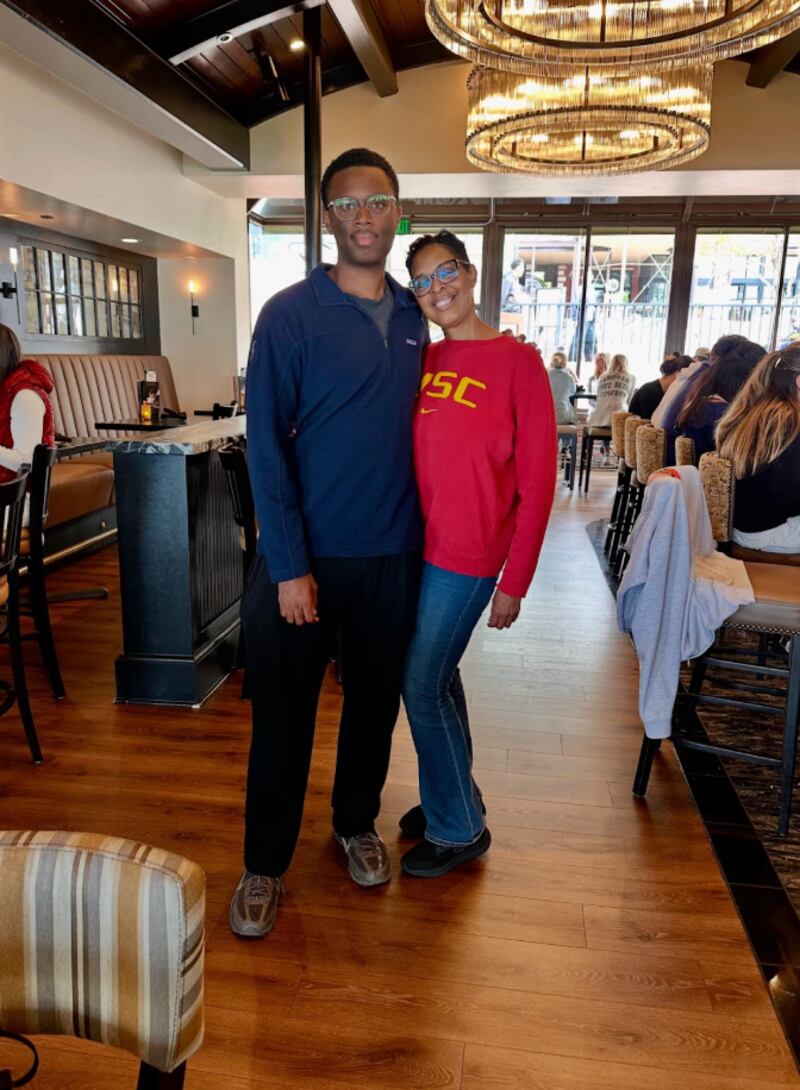
Today, that legacy continues. Her son, Jordan Clarke, now attends the University of Southern California, carrying forward the values, discipline and vision she fought to instill.
“We, as Black women, stand on the shoulders of Shirley Chisholm, Fanny Lou Hamer, Dr. Dorothy Smith, .”
When asked what she would share with the next generation of Black women, her answer is both practical and profound:
“Have confidence. Surround yourself with like-minded Black women. Remember where you came from. Walk into a room and let your presence be felt before you open your mouth. And when you do speak, make sure you know exactly what you’re talking about. Tap into your resources, mentors, and others who are grounded. I want you all to be a better version of me.”
Her words echo beyond a single conversation. They are instructions. They are affirmation. They are wisdom. Most of all, her words are an invitation to rise, to prepare, and to lead.