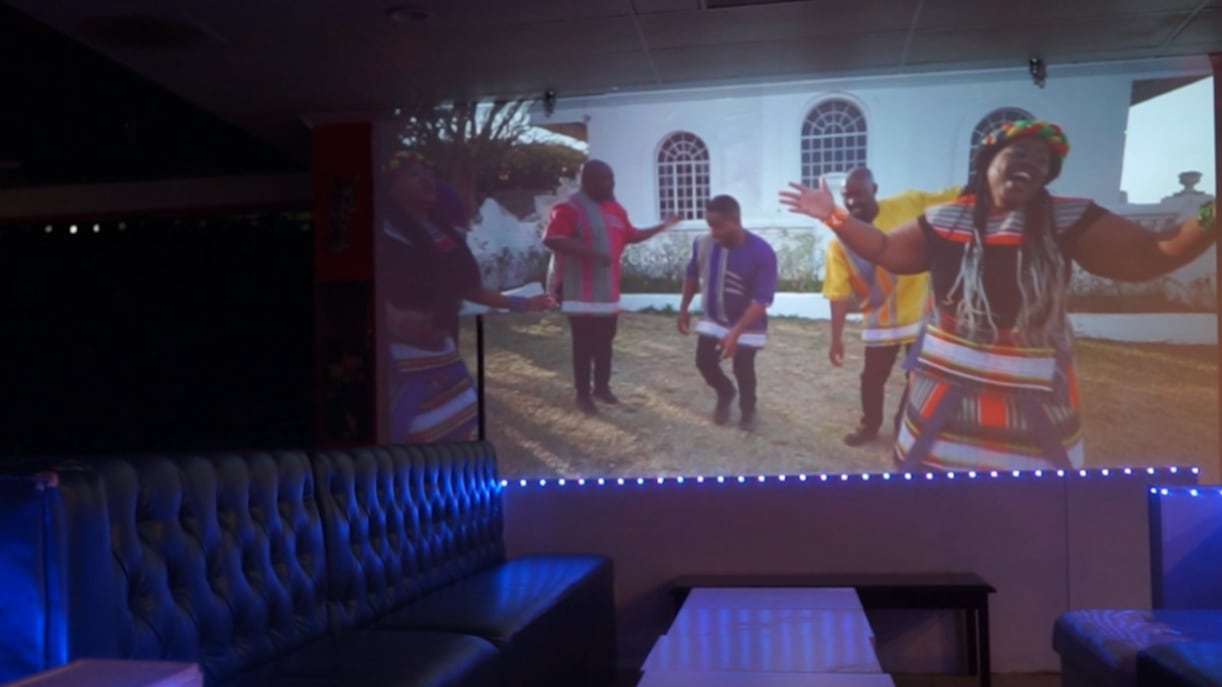
Dena Brummer loves to talk about food. It’s her whole world.
She educates people on how they can grow vegetables at home to the food traditions that boost environmental consciousness. She teaches food communication at the University of Southern California and is an advocate for food justice and sustainability. That’s how she knows something is missing.
Living in Los Angeles, where nearly every corner offers a taste of somewhere in the world, Brummer said African cuisine, somehow, has always been everyone’s afterthought.
“The notion that Africa is the second largest continent and the second most populated continent in the world,” she said. “Yet when it comes to the cuisine from the 54 countries, it’s very difficult to find around the United States.”
To understand what’s missing, it helps to first understand what African cuisine actually is.
Queen Ewudo, founder and CEO of the African food delivery app, Catered by Africa, dissected the different nuances of the rich cuisine from Africa: soul food, African food and Afro-fusion.
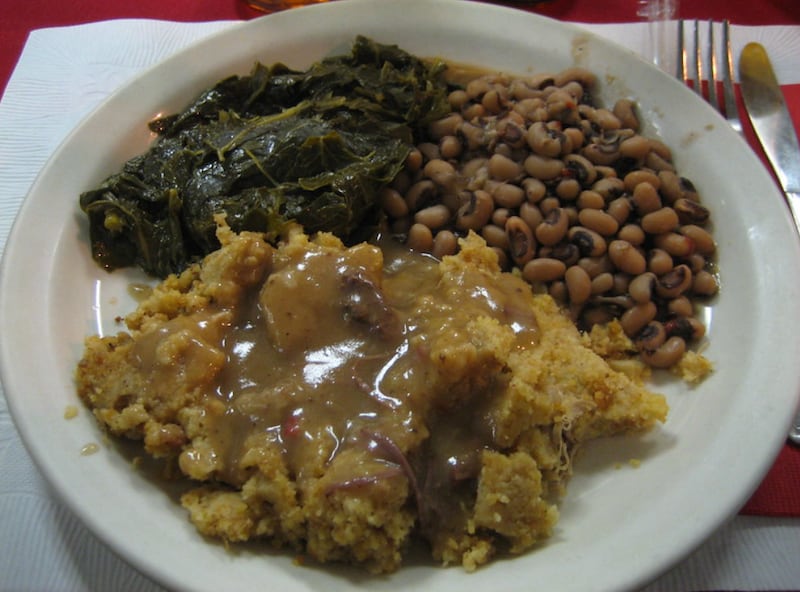
Soul food is a staple of Black American cuisine.
“During slavery days, … the African slaves came and they used their spices, their food culture, and really just, utilize their knowledge from Africa [with] the ingredients they have here in America to create these unique cuisines that we now call soul food,” Ewudo said, “Soul food is just the candied yams, the collard greens, the mashed potatoes,…those are Black culture.”
African food is a broad term that refers to the traditional cuisines of the African continent. Rather than a single culinary style, it represents a rich tapestry of regional cooking traditions, each shaped by local ingredients, cultural practices and historical influences, according to Cook Unity.
Afro-fusion cuisine refers to African food that fuses local and global cuisines.
Ewudo said African cuisine transcends borders because of the commonality between the spices they use, the type of meat they eat and the way they name their dishes.
“It makes it easy for us to pretty much bridge the gap between us and really call ourselves like brothers and sisters in a way because we all are the same nationality and continent,” she said. “We always have something unique that we all share among ourselves as well, no matter how far we are from home…Our foods are all spicy. That’s one thing we can count on.”
Ethnic cuisine came to the United States with migration, and so did African cuisine. But its path to cultural recognition, especially in Los Angeles, faced a unique set of challenges, many of which persist.
Almost 1 million people identified as Black or African American in the Los Angeles-Long Beach-Anaheim area, according to the Census Reporter in 2023. While this population is a primary supporter of African cuisine, it is scattered across the county and neighboring cities.
This dispersion, said Jared Cohee, who has written more than 500 articles on Los Angeles restaurants through his blog Eat the World LA, may be one reason the cuisine has struggled to gain the mainstream recognition it deserves.
“There are some [African restaurants] in Inglewood, the Leimert Park area, and [others] in Culver City,” he said. “Since they haven’t really formed communities like they might have in other cities, I don’t think they really have [a central] hub here, so [if people are interested in the food] they kind of have to go here and there to find it.”
Cohee said the Ethiopian and Nigerian communities are among the more prominent African groups in the city. These communities often form cultural enclaves, like Little Ethiopia, where locals experience a glimpse of the cultures immigrants brought with them.
Still, behind that cultural presence, Brummer said the challenges behind the scenes for many of these restaurants are significant.
“Most people who are running restaurants are, honestly to God, just trying to keep the doors open and pay their bills,” she said. “What ends up happening in a city like Los Angeles, those [restaurant owners] are very much just in survival mode, and it’s not about getting food and wine or a bon appétit.”
These operational struggles are exactly what Ewudo witnesses while overseeing logistics for many restaurants on her app: slow cook times, understaffing, and a lack of resource sharing within the community. During her onboarding visits, she’s seen firsthand how the absence of support systems hinders these small businesses’ day-to-day operations.
“When a customer’s order was out of stock, I watched [the owner] leave her restaurant and come back to start cooking. I was like, ‘That is not okay,’” she said. “They [still] use their ‘back home mentality.’ They’re not adapting to the country that they’re in, [where, in here] we have all the tools to keep the restaurant restocked [automatically], but nobody is helping them. It doesn’t cross their mind because they come from a country where things are done manually.”
These internal struggles are only half the battle. Brummer said that to many Americans, African cuisine remains unfamiliar simply because they haven’t had much exposure to it.
“Most people do not travel to African countries outside of South Africa, maybe Kenya for a safari, maybe Egypt. But other than that, the whole continent is not readily explored by most people. So there isn’t that level of comfort,” Brummer said. “It’s a case of ‘you don’t know what you don’t know.’ If you’ve never gone to, let’s just say, Nigeria, and you’ve never had fufu, how do you know to go look for it or to Google it? So the demand is not there. The capital is not there.”
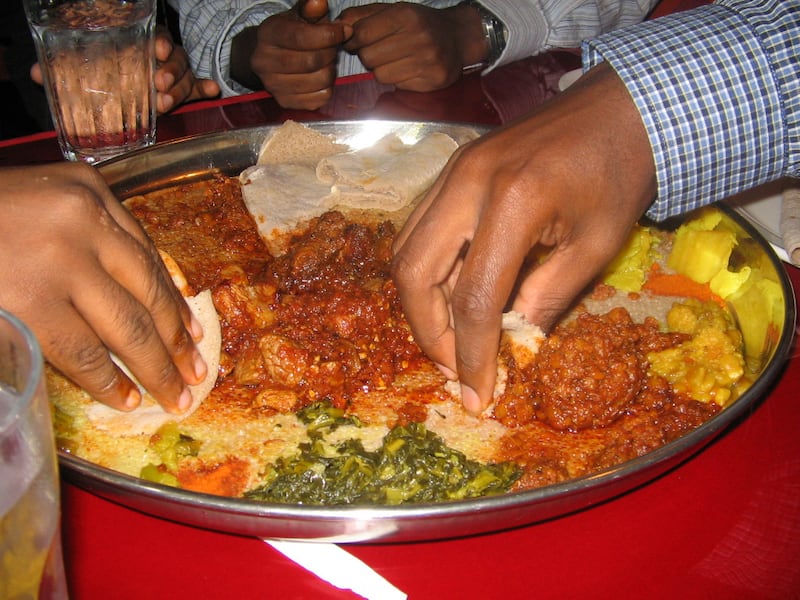
Saba Mengesha, who has run Queen of Sheba, an Ethiopian restaurant in Inglewood, for 12 years, said she believes the cuisine’s unpopularity stems partly from its use of unique spices and ingredients.
“I guess the flavor too is different,...our bread [injera] that we use is kind of sour, so everybody’s not comfortable eating that bread,” Mengesha said. “But everybody’s comfortable with rice. That’s why Chinese food can get very popular or Thai food because it’s meat and rice, any other food is like meat and rice.”
Elizabeth Lemwi, who recently opened Mother African Cuisine, a restaurant serving a mixture of West African food, said she believes that the African way of eating could be foreign to those who don’t know the culture.
“People from different races eat with forks, knives, and spoons. But Africans, we eat with our hands for most of our food,” Lemwi said. “So when [guests] come here… and don’t know how. We go to them to train them on how to eat. That’s a little bit of a challenge, but it’s exciting [to see people adapt to our eating way].”
On another note, Brummer said, African cuisine is perceived with a different historical legacy from other global cuisines.
“Chinese and Italian food is a very prominent part of American food, mainly because of immigration,” Brummer said. “But I think those cuisines also thrive because they have a certain level of freedom. They weren’t under the shackles of slavery.”
The continent’s history remains a barrier to how its cuisine is covered in traditional and social media, said Pierre Thiam, executive chef and co-founder of Teranga in New York City, in an interview with The Objective.
“The media misjudges the audience,” he said. “They think that the audience isn’t interested [in African cuisine].”
According to The Objective, food is political, and the fact that African cuisine is lacking in food coverage “shrouds the continent—and its contributions—in popular obscurity. It also reduces Africa to its colonial legacies.”
“We owe Africa for coffee, for rice, for yams, for okra. These are the pillar things in an American diet that are usually not attributed back to the continent of Africa,” Brummer shared the same sentiments.
Ewudo, in addition, said the representation issue extends to third-party delivery apps and search engines, which often flatten the continent’s rich food traditions into a single label.
“There’s an issue on Google when you type ‘Nigerian restaurant’ or ‘Ethiopian restaurant’; Google categorises all of them as African restaurants,” she said. “So my app identifies every business based on its nationality. It says their country [of origin] on a bubble to educate people about the type of cuisines they’re eating and where in the African diaspora they’re from.”
Rewriting the narrative around an entire continent’s cuisine requires change on many fronts, Ewudo said. One place that shift is already happening is in the kitchen, where modern twists and international influences have added to African food, creating fusions that appeal to a broader audience.
“I don’t know how that started, but shawarmas have been on their menus lately…that’s not our food. It’s Greek, but they will use Nigerian spices to make it like a Nigerian shawarma. Or there’s a popular beef spicy delicacy called suya,...and they will make it like suya tacos or alfredo,” she said.
Brummer added that she is seeing a new wave of African chefs using their platform to bridge gaps in awareness and push their home cuisines into the spotlight.
“There is an onset of second-generation [and] celebrity chefs who are highlighting their cultural heritage… that have been able to make it to a mainstream level in terms of creating cookbooks and even having restaurants,” she said. However, she added, “those restaurants tend to be more popular and do better on the East Coast versus the West Coast [currently].”
With Brummer, food carries stories, histories, and culture across time and space. In a sense, it’s a reminder that the journey of flavors often speaks louder than words.
“Food was the original immigrant long before people showed up, because spices and seeds were sold and traded long before bodies were moved to different continents,” she said. “As much as you think you’re open-minded, your belly really tells the truth if you really are.”