
Season 4 of the show “ Industry” doesn’t waste any time letting you know who’s boss. In the season premiere, viewers witness the show’s leading woman, Harper Stern, who is also the only Black woman in the show, strut into her hedge fund headquarters wearing sunglasses that scream “you should be scared to look me in the eye.” Played by “Bodies, Bodies, Bodies” actress Myha’la, Stern’s employees are quick to butt heads with her when she makes her royal entrance, and she’s quick to butt heads right back. “I am managing this fund, okay?” Stern declares, planting a foot down. Stern is the head person in charge, and she’s not afraid to consistently remind people that.
The show, in its debut season, follows a group of graduates working at a high-pressure, fictional London-based bank called Pierpoint & Co. It’s a working environment where human decency is low and the stakes are at an all time high. When I typically think of the finance industry I picture white men in suits, sitting in front of huge computer screens, smoking fat cigars confidently like they own not just the trading floor, but the world. But Stern challenges that portrait and provides a new, subversive perspective I haven’t seen before on television.
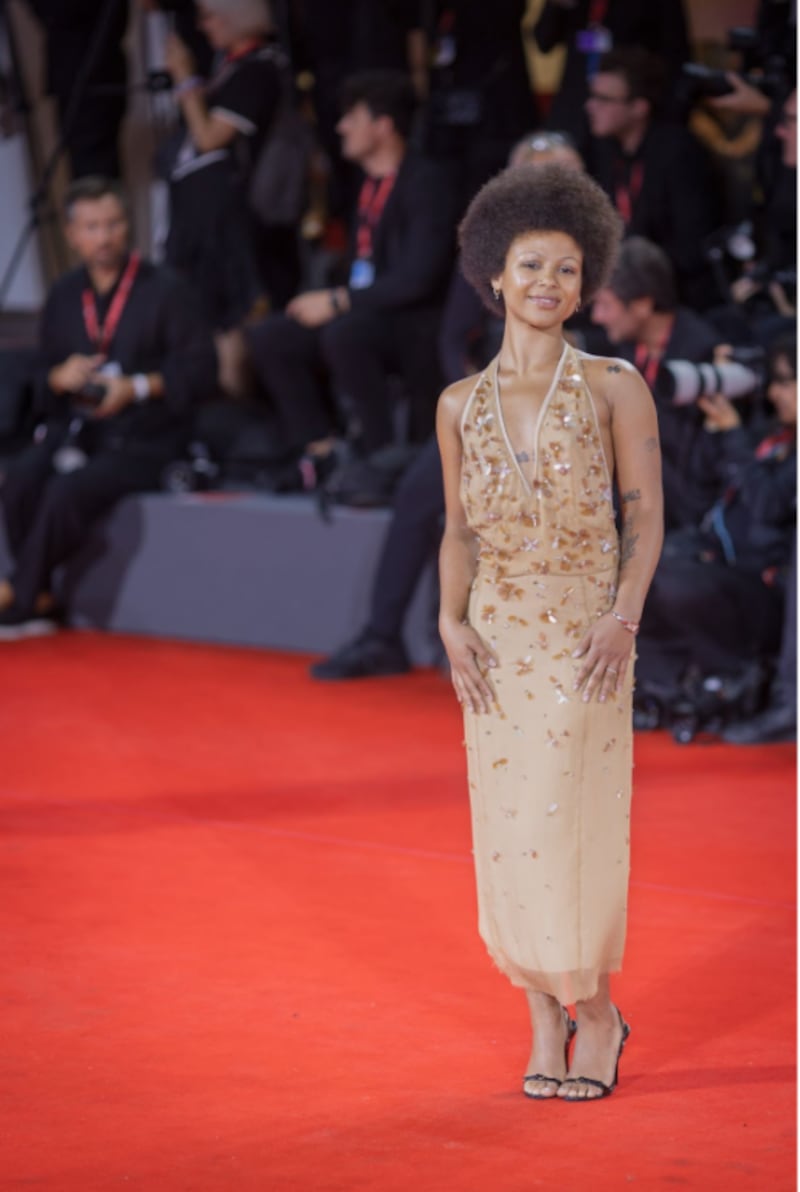
At the beginning of the show, Stern sits at the bottom of the finance chain, constantly having to prove herself to her dagger-eyed boss Eric Tao played by Ken Leung. But to eventually become top dog in the finance realm, you have to have a mean bite, and Stern has one of the meanest. She’s smart and quick to problem solve, but also manipulative and selfish with her actions. She gets people fired who are only trying to help her. She chooses money over her friends repeatedly. It’s no surprise that Stern is able to come out on top, even if you have a hard time rooting for her to grab the crown. But she’s impossible to look away from when she’s on screen. She’s a deeply flawed, antihero that makes me think of all the possibilities of what a Black television character can be.
There have been Black antiheroes that have taken up the small screen before. Think Olivia Pope (Kerry Washington) in “Scandal” and Annalise Keating (Viola Davis) in “How to Get Away With Murder.” Pope, like in the show’s title, is a person who is dressed in scandal, constantly making rash decisions that put her career, and even her life, on the line. Keating also plays with fire, lying religiously and using her power over her students unethically. More recently, “Godfather of Harlem” with Bumpy Johnson (Forest Whitaker) and “Euphoria” with Rue Bennett (Zendaya) have added themselves onto the list of unlikeable Black protagonists. But this is still few and far between compared to the number of white antiheroes on television.
There’s Tony Soprano (James Gandolfini) in “The Sopranos,” who is long regarded as the pioneer of the TV antihero. There’s Jackie Peyton (Edie Falco) in “Nurse Jackie,” Don Draper (Jon Hamm) in “Mad Men,” Walter White (Bryan Cranston) in “Breaking Bad,” and so much more. Other than playing antiheroes, all of these actors have another thing in common—they all have Emmys for their performances. Some even multiple. The Television Academy loves a character they can hate, and white actors tend to get first pick because they take up a majority of these character slots.
According to a study by the UCLA Hollywood Diversity Report, 77.5% of television leads are white, while only 5.5% are Black, despite Black people making up 13.7% of the U.S. population. This makes it less likely for Black actors to take up these unlikeable roles.
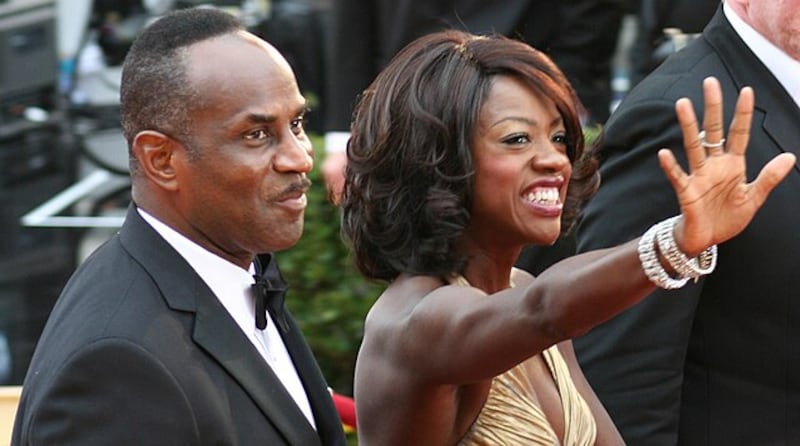
Both Zendaya and Viola Davis were awarded Emmys for their respective performances, with Davis becoming the first Black woman to win Best Actress in a Drama Series in 2015, saying powerfully in her speech, “In my mind, I see a line. And over that line, I see green fields and lovely flowers and beautiful white women with their arms stretched out to me, over that line. But I can’t seem to get there no how. I can’t seem to get over that line.” On that day, Davis stepped over that line herself—but it took 67 years for a Black woman to finally win that award category. Is it always going to be a waiting game to get the representation we deserve?
When antihero stories are only given to white actors, then those types of stories are only going to be seen as white stories meant for white people. In a Watchmojo video counting down the top 10 TV antiheroes of all time, one out of ten of the characters mentioned in the list were white. This contributes to a narrative that Black people can’t be antiheros—that we can’t be more than our skin color and oppression.
Showcasing Black characters who are deeply flawed and complex outside of their racial identity is also a showcase of Black characters who are deeply human. There is nothing wrong with creating films about racial oppression—it’s essential for art in some capacity to reflect the horrors of our reality. But we are more than our oppression. We are more than our history and pain. When characters like Stern show up on screen, it’s a reminder that we can be as impulsive, ruthless, money-hungry and smart-mouthed as white characters. We are as complex as them.
But change needs to start from behind the scenes before it begins in the front. The creators of Industry are Konrad Kay and Mickey Down, the latter being a mixed race TV writer. When questioned about their handling of race in the show, the creators responded by saying that “We were very aware that the financial world’s regular POV in art and entertainment tended to skew old, white and male. So we wanted to approach ‘Industry’ differently. But equally, we didn’t want race to be the determining factor of our characters, their desires and their actions.” In the same UCLA report, it showed that over 90% of showrunners are white and 2.2% are Black. This is an astronomically large gap in representation that bleeds through on-camera.
There should be more Black characters like Harper Stern on television, but the entertainment industry needs to open its doors to Black creatives and let them cross over the line Viola Davis speaks of. We have to work ten times harder to get as little, and Stern speaks for all of us when she shares these words in the first episode of “Industry”: “I think mediocrity is too well hidden by parents who hire tutors. I am here on my own.”