
On February 17, civil rights activist and politician Jesse Jackson passed away. He left behind a legacy that redefined a nation and instilled pride in millions of Black children, workers, and changemakers. Reverend Jackson saw the struggle of civil rights and the induction of the first Black president, he guided the minds of the Democratic Party on class struggles all the while carrying the weight of survival.
The word revolutionary is too meek to describe Rev. Jackson’s impact on the Black American collective identity. Beginning his counter-public activism through the Southern Christian Leadership Conference (SCLC), he worked with Dr. Martin Luther King Jr to advance economic justice and organize boycotts. Often regarded as a protege of Dr. King, he carried his legacy of strategic action and bold organizing in his own career. He understood our most vulnerable, from children to the working families that have been forgotten by the dominant democratic party. Dedicated leadership drove his fight for equity and soon became the first Black man and second Black person to run for presidential office after Shirley Chisholm. Contemporarily, he continued the fight for economic equality and justice through his own organization, Rainbow Push. The blueprint for civil disobedience, Jackson wove a rich tapestry across industry and issue.
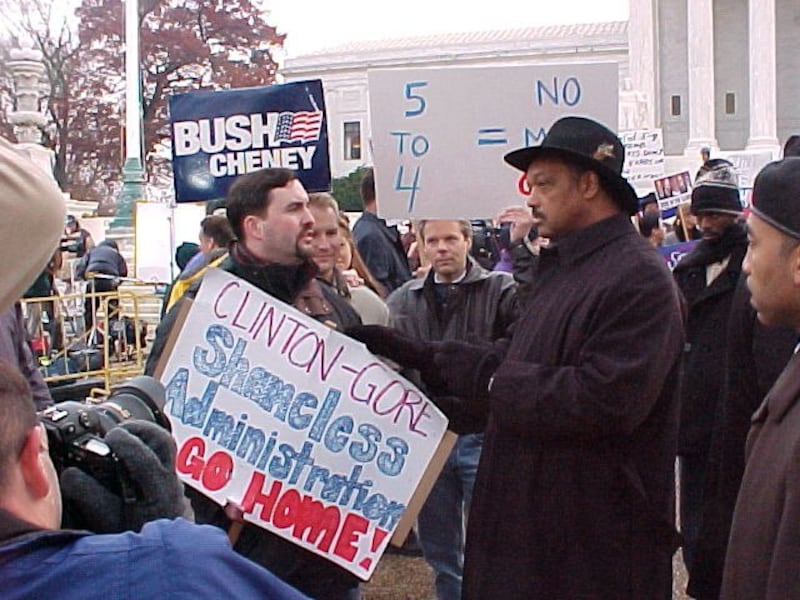
With trust in federal government at an arguably all time low, the conditions that contributed to Rev. Jackson’s interest in organizing has once again met our Black and brown Americans. The political climate and discourse has transferred from in-person cruelty to anonymous, online cruelty. In many ways, we no longer live in the world that Rev. Jackson did. And while Trump has called Jackson a “good man,” with “street smarts,” we once again have to confront a system that celebrates revolutionaries only when they’re dead.
Rev. Jackson’s work cannot go uncared for. As we all collectively share our photos with Reverend Jackson, I challenge everyone to lead in his steps of service, amplification of diverse voices, and pride in our histories. So often do we post social media captions of a historic figure’s passing and our bodies remain unmoved. So often do we divert our attention to something else instead of asking, “How can I make sure that my community is better served?” And while there is no absolute answer, we have to make an effort to come together and lift each other up.

As college students, sometimes we often take our education for granted. As Black college students, I think there is so much more room to locally engage and stand in the legacies of the giants who came before us. The college educated men and women of the 60s fought for upward mobility of all Black Americans. It is up to us to form the future of the movement. The fight for civil rights never ended with integration or with leaders’ deaths, it has instead transformed into demanding respect in these integrated spaces through innovative ways.
We can’t only mourn those who gave their lives for our social and political freedom. We have to pick up the baton they put down and change the world once again.