
Mark Twain once said, “A Scotchman has not seen the world until he has seen Edinburgh; and an American has not seen the United States until he has seen Mardi Gras in New Orleans.” For those not from New Orleans, Mardi Gras often seems like a weekend of celebration—drinking on Bourbon Street, attending parades, and returning home.
As a native New Orleanian, Mardi Gras is a season that starts on January 6th, “King’s Day,” and runs through Mardi Gras Day. This time is spent attending Mardi Gras Balls, parades, parties, and various celebrations with community members and tourists from all over the world who come to enjoy the world’s biggest free show. The famous King Cake is even sold by various vendors, including Black-owned businesses like Antoine’s & Adrian’s, which have been bringing flavor to customers for over 20 years.
Since the early days of New Orleans, Mardi Gras has been a celebration of the city’s culture, but it has not always been inclusive of all people. Organizations such as the Mystic Krewe of Comus and the Krewe of Rex, which paraded in the streets of New Orleans, did not open membership to potential Black members.

Black New Orleanians would make the most of their Mardi Gras experience by forming their own traditions, such as Mardi Gras Indians and Debutant Clubs, including the Young Men Illinois Club, Inc. and the Original Illinois Club, as well as other social clubs, to bring Black people together to celebrate their love for this once-a-year celebration. These clubs include The Bunch Club, Vikings Krewe, The Townsmen Club, Inc., Black Pirates, and Six-Ward Steppers Social Aid & Pleasure Club.
High School Marching Bands have become a huge part of what crowds look forward to, but due to discrimination and racism, Black high school bands were not allowed to share their gifts with the rest of the world. St. Augustine High School, founded in 1951 to provide Black men in New Orleans a proper education, still stands as the only all-Black male Catholic High School in the United States of America. It would make history as being the first Black band to parade in the Krewe of Rex Parade in 1967. In the present day, you can find schools like St. Augustine participating in Battle of the Bands competitions before the parade begin, hyping up the crowds and showing the world what New Orleans is all about. among other local schools such as Edna Karr High School, McDonough 35 College Preparatory High School, Warren Easton Charter High School,George Washington Carver High School, and John F. Kennedy High School.
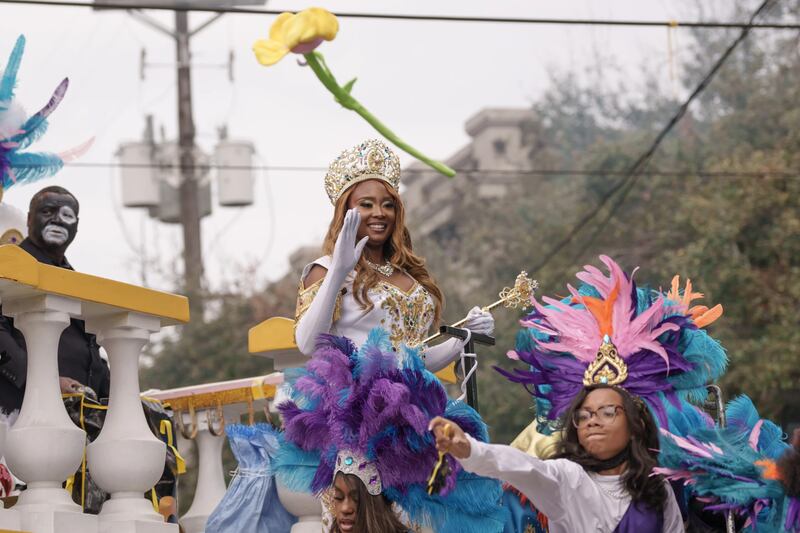
The Zulu Social Aid & Pleasure Club was founded in 1909 and remains the oldest Black parade organization in New Orleans history. Zulu royalty includes Jazz Artist Louis “Satchmo” Armstrong, who reigned in 1949 as King Zulu. The Zulu parade is still seen as the pillar of Mardi Gras, not only within the Black community but also by all who love the celebration. Zulu was one of the few parades where Black residents felt seen and could really enjoy themselves during the Mardi Gras festivities without being discriminated against.
Dorothy Mae Taylor, the first African American woman elected to the Louisiana House of Representatives in 1970 and later the first Woman elected to the New Orleans City Council in 1986, would pass an ordinance that would change Mardi Gras culture forever.
In 1991, Councilwoman Taylor authored an ordinance that prohibited any Mardi Gras krewe from discriminating against anyone based on race, sex, or religion. This ordinance caused many organizations, including The Krewe of Comus, to stop parading in the streets of New Orleans, but The Krewe of Rex would open its membership to people of all backgrounds.
Taylor’s work on the city council paved the way for organizations such as The Mystic Krewe Of Femme Fatale , Krewe Of Oshun, and Krewe Of Nefertiti, all predominantly Black krewes, and two of them being all-female organizations that shower the streets of New Orleans with beautiful throws and put smiles on children’s and attendees’ faces.

As the Mardi Gras season comes to an end, it is now time for the City of New Orleans to transition to the season of Lent, where members of the Catholic church will abstain from something of their choice for 40 days before Easter.
Mardi Gras is the perfect celebration to eat and do what you want before you do a 40-day sacrifice. Make your way to The City of New Orleans next year as Mardi Gras Day will be on Tuesday, February 9th, 2027, to experience the fun of Mardi Gras and see the magic for yourself. Laissez les bons temps rouler. Let the good times roll, and Happy Mardi Gras.