
In late September, the U.S. Navy paid USC over $200,000 for more dead bodies. The university sold these cadavers as part of a contract with the Navy that would train military medical personnel from the Israel Defense Forces.
The contract was extended in September, just as Annenberg Media was breaking the news on the existence of the cadaver training program. Asked then if an older contract would be extended, USC did not answer. The September contract did not become public until late December.
Through a further review of public documents since the initial story, Annenberg Media found that body donation programs at USC and the University of California San Diego provide cadavers to the training. Donors freely give their bodies to the universities for “medical training and research,” however, these programs do not inform donors or their relatives about how the body would be used. In some cases, USC sells their remains, and a foreign military uses them for training.
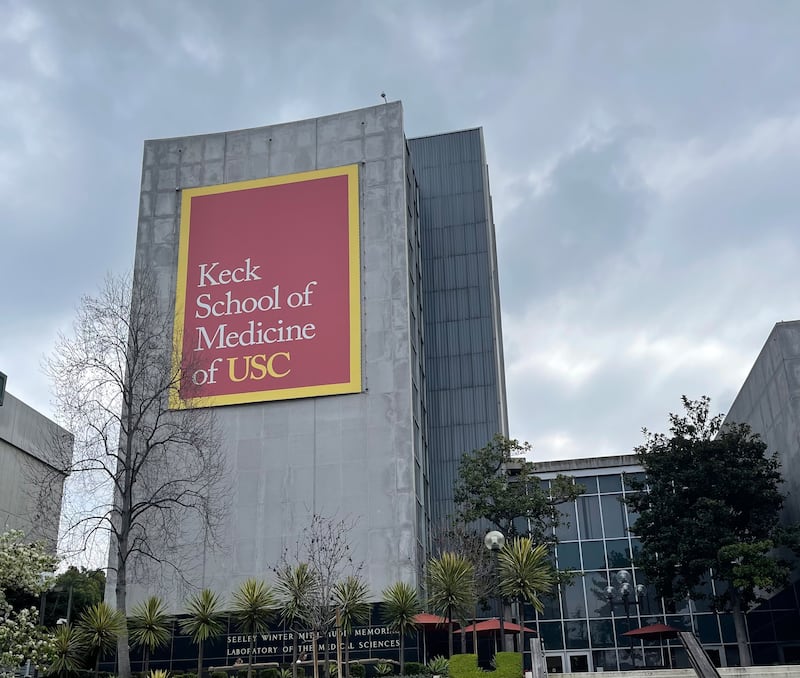
Held at USC’s Navy Trauma Training Center at Los Angeles General Medical Center, these training courses invite “non-combatant surgeons, nurses and anesthesiologists from Israel,” according to a statement from the Keck School of Medicine. The most recent contract states that part of this course includes “a three-day hands-on training on non-perfused and perfused cadaver bodies.” Perfused cadavers are bodies pumped with artificial blood after death to better simulate a live patient.
Many of the courses exclusively serve U.S. military personnel, but out of 36 cadavers provided to the program in the past two years, the Israeli military used 12, according to the contract.
In a statement to Annenberg Media, Keck wrote that the practice of inviting international medical personnel to train at USC began in 2013.
“Our trauma training program is aimed at preparing medical professionals to deliver lifesaving care wherever trauma occurs,” Keck wrote. “The courses under the Navy’s contract comprise a very small portion of the trainings conducted in 2024-25 in the lab, where trainings for more than a dozen medical specialties are conducted, from orthopedics to cardiothoracic surgery and neurosurgery.”
The ‘false’ body source
Annenberg Media previously reported on the seemingly apparent connection between the program and L.A. County’s Office of Decedent Affairs. A lab manager, surgery professor and surgery director — all of whom worked at USC at the time — co-authored a report with two other researchers in 2020 that listed the ODA as the source of bodies in the program with the Israeli military.
But L.A. Health Services said this month that the information in the report was “incorrect and false” and that it had not provided the bodies.
“The authors appear to have assumed—erroneously and without verification—that the cadavers used for training foreign military personnel came from the same source as cadavers used to train physicians in County residency and fellowship programs. That assumption is wrong,” Health Services wrote in a statement to Annenberg Media. “To be unequivocal: Los Angeles County has never provided cadavers for foreign military training.”
The authors included USC’s Michael Minneti, Demetrios Demetriades and Kenji Inaba, as well as West Virginia University’s Daniel Grabo and former NTTC director Travis Polk.
Inaba declined to comment. None of the other authors responded to repeated requests for comment.
Health Services also contacted the Navy, which Health Services said confirmed that the cadavers were obtained elsewhere. Navy representatives and the Pentagon press contacts did not respond to Annenberg Media’s requests for comment.

The true body source
According to Keck, cadavers used in the program came from two places. Some came from USC’s own donations. A majority came from “another academic medical institution.”
This institution was not mentioned previously in any statement or forward-facing document. However, there was an indicator written in a 2021 Request for Quote sent from the Navy to USC.
“The contractor shall coordinate the acquisition of fully tested fresh tissue cadaver bodies from the University of California San Diego School of Medicine and transport the cadaver bodies to the [Fresh Tissue Dissection Lab] based on the allocated NTTC curriculum schedule and IDF course schedule,” the document reads.
Keck did not name any cadaver source directly but did state that all of the cadavers had been donated. At USC, bodies are donated through the Anatomical Gift Program; at UCSD, they are donated through the Body Donation Program.
USC and UCSD advertise their body donation programs as a rare and meaningful opportunity for people to advance “lifesaving” scientific and medical research.
University of California Health’s website tells potential donors: “Your gift can provide resources for research that improves the health and lives of people for generations to come.”
USC’s Anatomic Gift Program shares a similar message: “We sincerely hope you will become one of those extraordinary people who make it possible for others to live long and healthy lives.”
In reality, people who donate their bodies to science may be unknowingly surrendering their remains to the country’s widely unregulated, for-profit cadaver market.
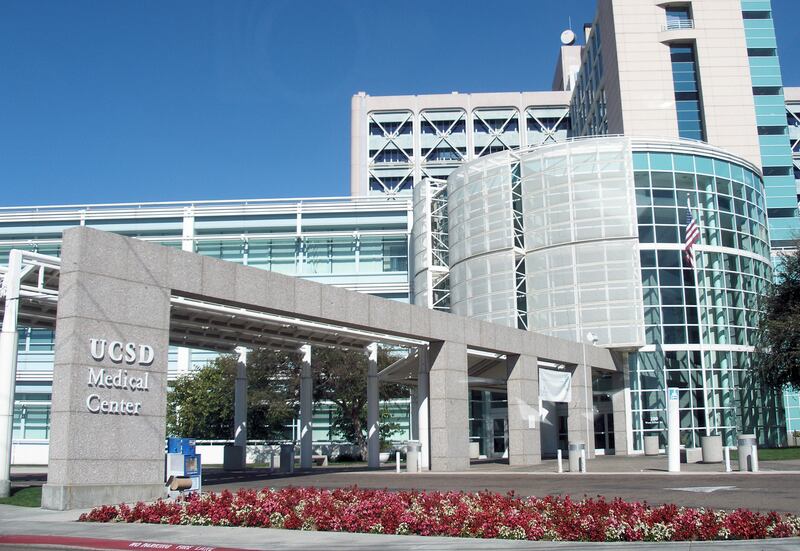
On the “Frequently Asked Questions” page for their Body Donation Program, UCSD explains that a donor’s loved ones cannot legally be compensated for their gift.
“No payment may be made in connection with a body donation,” the page reads. “This policy is in accordance with State laws, and all institutions accepting human remains must comply with it.”
However, this statement is not entirely true.
The sale of bodies, according to law
Although the National Organ Transplant Act of 1984 explicitly prohibits selling organs for transplantation, it does not prohibit academic institutions from participating in the sale of whole cadavers or body parts intended for research, education or dissection.
Under federal law, anyone can legally buy and sell human body parts without training or licensing. Body brokers can sell a donated body for $5,000-$10,000 or more, with parts being repeatedly sold and leased across state lines.
In California, the penal code prohibits the sale or transfer of human organs for transplantation, but again, this does not apply to research, education or dissection.
Once a person donates their body to “science,” few states regulate use, and families lose the ability to track what happens. Under the current regulatory environment, universities operate body donation programs where they receive bodies at no cost from grieving families, retain broad discretion over how those bodies are used and, in USC’s case, even sell them.
USC’s Anatomical Gift Program receives approximately 100 body donations each year. All participants sign a waiver granting Keck authority to use their remains for “teaching, research or such purposes as USC shall, in its sole discretion, deem advisable.” The university provides no further specification of what these additional purposes might entail.
Beyond educational and research applications, the agreement explicitly permits photographing and videotaping of remains. Donors are also asked to authorize USC to permanently retain portions of their bodies. Under this provision, these retained portions would be excluded from cremation when remains are eventually returned to families. Instead, USC may cremate the retained tissue at an unspecified future date, with no return to next of kin.
The University of California system operates on a much larger scale, receiving more than 1,000 body donations each year across its campuses — 10 times the volume of USC’s program. UCSD’s approach differs fundamentally in its treatment of families. The donation agreement explicitly states that cremated remains will not be returned under any circumstances, and donors must waive their survivors’ right to receive their remains back.
After studies are completed, donations are cremated and scattered at sea. Critically, survivors will not be notified of the time, place, or manner of disposition of the body or any part of the body. Families never learn when the university finishes its studies, when cremation occurs or where ashes are scattered.
Neither program is required by federal law to provide detailed accounting of how bodies are used, whether parts are shared with other institutions or what specific research purposes they serve.
Both body donation programs state on their FAQ pages that information regarding the use of a cadaver will not be made available.
L.A. General: Uninvolved or complicit?
L.A. General, despite housing the physical location where the courses took place, maintained that it did not associate with the Israeli military program.
“The Fresh Tissue Dissection Laboratory is a jointly funded resource designed to support the training of our physicians, faculty, and trainees,” L.A. General wrote in a statement to Annenberg Media. “The County has no agreement or role regarding any use of this laboratory by foreign military personnel.”
The hospital’s physician housestaff union, however, argued that providing the facility itself made L.A. General complicit.
“It is unacceptable that our public hospitals and institutions, which are designed to serve our most vulnerable communities, are instead engaged in the exploitation of our patients to support the training of military personnel,” a union representative wrote in a statement to Annenberg Media.
The union went on to emphasize that the Navy’s extension of its contract with the university went against the union’s core values as healthcare workers.
“It is our responsibility as medical doctors to honor the sanctity of all human life, in death as in life,” the union wrote. “We reject the collaboration between our public hospital and a foreign military at the expense of our patient population.”

‘A horrifying use of their body’
A member of Healthcare Workers for Palestine — Liza Goldman Huertas, a family medicine doctor who received her medical degree from Yale University — said she found USC’s decision to sell donated cadavers to support the military efforts of a “genocidal state” to be highly unethical.
“When we raise genocide in other contexts, somehow people can understand that, yes, you can be a doctor in the health organization of a genocidal state,” Goldman Huertas said. “We understand why a partnership with Nazi doctors … or even a partnership with German doctors during Nazi times [would have been] problematic. Ethically, there’s no other way to respond to it except to break ties.”
A genetic counselor and member of Healthcare Workers for Palestine, who requested anonymity out of fear of retaliation from their employer, took issue with the lack of information and oversight provided.
“There’s really a lack of regulation or any sort of ethical parameters on how these bodies should be used,” the genetic counselor said. “Specifically in medicine, we talk about informed consent. The whole informed consent protocol came about because of exploitation of individuals from marginalized backgrounds.”
Body donations cannot be given for a specific purpose, and relatives remain unaware of the body’s use afterward. Although Keck said donors gave “full consent for use in medical training and research,” the donors never would’ve been aware that the Israeli military would use their body.
Goldman Huertas could not imagine any individual giving that consent, had the eventual destination of the body been provided.
“The vast majority of people would find this a horrifying use of their body,” Goldman Huertas said. “You’re supposed to go to great lengths to try to figure out the way that people would want their body used, and as I said, I find it very difficult to think of anyone who would want their body used this way.”
Moving forward, Goldman Huertas said an independent inquiry into the university’s partnership with the IDF could restore the community’s trust in the Anatomic Gift Program as well as USC’s medical school.
“I would be happy to join a team of people to find out just exactly what happened,” Goldman Huertas said. “I think the first step is always truth, and then trying to figure out how to prevent it from happening again and learning some of the deeper lessons.”
Annenberg Media asked USC whether there were plans to end the program with the Israeli military after the conclusion of the current contract in September 2026. The university did not answer that question.
UCSD did not respond to requests for comment.
USC’s AGP did not respond to requests for comment.
UCSD’s BDP did not respond to requests for comment.
USC’s Institutional Biosafety Committee did not respond to requests for comment.
USC’s Department of Surgery did not respond to requests for comment.
The Israeli military declined to comment.