I grew up with the same morning routine: get up for school, brush my teeth, get dressed in an outfit that my mother picked for me the night before and have her braid my hair while I have my morning bowl of cereal. My mom spent her time coordinating my outfits to match the rest of my siblings, especially my older sister, who most people thought was my twin for the longest time because of our matching ensembles. That was until I reached the second grade. At that time my younger sister, Sarah, was a toddler and with a fifth child in our home, my mother naturally did not have the energy to attend to tasks she was doing before. This marked the beginning of ultimate freedom when it came to my closet.
The Bratz dolls were my inspiration when it came to creating the perfect outfit. I played Bratz: Rock Angels on my GameCube and fell in love with fashion and journalism. I would switch between the girls doing tasks that would help their magazine and stop at the game’s shops to try on new outfits styling each character. I dreamt of owning the dolls but we did not have the means to afford them. It wasn’t until one day this older woman dropped off a box of her niece’s toys she outgrew at my dad’s store and in the box were dozens of Bratz dolls, marking one of the best days of my life. My sister and I dressed up our Bratz while playing their games, dreaming to live like Sasha, Cloe, Yasmin and Jade. It was then that I became one of “the girls with a passion for fashion.”
So naturally, I loved accessories — anything with beads, sparkles, and fur.
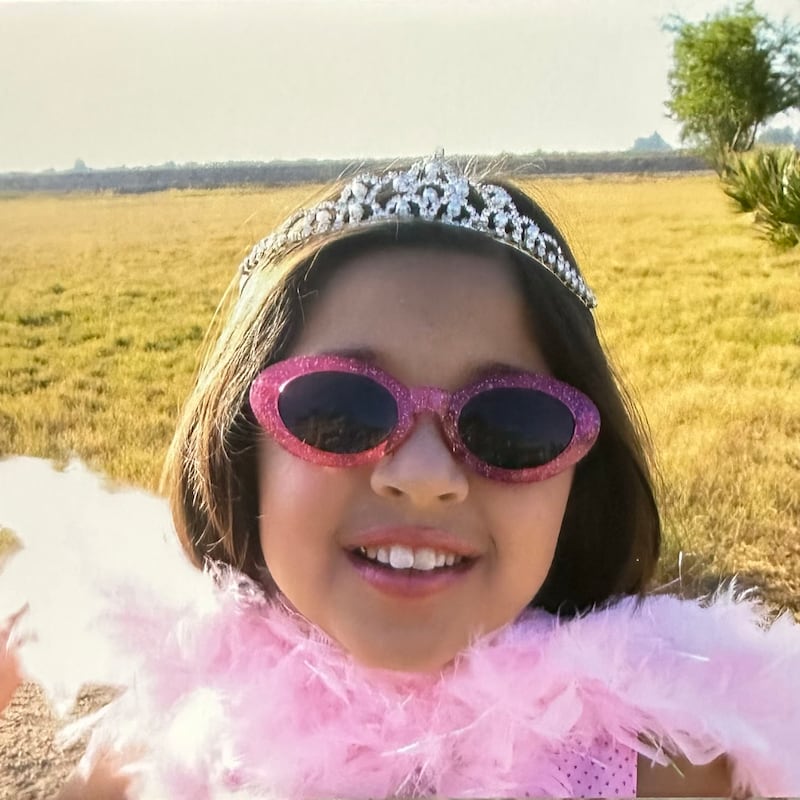
I remember brushing my own hair and putting at least three colorful clips on each side of my head as a fashion statement. When shopping at Walmart, I would pick shirts with sparkles and gems, anything that screamed maximalist. I really hit the jackpot shopping at Ross one day where I found dozens of Paul Frank shirts and begged my dad to buy them for me. He spent hundreds of dollars just to make my fashion dreams come true. For Halloween, I would wear an Afghan dress and accessorize it with a crown calling myself a princess. My daily outfits were based on my mood and I did not care if they got stained or dirty when outside.
It wasn’t until I hit puberty when my closet began to shrink.
I stopped feeling comfortable in short skirts and halter tops because of my growth spurt (aka suddenly having breasts), and felt more comfortable covering up. My father also started to place religious and cultural pressures on my older sister and me, telling us to wear long sleeves and cover our legs because we were a Muslim household and people would talk. So my closet became the same sweatshirts and recycled jeans. I would still wear my maximalist t-shirts but they were hidden under my purple sweater — which haunts me to this day and I hated the color for years. I was constantly aware of everyone else’s opinions about my body and clothing. I stopped feeling confident in the way I dressed and found myself using my clothes to disappear. It wasn’t until I was in college that my dad loosened up and said around family I had to maintain a modest look, but out in public around strangers I could wear my skirts and be more expressive with my clothing. I found this odd. How is it that I had the freedom to be open in the world but not in my own home?
When I got older I realized my father was shielding me from the judgement of our community: Afghans gossiping about each other’s outfits, life choices and how American one family was compared to another, whispers of our culture being erased. But even though I did not care for the gossip, a part of me wished I could be part of my community in some way without feeling judged for being “too American.” I felt alienated being named Ashley, and having this instant reaction from everyone assuming I was extremely Western because of it. But a part of me felt they were right; at least when it came to my closet, my culture was missing.
The issue was that I did not have many Afghan dresses growing up. The only time I would receive a dress was as a gift, and they lasted years as the dresses are very large and are to be tied at the waist, so they tend to fit most ages. It wasn’t until I reached my twenties that I wanted to have new Afghan dresses. I began to show my mom photos she would send to her aunt back home who would have the dresses created by a tailor in Kabul and shipped to me.
I always saw Afghan dresses as an extravagant outfit that I could never wear casually, which is why I only allowed myself to wear it as a costume growing up to feel like a princess. The dresses are covered in small mirrors, coins, beads and embroidered patterns — they are every maximalist’s dream. But it was difficult to convince myself to spend the money because I felt I had no place to wear them. The dresses I did have were tucked at the back of my closet and slowly, like Afghanistan’s current state, my cultural identity began to fade — in turn, proving my community right.
A few days ago I scrolled through my camera roll and reflected on a photo I took when visiting Afghanistan last year. I have only been to Afghanistan once before, when I was a kid in 2010. When I had arrived this time they almost did not let me in because the Taliban in charge asked me to show proof that I was Afghan. I did not have a tourist visa, but because I was with my parents, we figured entering back into their homeland shouldn’t be an issue. We had to call my brother who was back in the states to send over a photo of my birth certificate so they could match it to my parents passports and confirm that this is indeed my motherland. After answering a few of their questions they finally granted us permission to step foot into the country’s capital, Kabul.
I felt a bit strange being back, like a fever dream from the first time I visited. I was a bit skeptical to visit because of the new Taliban rule and warnings of women and girls being prone to danger with a loss of their rights — including limited access to public spaces. As we drove through the streets of Kabul there were multiple checkpoints where the Taliban sat with their guns asking everyone who they were and where they were going. Here no girls are allowed to travel in a car alone without a man accompanying them, so one of my male cousins always came with us when we decided to explore the city. I also noticed how no girls were wearing colorful cultural clothing. Most girls wore neutral colored clothing that covered them from head to toe. No maximalist dresses were to be seen on the street. In fact, the only time I did see the Gand Afghanis, the vibrant maximalist dresses, was while roaming Leseh Maryam, the shops in Kabul.
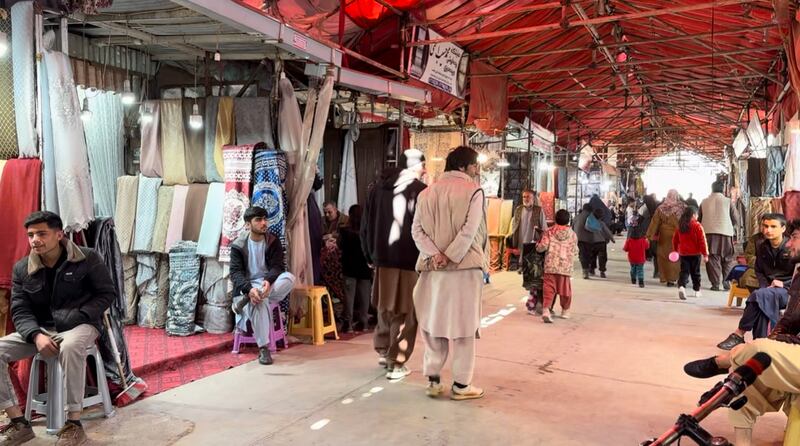
It seemed that even in the country the extravagant Afghan dresses came from, they were also reserved only for special occasions.
Luckily I had come here for a special occasion. Two of my uncles were getting married so I was on my way to a hidden beauty salon in Kabul and had taken my suitcase, which had my dress I’d wear to the wedding inside. My cousin guiding me through the gate toted along a bag full of our accessories and her outfit. The women inside had stopped me as soon as I entered the gate and asked us to open our bags to inspect them, fearing that the Taliban found out about their secret business and potentially had placed a bomb inside our luggage to attack them. But there were no weapons in my suitcase; all I brought was my dress.

With the new Taliban rule, girls were also not allowed to beautify themselves in public spaces. As a result, there were no hair, nail, or makeup salons — not even a single public woman’s gym existed anymore — at least not in spaces known to the Taliban. I never thought wearing a shiny Afghan dress while getting my hair and makeup done would make me a criminal if caught.
When we were in the clear with our luggage we walked towards the building. There was a small garden in the front and colorful mosaics lined the home. A girl was standing at the front with a notepad in her hand asking how many of us there were and what services we wanted. The home had three rooms: one for bridal makeup and hair, the other two split for hair and makeup reserved for regular wedding guests. The girls inside were loud and energetic, popping in and out of the home to check on the guests waiting for their turn.
Even though I felt a bit shy conversing because my Farsi isn’t as fluent, they still cracked jokes with me and asked about the details of how I’d like my hair and makeup to look like, trying their best to achieve my vision. They did not make me feel awkward or bad for not being fluent in my speech either. All the propaganda of not being Afghan enough that my relatives in the states tried to feed into my thoughts did not matter at that moment because everyone in the salon made me feel like we were all the same — just girls who wanted to feel beautiful.
After getting my hair and makeup done there, we were told to hide when we were back in the car, so they would not be suspicious seeing a group of women walking out of the same home dolled up tracking it back to their business. Even after the wedding I was warned by everyone not to step outside unless I had a chadar, a large head covering, to hide my outfit and hair because there were Taliban outside the wedding hall.
I realized my own relationship with hiding in clothes at home and public wasn’t just a me thing. Even while in Afghanistan, the dress code was constantly policed and girls were constantly hiding who they truly were.
I was so tired of hiding in my clothes, and it seemed to be the same feeling no matter where I went: fear others’ judgment, follow the rules to stay safe and hide.
Now that I live on my own with no one to tell me what I can and can’t wear, I’ve begun to notice some things. Days when I had my makeup and hair done people would smile and tell me to “have a great day.” On the contrary, when I was in my sweatpants and unbrushed hair, I received no looks; it was like I did not exist. When I would wear my cultural clothes people would stare, but in a way where it made me feel like I was on display and they would always ask “what’s the occasion?”. I understood that maybe they have never seen Afghan clothes but it made me uncomfortable. I just wanted to wear an outfit tied to my identity without feeling like it had to be tied to a reason.
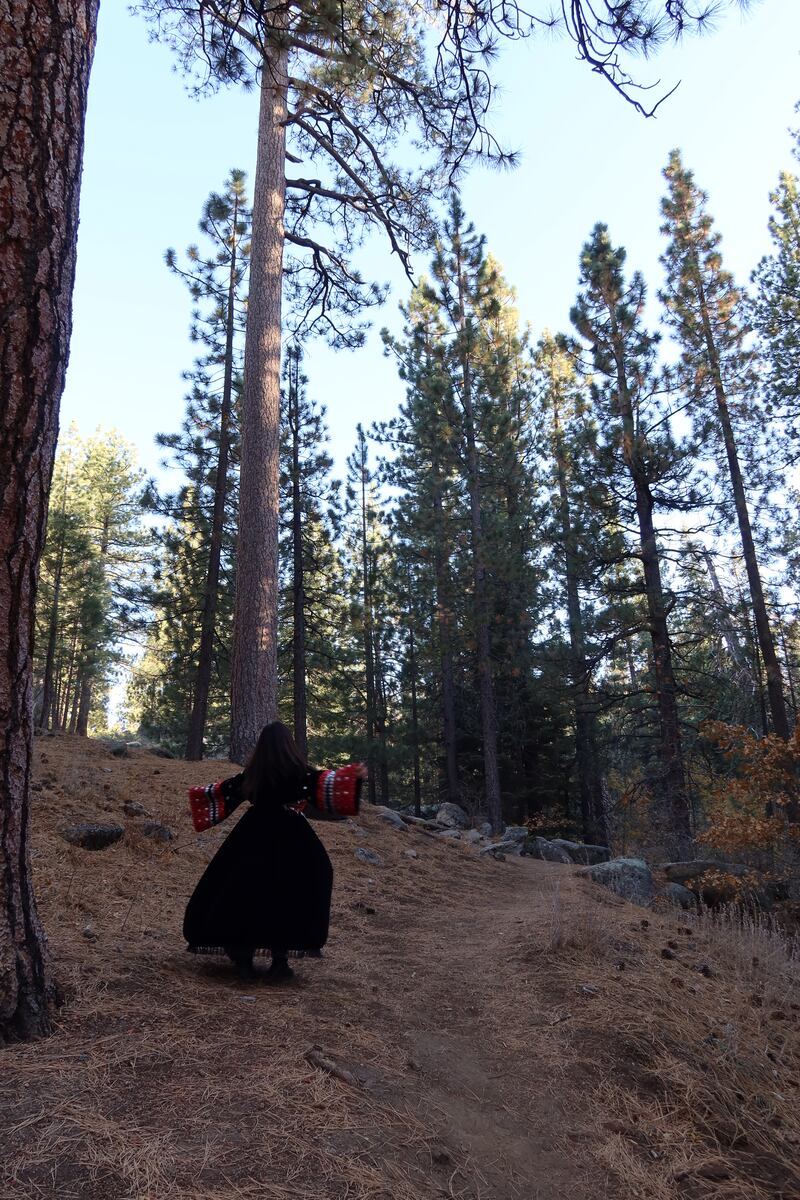
One day, after I returned back from my trip, I decided to escape the city and take my most minimalist Afghan dress I owned. It was just me, the mountains and the earth. I closed my eyes wearing my Afghan and took a deep breath. I opened my eyes to no stares, no questions, no judgement, no one telling me to hide. I felt free in my clothing. I wondered if this is how my ancestors felt back home existing in our cultural clothing. I wondered if Afghan girls back home could ever feel this way again. Just existing.