
The very first scene of the film opens with the two young protagonists sitting in the back of a truck with construction workers at the break of dawn, reading eagerly from a book with a flashlight. They got off at a railway station called Mapur, somewhere in rural north India. At the station, there were thousands of aspiring students sitting and studying, waiting for the train. They were all going to urban centres to sit for government examinations.
The camera lingers on the platform long enough for hierarchies to reveal themselves without dialogue. Bodies arranged by habit rather than instruction, some seated comfortably on benches, others standing, or sitting in stairs and getting chased away by the police. The station feels public, but access to comfort within it is uneven.
Parallel with stunning cinematography, this immediately mirrors marginalization as an unspoken system: no one announces it, yet everyone seems to know their place.
Filled with nuanced visual sequences, the story revolves around two friends chasing a government job of police, to working as migrant laborers in a textile mill, to enduring the cruelties of a pandemic – and then remembering that home is not merely a place, but a feeling we carry within ourselves.
Stemming from the idea of connection as resistance, the film dwells on the fundamental emotion of friendship – the warmth and humanity of it.
Homebound is a film inspired by Basharat Peer’s New York Times article “A Friendship, a Pandemic and A Death Beside the Highway”. The movie follows the journey of two friends Chandan Kumar and Mohammed Shoaib – one Dalit and the other Muslim – from the perspective of a country that has systematically marginalized those communities.
While the struggle of being a Muslim and facing Islamophobia is relevant around the world, being Dalit is something unique to India owing to the Hindu caste system.
Homebound was India’s official entry for the 98th Academy Awards, and now it has been included in the shortlist for Best International Feature Film.
The filmmaker Neeraj Ghaywan was at the home of the Academy Awards, in Los Angeles, in mid-November.
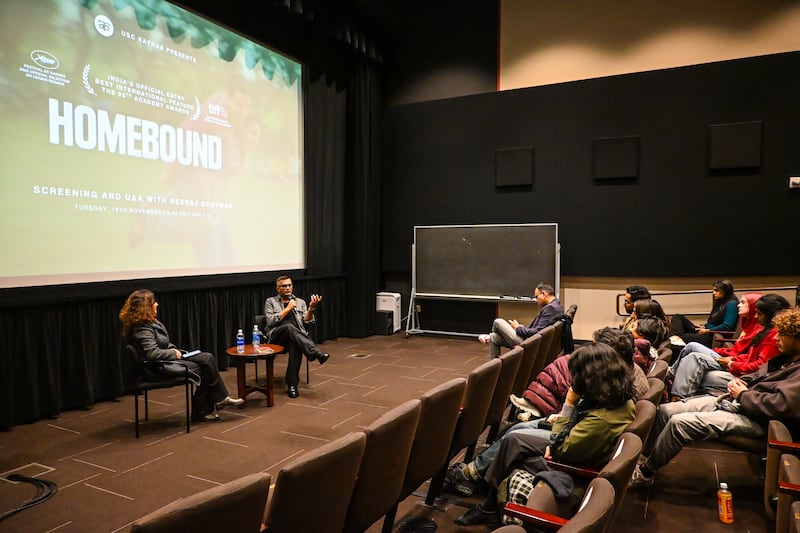
USC Kathaa, the South Asian film club at USC School of Cinematic Arts organized a screening of the film. It was followed by an in-person discussion with Ghaywan himself.

Vrinda Das, Cofounder of USC Kathaa said, “The goal was to create a space where we can really bring South Asian artists, people that are not really looked at in the mainstream, and celebrate them, and create space for that.”
Aador Bose Roy, a member of USC Kathaa said, “That’s the authentic Indian experience. It’s not what people stereotype Bollywood to be. It’s not all song and dance. This is truly what India is. It’s being represented by its own people.”

Ghaywan reached the USC building an hour before the film’s ending. That was the time he set aside for a one-on-one interview with the journalists and USC Kathaa team, inside the Cinematic Arts faculty room. It was pleasant to witness his humble and collaborative nature. Calm and poised, he sat down and asked for a glass of water first, then began with the interview.

For people growing up watching Indian films, something that needed acknowledgement was the support of Dharma Productions for this film. The particular production has been built on elite, urban, upper-caste and class, glossy storytelling. During a time when nepotism controversies sparked debates around insiders versus outsiders in the Indian film industry, Dharma Productions supporting independent films like Homebound is a breath of fresh air.
Karan Johar of Dharma Productions is not just a neutral cultural figure; he is one of the most powerful producers in Hindi cinema. When someone with that kind of institutional power backs films about caste or social marginalization, the gesture will inevitably be scrutinized and might get labelled as “wokeism”, but Ghaywan had a prompt response to that.
“I think even if it is out of wokeness, I’m fine. It’s about time, because we haven’t had any major influx of films, especially, marginalized people talking about their own communities.”, said Ghaywan.
He shared that he thinks Homebound could be a milestone, and it is not just about the film but the dynamics of it. Not only the backing of Dharma Productions, but also celebrities like Vishal Jethwa, Ishaan Khatter, and Jahnvi Kapoor headlining it is a big deal. He feels that this is sort of a churn, because it is beyond the stereotypical independent filmmaking model.
“It is independent-spirited, but at least it’s still studio-led. So there is this hybrid model, and this has not happened before. I feel this could lead to a lot of changes, like, maybe many studios will open up to independent films,” Ghaywan said.
Ten minutes before the end of the film screening, Ghaywan wanted to be inside the theater. Walking from the faculty room to the theater, Ghaywan stopped and admired the film posters hanging on the wall. He posed in front of the film poster of Federico Fellini’s 8½.
Ghaywan entered the theater a few minutes before the film ended. Standing in the darkness at the extreme backside corner, he quietly observed attendees leaving when the credits scene rolled out. Till the lights turned on, nobody knew that the silhouette near the door was actually the celebrated filmmaker himself.
As the light turned on, Professor Priya Jaikumar welcomed Ghaywan on the stage and joined in a Q&A session.

Ghaywan addressed the starkness of how much of an inequitable culture prevails in Hindi cinema. He said that he wants to change how most stories that have been spoken about marginalized communities – all have been made by people from the privileged communities and using privileged people.
“In all of history of Hindi cinema, I am the first acknowledged Dalit, in front and behind the camera,” Ghaywan said.
Ghaywan shared how during his heyday, he would hide his identity due to the fear of abandonment from his peers — something that he portrayed through Chandan’s character in Homebound as well. It was tiring to always watch over his own back and constantly feel like walking on eggshells – because what if somebody spots the truth, getting him abandoned by the whole social circle, just because of his caste. It took Ghaywan time to embrace his identity and shed all the fears.
“Even I used to not carry my last name for a long time, but now I just carry my last name, because I think I realized over the period of time, also how Chandan is, that I don’t have to carry that shame. The shame has to shift to the oppressor,” Ghaywan said.
Going over the process about filmmaking, Ghaywan made his cast read B.R. Ambedkar’s Annihilation of Caste to deeply understand the lived realities of caste, privilege, and marginalized lives in rural India. They also did a three month workshop just on language, along with other immersion exercises like travelling across rural India in plain clothes.
“Dialect and language are very important, because I also come from a very anthropological approach to cinema”, Ghaywan said.
A decade after his first feature film Masaan, Ghaywan compared both the movies – which despite having core similarities rooted in casteism, also contains noteworthy differences. Ghaywan said, “Masaan was dealing with the interiority of feelings, more existential, whereas Homebound is more political, as there is a rage of wanting to be seen and heard – and it all comes from the text.”
Stories by Ghaywan always focuses on layers of intersectionality – casteism and Islamophobia might be the foundational themes of the movie – but he also portrays gender issues, as we can see the protagonist Chandan is allowed to go get a college education, but his sister, who actually wants to study further, is compelled to work in the local school, because the family can only afford the education of one child.
On the topic of intersectionality, Ghaywan reminisced about his 2021 short film Geeli Pucchi – where the protagonists were two women in love – one from upper Brahmin caste and the other from the lower Dalit caste. He was particular about crying and showing emotions in his films, so he was discussing with one of the actors, Konkona Sen Sharma, about how every cry communicates a certain emotion. By the end of the conversation, she showed him three different ways of crying.
“Some actors blow your mind that way!” Ghaywan said.
Ghaywan remarked about a particular scene towards the end of Homebound, where Chandan’s mother (played by Shalini Vatsa) cried in pain, leaving everyone in the set in a trance, with how real her acting felt. He suggested that filmmaking is undoubtedly toilsome, but it is the impeccable actors who breathe life into his imagination and the characters.
Finally, the most talked about aspect of the film – Martin Scorsese mentored the film from script to edit as an Executive Producer, giving his name, time and effort. Ghaywan noted how initially Scorsese did not know what was Scheduled Caste (SC) or Scheduled Tribe (ST) – how casteism worked in India – but he has always been eager to learn.
“Martin didn’t understand SC/ST, but he asked me that question, he made me explain it. So I think people may not understand right now, but somebody has got to start it.”, Ghaywan said.
Scorsese recently hosted a discussion with Ghaywan in New York. Scorsese shared that he knew of Indian cinema from Satyajit Ray’s 1955 Bengali film Pather Panchali.
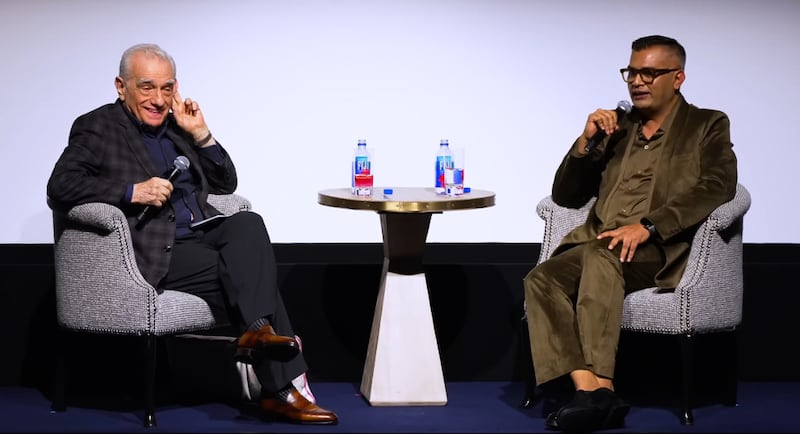
In the discussion, the effects of casteism, India’s regressive agrarian economy that further marginalizes the Dalits and the obsession with underpaid government jobs – were all touched upon during this discussion at a global stage. Scorsese said he did not know much about caste issues and the problems attached with it; but after reading the script, he started to learn more. He also praised the cinematography which gave life to the script in a stunning manner.
Ghaywan connected the untouchability factor attached to casteism with the universal “social distancing” that happened during Covid. He added that Dalits were kept at a social distance for over 2,000 years because the privileged society discarded them off as infected – just by the virtue of their birth status.
“The complexity of the political and the social world that you’re in, in India, if we don’t understand it completely, they come across – and it comes across that you care about them,” Scorsese said to Ghaywan during the interview.
Homebound is a quiet film on the surface, but beneath its unadorned realism lies a searing inquiry into the social architecture of caste in contemporary India. Rather than staging dramatic confrontations or moral sermons, the film embeds caste into the everyday rhythms of its characters’ lives— it reveals how inequality persists through overt discrimination and habits, silences, and inherited ways of seeing the world.
“My film is actually not anti-establishment. It’s pro-humanity,” Ghaywan said.
By reaching Oscar voters and global audiences, Homebound has broadened the international understanding of India – away from Bollywood glamor towards a more complex, honest depiction of caste, class, religion, inequality, ambition, pain, and resilience. It shows that Indian stories are not monolithic; they are messy, nuanced and real. This is especially valuable at a time when global film platforms often expect authenticity, realism, and social relevance. Homebound ticks those boxes in a way few mainstream Bollywood films attempt.
The success of Homebound, its festival acclaim may encourage other filmmakers to tell uncomfortable stories, not through the lens of suffering only, but through daily life experiences. For directors and creators, this means more space for realism, social critique, and courage. If those stories can reach Cannes, Toronto, Oscars, mainstream success, then Indian cinema might slowly evolve towards further honest social reflection.
This recognition is a monumental breakthrough that helps create a film ecosystem where artistic risk and meaningful representation are rewarded.
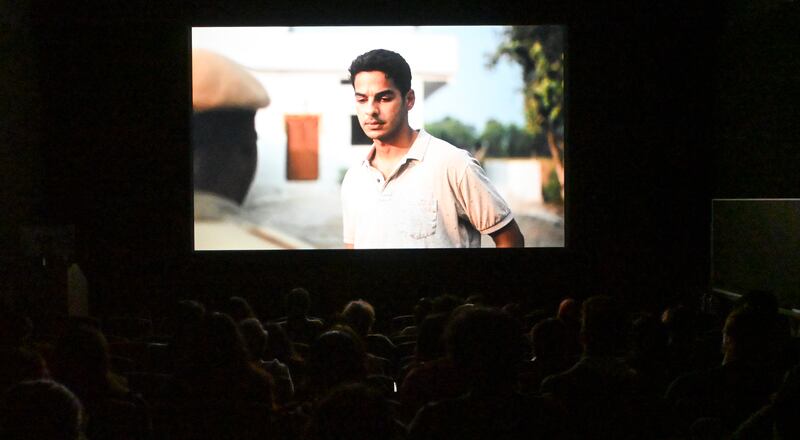
At its heart, the film is about the friendship between Shoaib and Chandan — across caste and religious divides. That bond becomes a powerful lens to explore how people from marginalized communities seek dignity, joy, respect, and belonging in a society that often denies them that through systematic oppression. At the bottomline, it is the human bonds of warmth that helps and heals with everything.
“We are allowed to disagree with people, even if people who are ideologically different from us, or different from our worldview or the way we look, or whatever, but still, we cannot deny the humanity that exists between us,” Ghaywan said.