
The Black Boy Art Show didn’t feel like a quiet gallery opening. It was alive. Music pulsed through the space. People crowded around paintings, clothing racks, and jewelry tables. The booths were filled with everything from bold portraits to abstract pieces. It was part art fair, part block party, and entirely a celebration of Black creativity.

Since 2020, the Black Boy Art Show has traveled from city to city, showing work by Black male artists who are often overlooked in mainstream galleries. In Los Angeles, the show was more than a marketplace. It was a gathering place for creatives, collectors, and supporters. It declared that Black art deserves its own stage, and the community proved it will always show up.

Artists came from across the U.S. to share their work, but one who stood out was Brandon Brown. He used mirrors to frame his paintings, allowing each piece to reflect both color and the faces of those who leaned in to see. Brown admitted he was hesitant to join at first. After looking up the event, he noticed that much of the advertising leaned heavily on AI visuals and began to question what was real.

“I use ChatGPT for questions — it’s helpful,” he said. “But if a platform is promoting real visual artists, it’s probably best not to overuse it.” I reached out to the organizers of the Black Boy Art Show for comment about their use of AI-generated visuals in promotional materials, but did not receive a response.
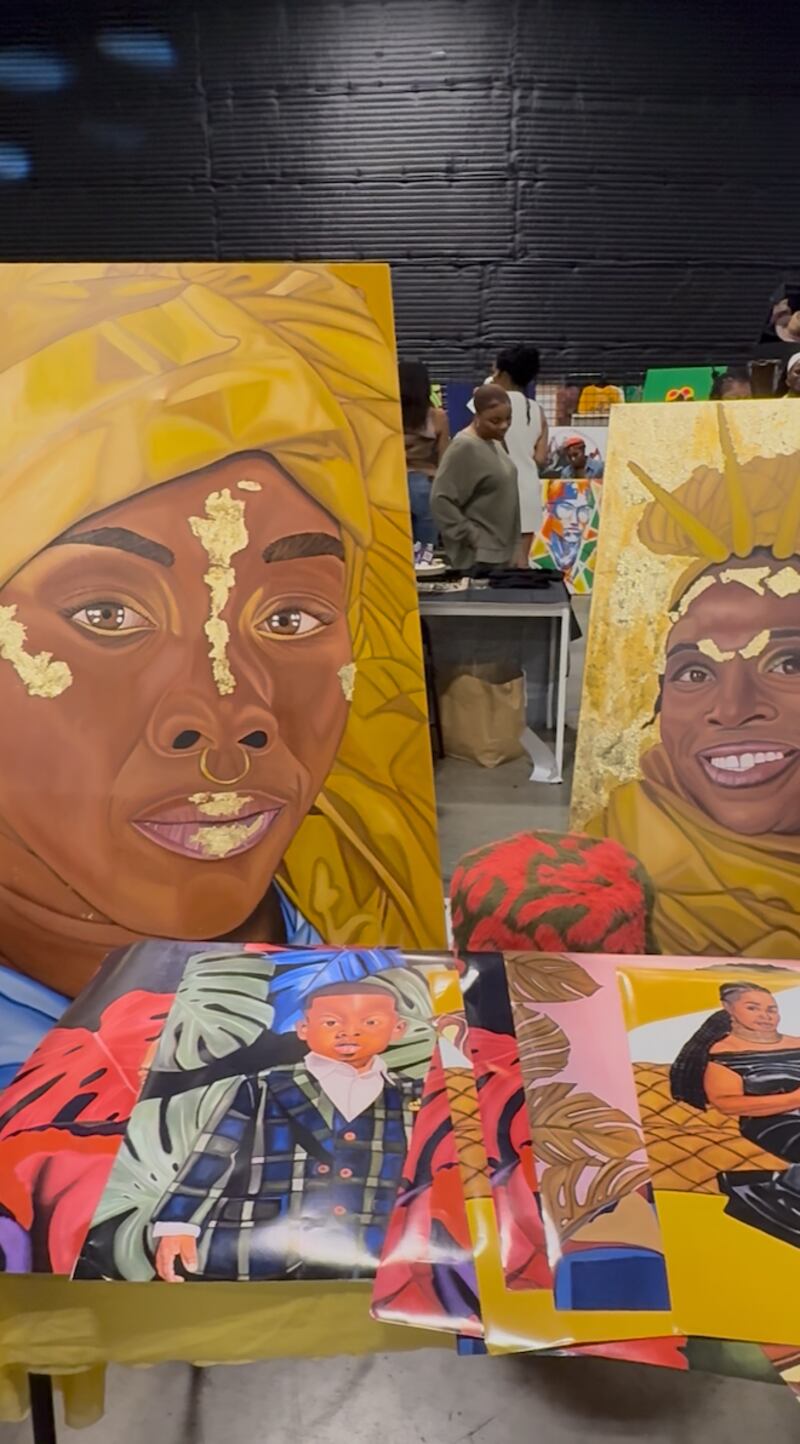
Despite his doubts, Brown decided to take the leap. He reached out to artists who had previously participated, and every single one shared positive feedback about their experience. Encouraged, he paid $450 for a booth and began preparing new work for the show.
Even with that concern in mind, Brown poured himself into the event. Though he had months to prepare for the show, he admits he had an artistic block and created all of the pieces he featured just two weeks before the show opened. He built displays using mirrors, tennis rackets, and vanities. His goal was for audiences to see themselves in his art. They did. Before doors opened at three in the afternoon, a line already wrapped around the block. One of his customers even flew in from Washington, D.C., just to buy his work. By the end of the night, he had made five figures and sold ninety percent of his inventory. For him, the night showed that artists shouldn’t wait to be discovered but should tell their own stories and introduce themselves.
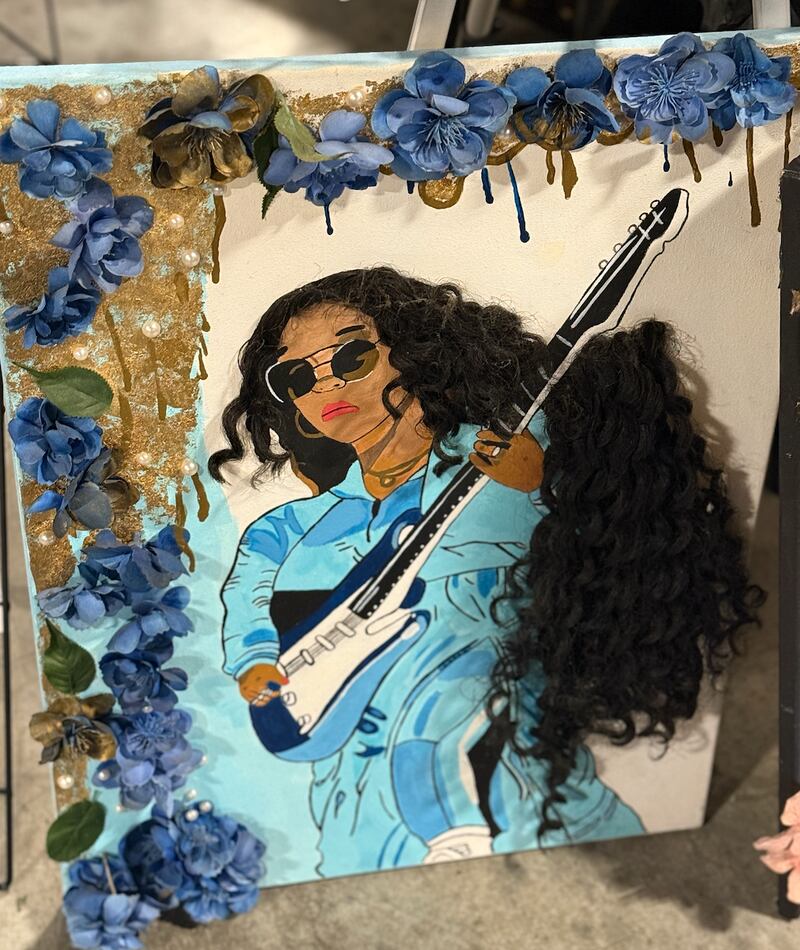
The event carried a mix of joy and curiosity. The crowd spanned generations. Children raced between booths, adults searched for their next centerpiece, and elders looked proudly at the creativity on display. Each artist stood ready to explain their work no matter who stopped by their booth. I arrived around 6 p.m.,the midway point of the show, and many artists had already sold out of their prints, fashion pieces, and fragrances. Still, they were eager to share business cards, Instagram handles, and website links with anyone interested in their work.
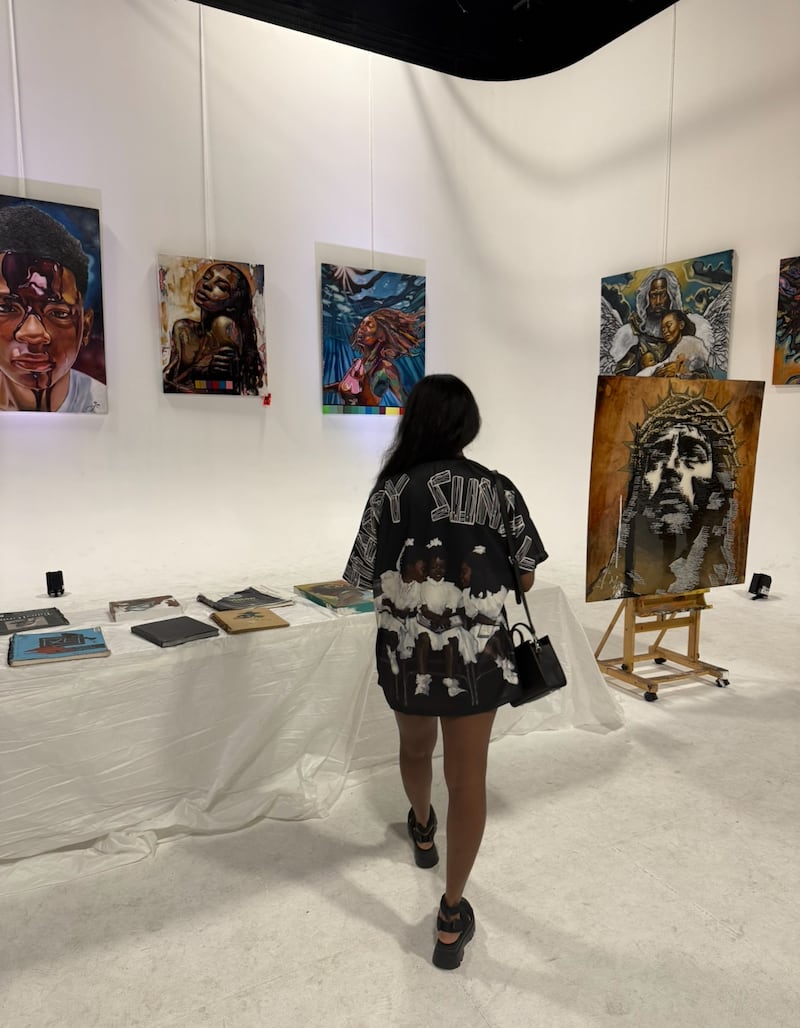
Not everything worked as well as the art itself. The event was smaller than the advertising suggested, and I expected more booths. The music, while lively, was sometimes so loud it drowned out the artists trying to share the stories behind their work. And while it was powerful to hear from creators directly, I wished there had been a pamphlet listing each artist’s name, background, and contact information. None of this ruined the night, but the show could have taken a few steps to be even stronger.
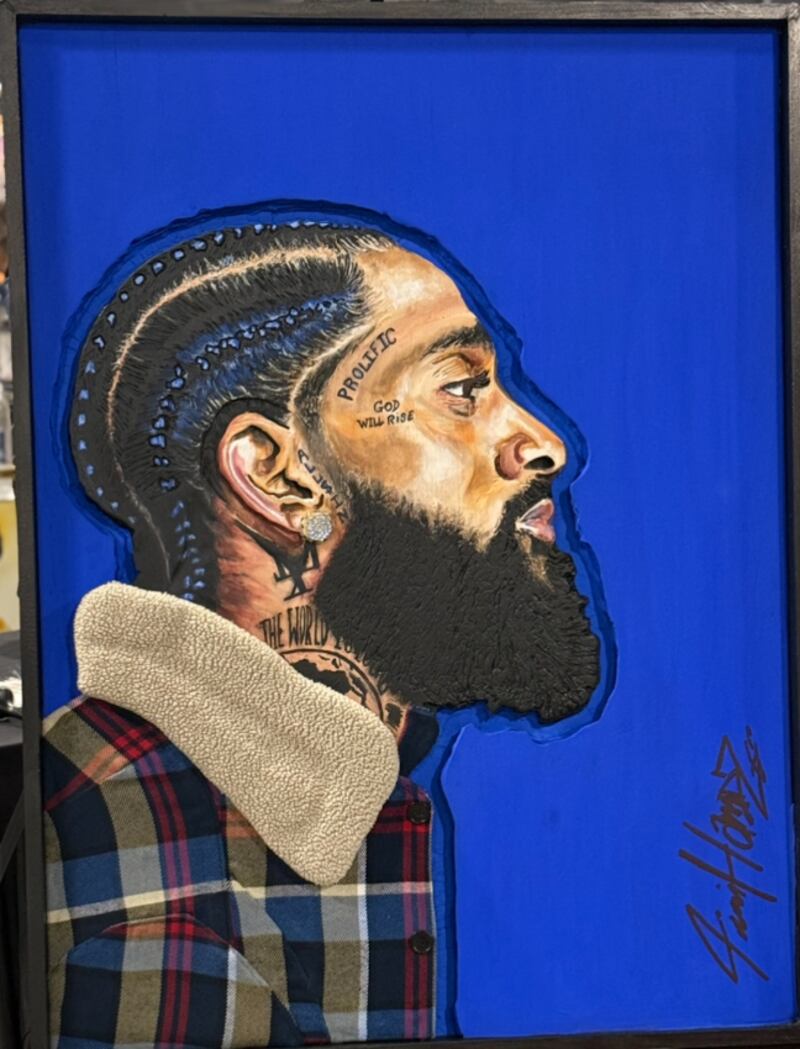
Still, one interactive piece stood out, not only to me but to the crowd gathered around it. I’d almost walked right past it until the artist’s mother grabbed my hand and pulled me over to see her son’s work. I didn’t get the chance to meet him, but the art spoke for itself.
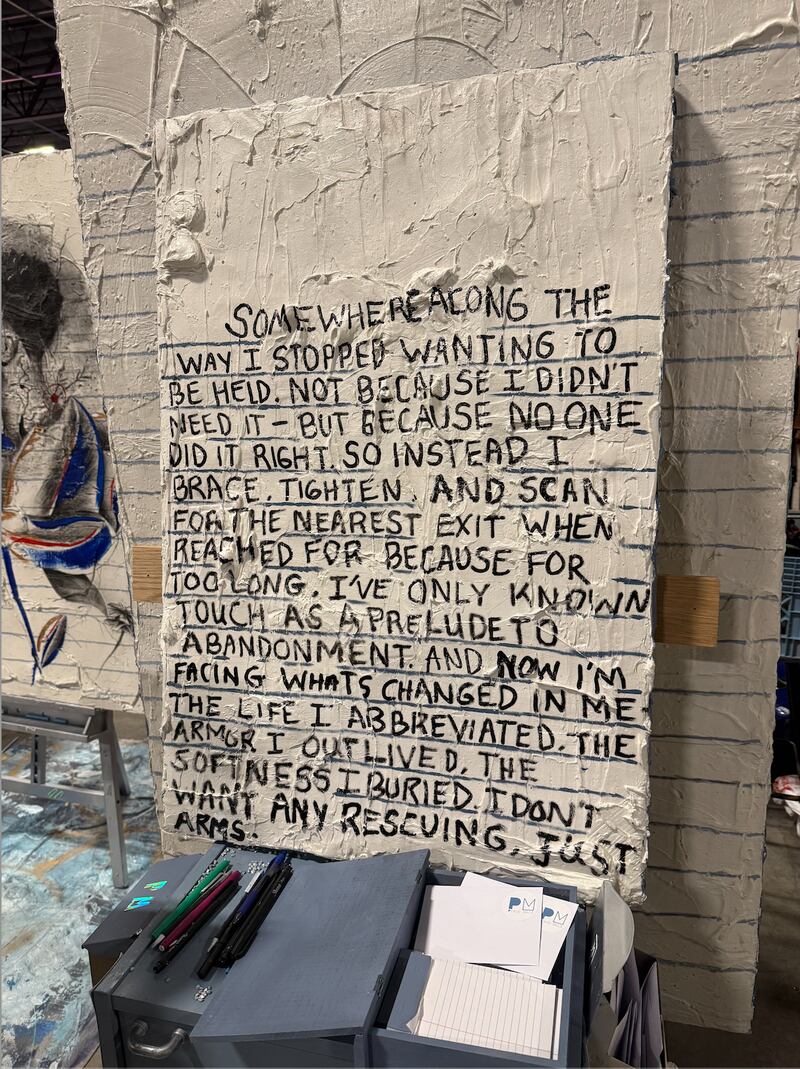
The piece featured text about what it means to want touch, to resist it, and to carry both softness and armor at the same time. The words described how the desire to be held can fade after too many experiences of touch tied to abandonment. It read:
“Somewhere along the way I stopped wanting to be held. Not because I didn’t need it, but because no one did it right. So instead I brace, tighten, and scan for the nearest exit when reached for, because for too long, I’ve only known touch as a prelude to abandonment. And now I’m facing what’s changed in me: the life I abbreviated, the armor I outlived, the softness I buried. I don’t want any rescuing, just arms.”
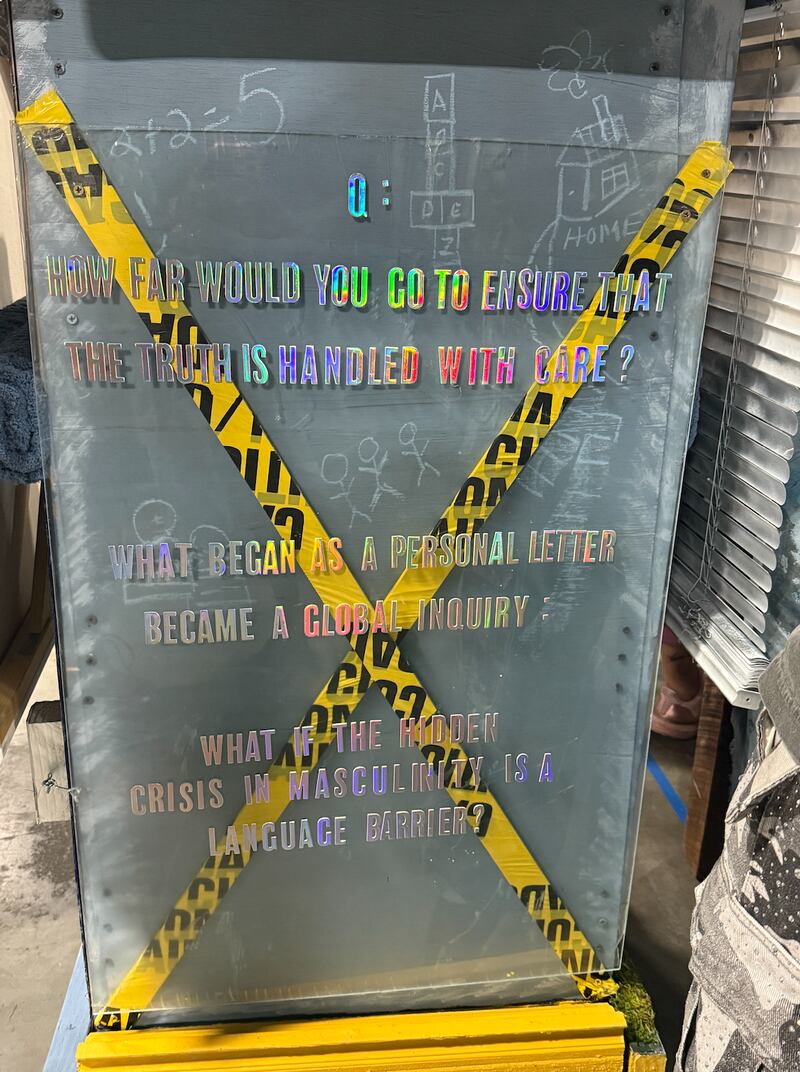
It wasn’t just art. It was a conversation starter about vulnerability, protection, and Black masculinity. Visitors were invited to respond by writing letters to Black men and placing them into a box beside the piece.
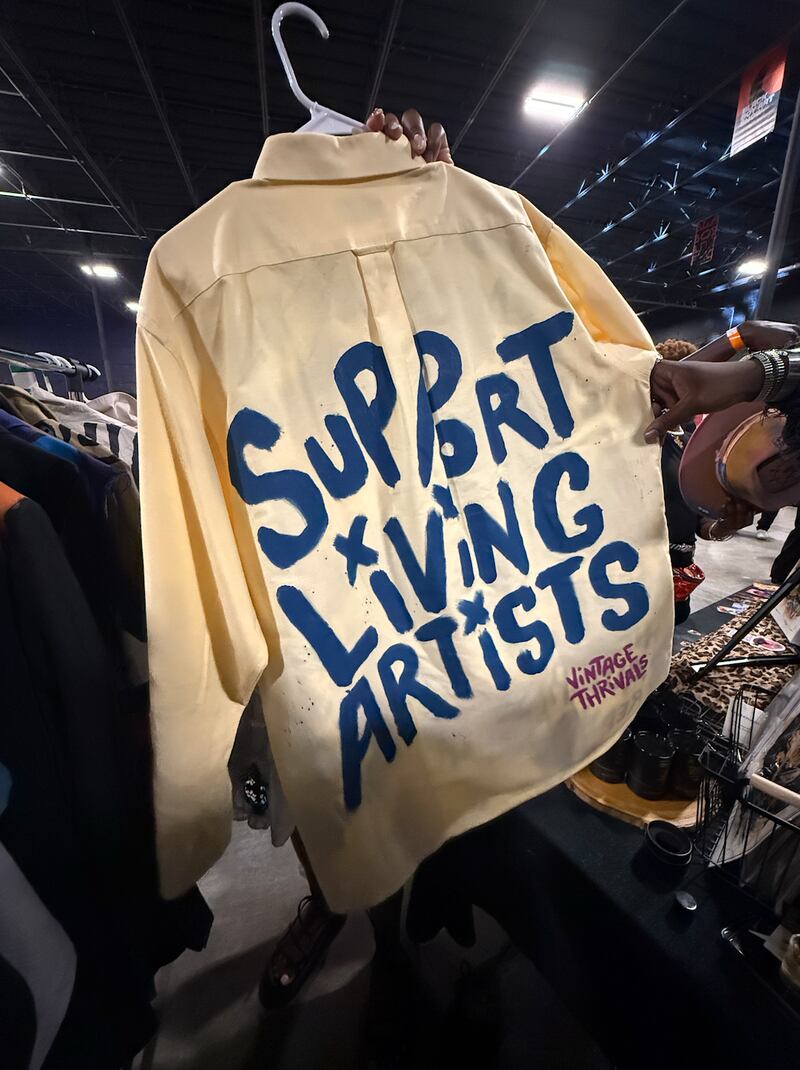
Walking out, I felt that truth. The show was not only about buying art. It was about seeing Black men as artists first, and about giving the community a mirror to see itself.