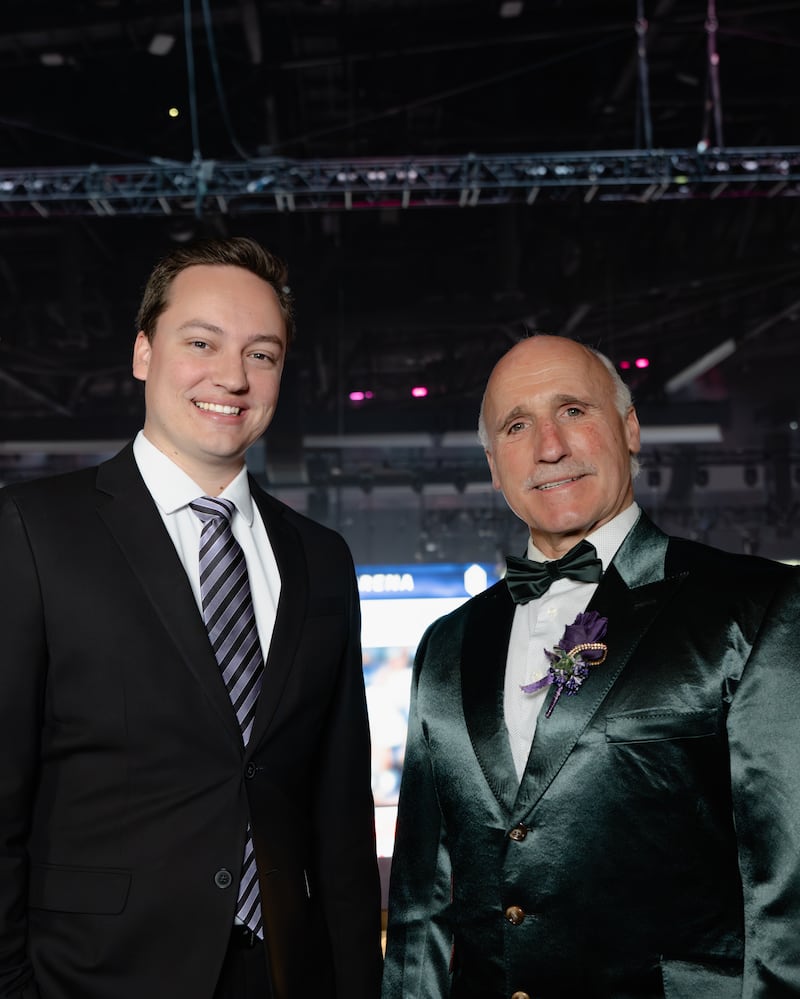
For more than 50 years, the Los Angeles Kings’ broadcasts have been anchored by voices that became synonymous with the team itself.
Bob Miller, the franchise’s voice from 1973 to 2017, called over 3,300 games, chronicling the highs, lows, and historic moments of Kings hockey. His storytelling helped introduce the sport to Southern California and made the team’s triumphs and heartbreaks feel personal to generations of fans.
Spanning four decades, across rebuilding years and championships, Los Angeles Kings fans tuned in to hear the steady, unmistakable cadence of Nick Nickson.
Nickson joined the organization in 1981 and gradually became the full-time radio play-by-play voice in 1990, providing continuity during decades of change. Like Miller, Nickson brought precision, energy and a deep understanding of the game to every broadcast, narrating two Stanley Cup-winning runs and countless memorable moments.
Nickson says now that reliability came from one core principle.
“I always had the confidence to believe that if I was prepared every night for every broadcast and did as much as I could to make it a good broadcast, then I felt that it was going to be a good show,” Nickson said.
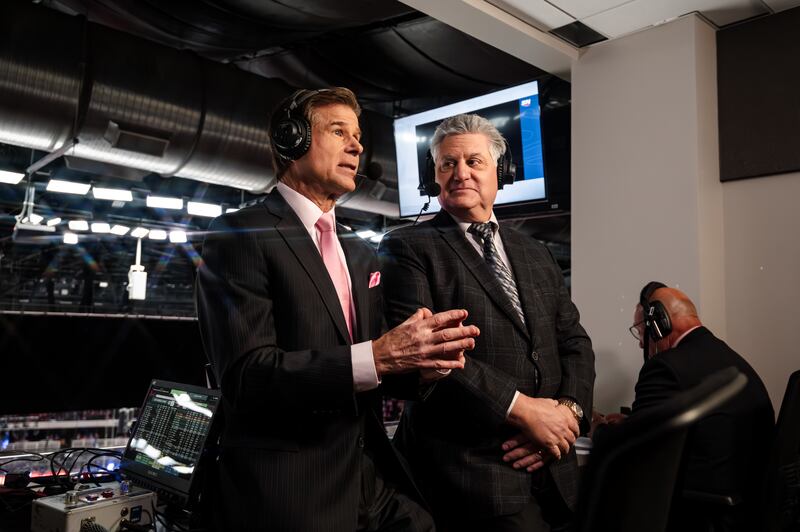
So, when the time came for Nickson to step away, the question for the organization wasn’t just logistical.
It was cultural.
Who would follow a Hall of Famer behind the mic? And how would that transition happen without losing what made Kings broadcasts unique?
The answer, unexpectedly, began during one of the strangest stretches in hockey history.
Nickson’s first encounter with play-by-play announcer Josh Schaefer happened at the team’s practice facility in El Segundo during the pandemic season. The Kings’ AHL affiliate, the Ontario Reign, was playing in empty buildings.
The Reign were short-staffed, juggling remote broadcasts amid slashed operations.
“It was kind of all hands on deck, and you did what you had to do to get by,” said Darren Abbott, President of LA Kings Affiliates and SVP of Revenue.
Into that environment walked Schaefer, a recent Arizona State graduate, prepared, eager and unconnected to anyone in the organization.
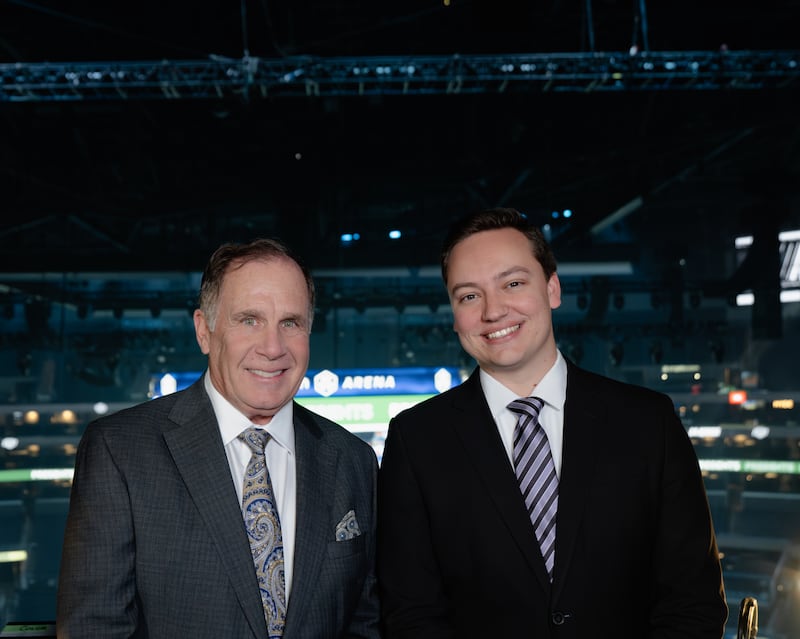
“He didn’t know anyone,” Abbott said. “He came well prepared and had fun on the air and did a great job. And look where he is now. It’s a great story.”
What Abbott didn’t know then was that this moment — the organization’s scramble to keep games on the air — would also introduce the voice who might help bridge one broadcasting era to the next.
Even early on, Nickson noticed Schaefer’s desire to grow.
“To his credit, he was seeking out the advice of others,” Nickson said. “He did send me some tapes of his games, and I would critique them.”
His critiques emphasized fundamentals.
“If you’re going to be good at radio, you’ve got to be very descriptive,” Nickson said. “Tell me who’s got the puck but also tell me where the puck is on the ice.”
That institutional perspective and the standards Nickson built games around are now part of what the franchise hopes to carry forward. The Kings’ broadcast lineage isn’t just a list of names. It’s a style, a philosophy and a sound marked by the unique impact of Hall of Fame talent.
Schaefer always had been drawn to call games, doing play-by-play in his head when he played basketball in his driveway.
“I have gotten a lot of practice doing this,” Schaefer said. “It’s something that I was always very dedicated to.”
As Schaefer continued calling games, Nickson saw steady improvement.
“You could almost see the progression,” Nickson said. “From game 50 to game 100 to game 200 … you develop a rhythm.”
Abbott was seeing that same progression. When the pandemic ended, the Reign made an important decision: elevate Schaefer to full-time play-by-play.
“We realized he was really talented,” Abbott said.
Schaefer grew up in the San Fernando Valley, listening to Nickson and Miller. Nickson believes that background gives Schaefer a rare sense of continuity.
“This is a first for the Kings. They’ve got a homegrown product as their broadcaster,” Nickson said. “He grew up listening to mostly myself and Bob [Miller], so he has an understanding for the history of the game.”
Abbott sees that connection paying off with fans as well.
“I think it’s awesome,” he said. “He grew up a fan of the Kings … and the broadcast itself.”
The Kings have a unique legacy: two Hall of Fame broadcasters in Nickson and Miller. Nickson called more than 3,500 games and won the Foster Hewitt Memorial Award in 2015, given annually to a broadcaster who has made an outstanding contribution to hockey.
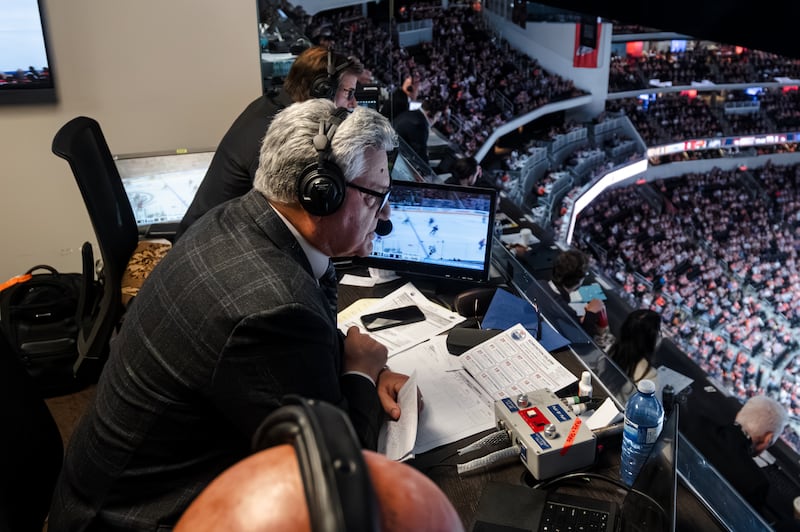
Nickson, now retired, looks back on his time with gratitude.
“I’ve said this before — I’ve had two families. My family, the Nickson family, and the Kings family,” he said. “I’d like to think I helped grow the game. It’s something I thoroughly enjoyed.”
The Kings’ broadcast history is also a story of evolution. Over the years, the team has adapted to new formats, from traditional radio to streaming and simulcast platforms, while keeping the essence of its storytelling intact. These shifts mirror broader trends in sports media, but the underlying goal remains the same: connect fans to the game, convey its drama and honor the team’s identity.
As the organization moves into a new era, the challenge is balancing that rich legacy with the demands of modern broadcasting, ensuring that the next generation of voices carries the same clarity, passion and authenticity.
Abbott, meanwhile, sees Schaefer as a symbol of what development and persistence can create.
“He’s sort of the model of perseverance,” he said. “He worked hard to get to where he is, and he should be very proud of that.”
And now, with the building shaking during a big Kings moment, Schaefer is the one describing it.
Or, as Schaefer likes to say: “When the building’s rocking, there’s nothing like it.”