
Returning from a trip from Japan, on Dec. 3 President Donald Trump spoke with reporters about his fascination with the micro kei cars he saw abroad. He described these cars as “really cute” and talked about wanting to bring them to America claiming they would provide an affordable option for American buyers.
“If you go to Japan … they have a very small car, sorta like the Beetle used to be” President Trump said. “I’ve immediately authorized the secretary to immediately approve the production of those cars so you’ll be able to buy them.”
Trump’s announcement came as a welcomed surprise to many, especially to those interested in enthusiast vehicles. But what does this statement mean for an average American?
What are “kei” cars?

“Kei” cars (pronounced “kay”) are a subclass of vehicles in Japan, limited by their physical and engine size. The word kei means light in Japanese, and the word 軽自動車 (kei-jidōsha) can literally be translated as “light motor vehicle.” These small cars come in all shapes, from work trucks to miniature sports cars. If you have been to Japan or seen photos online, these cars are extremely popular due to their practicality and affordability.
What makes kei cars interesting are the design restrictions Japanese auto manufacturers have to conform to, often resulting in unique designs. In order to qualify as a kei car, a vehicle must not exceed a maximum vehicle length of 3.4 m/11.2 ft, width of 1.48 m/4.9 ft, have a height under 2.0 m/6.6 ft and have an engine that does not exceed 660cc. This makes these cars extremely tiny and far less powerful compared to those sold in the U.S.
Despite these limitations, many kei cars are still very capable and practical compared to larger vehicles.
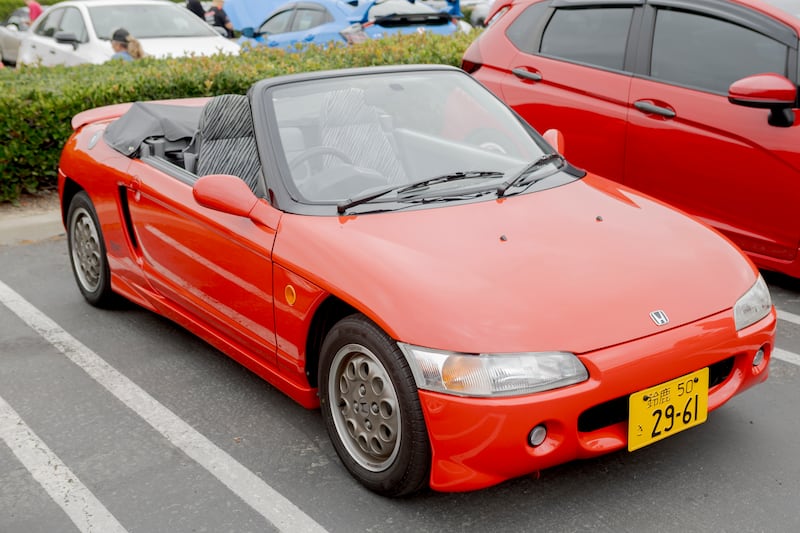
In exchange for the limitations, Japanese consumers are rewarded with less taxes and cheaper insurance, creating a major incentive for buyers, and this has made the kei car subclass favored by many.
Currently kei cars are sold primarily in Japan. They are not sold in the U.S. because they do not meet federal standards and regulations regarding safety and emissions. Furthermore, individual Americans cannot legally import their own new kei cars due to the U.S.’s 25 year import law, which restricts foreign cars not originally sold in America from entering the country until they turn 25 years old. These conditions mean that the only kei cars Americans can currently buy are from the early 2000s and older.
Uphill battle for Kei Cars in the U.S.

While many people are excited about this announcement from President Trump, actually manufacturing and selling these cars for an American audience is no easy feat. Kei cars were never sold in the U.S. due to their extremely diminutive size and a lack of market demand. However, other slightly larger, fuel efficient foreign cars were sold and in fact were once well accepted by the American public.
During the 1973 oil crisis, many people switched from gas guzzling domestic cars with large engines to the new small and fuel efficient offerings from Japan. This change in consumer behavior paved the way for Japanese auto manufacturers to establish a foothold in the U.S. market, resulting in popular models Americans love and still buy to this day, such as the Honda Civic, which was originally designed to be as small and efficient as possible.

However, with the oil crisis long gone and safety regulations becoming exceedingly difficult to meet, interest in manufacturing small cars for the U.S. market has greatly diminished. Furthermore, American consumer demand has changed significantly since the 1970s. Americans now favor cars that are larger and in turn are less fuel efficient such as the Ford F-Series trucks, the best selling vehicle for the past 34 consecutive years from 1985 to 2024 according to The Zebra.
This has led to many auto manufacturers not offering smaller, subcompact car models in the U.S. The Mini Cooper and Nissan Versa remain the only two subcompact vehicles currently sold here.

Furthermore, unlike Japan, the U.S. does not currently have any incentives in place for different classes of vehicles based on size and engine displacement. Tax and insurance are driving factors of the popularity behind kei cars in Japan, and similarly Americans would need a reason to switch from their large cars to something small.
A big factor that may persuade American consumers would be the low prices of kei cars. One of the most popular cars in Japan, the Honda N-Box, has a starting price of ¥1,739,100 or about $11,200; however, it is uncertain if auto manufacturers can price these cars similarly in the U.S.
Kei cars have a place in America

Currently kei cars are still mostly a niche thing for car enthusiasts, but there might be hope for the small, cute cars in America. With many capable models from Japan now turning 25 years old, the floodgates for importing a far greater number to America have opened.
In a market dominated by expensive brand new trucks that prioritize city driving over hauling, Americans have begun to turn to overseas for other options from Japan. The kei trucks are extremely practical and boast affordability, fuel efficiency and great reliability. Furthermore, the trucks are street legal in many states when other small vehicle alternatives such as ATVs are limited to off-road use only.
Kei trucks have gained popularity in particular in recent years among businesses. In 2023, Nippon TV reported Legoland New York’s adoption of the tiny trucks to easily move supplies around the theme park. Furthermore, in an interview with Ann News, Tony Childs of Mayberry Mini Trucks showed off his business that imports and sells old kei trucks for Americans seeking alternatives to U.S. trucks.
With these cars trending on social media and as more Americans are being exposed to them, many people online are beginning to view kei cars as viable alternatives.

As of November, car payments have reached a record high of $1,000 per month, causing many Americans to search for alternative options. This, however, has proven difficult with affordable options disappearing. Affordable smaller cars that boast fuel efficiency such as the Honda Fit, Mitsubishi Mirage, Hyundai Accent, Fiat 500 and Smart Fortwo have been discontinued in the past decade.
By making new kei cars an option for American consumers, these vehicles would serve as an inexpensive mode of transportation. A potential shift in the market may give automakers a reason to shift gears and produce and sell these new affordable vehicles in the U.S.

Many Americans often believe that small cars are more dangerous than larger ones, but they do not always think about what this means for pedestrians and other drivers on the road.
According to a study conducted by Consumer Reports, in the event of a head-on collision between a car and SUV, “the odds of death were 7.6 times higher for the car driver than the SUV driver.” With cars becoming increasingly larger and heavier, they become a threat to those around them.
Replacing large and potentially dangerous vehicles with smaller and slower ones would result in cities and roads becoming safer for both drivers and pedestrians.

A push for kei cars could be what average American consumers have been needing. However, to appeal to American buyers, these cars must be affordable, capable on American roads, and be able to cause a shift in thinking in how people approach smaller vehicles.
This could also mean the possible revival of automakers who have left the U.S. such as Suzuki and Daihatsu. These two companies have not sold cars in the U.S. for many years, but have large catalogs full of popular kei car models. This announcement from Trump could be what these automakers have been waiting for, for a potential return to the American auto market.