
Palm Springs calls itself an oasis. But for the Black and Brown families who once lived in Section 14, a one-square-mile neighborhood at the heart of the city, Palm Springs was something different: a refuge from the Jim Crow South and a self-built community. It later became the site of one of the most violent urban removals in California history.
Survivors and descendants gathered in Palm Springs on Nov. 15 to mark one year since the city’s $27 million reparative justice settlement. Civil rights attorney and lead counsel Areva Martin says the story of Section 14 begins long before the settlement—rooted in migration and a violent displacement many Californians have never been taught.
“During the 1940s, ’50s and ’60s, many Black families migrated from the South looking to escape Jim Crow and find better opportunities for their families.”
They arrived in what many believed was a desert oasis—just as Palm Springs began reinventing itself as a luxury escape for Hollywood elites, wealthy tourists, and seasonal visitors. The city needed labor, Black and Brown families needed opportunity. What formed between them was a complicated, an unequal relationship: a booming resort town built on the labor of people who weren’t allowed to live in most of it.
Racially restrictive covenants barred Black, Latino, and Indigenous residents from renting or buying homes in large parts of Palm Springs. The Agua Caliente Band of Cahuilla Indians, whose land makes up much of the city, leased parcels to these families, allowing a multiracial, working-class neighborhood to flourish in Section 14.
“These individuals were builders of the community,” Martin said. “They worked construction, hospitality, childcare. They were cooks, chauffeurs, nannies—everything the resort industry needed.”
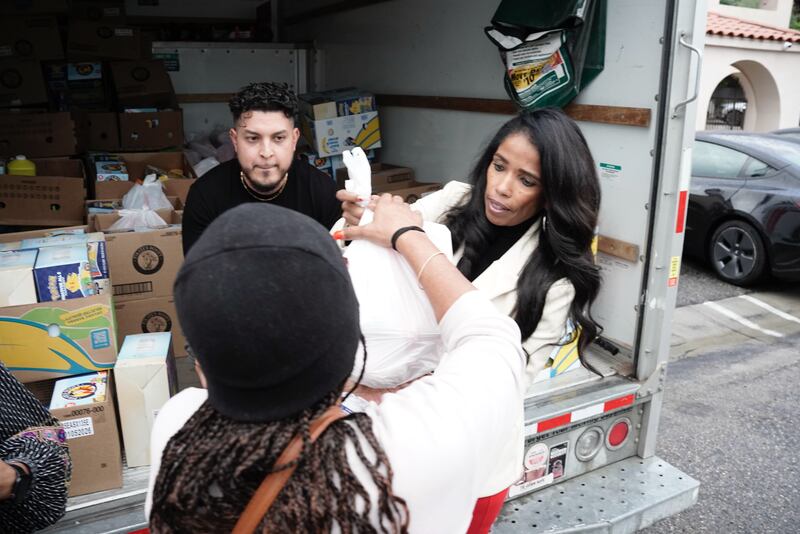
Section 14 had churches, small businesses, cultural life, and generations of families building stability. But the city saw its existence differently.
“They wanted this community gone,” Martin said. “They saw it as an eyesore. They didn’t want wealthy tourists coming into a city with Black and Brown families at the center.”
What followed was one of California’s most violent urban removal campaigns. City officials avoided legal processes and instead used intimidation—and their own fire department—to burn and bulldoze homes. Families fled with little warning; many never returned.
For decades, Palm Springs portrayed Section 14 residents as undesirable, masking the terror used to remove them. The truth remained buried—until the racial justice uprisings of 2020 pushed the city to confront its past.
After George Floyd’s murder, the city’s LGBTQ+ community began challenging the legacy of former mayor Frank Bogert — a leader known for championing Palm Springs’ resort image while overseeing the destruction of Section 14. Many families remember him as the face of their displacement. Their movement to remove his statue connected with long-ignored Black and Brown residents, who were finally emboldened to demand recognition.
“That coalition helped families secure an apology and, ultimately, the settlement,” Martin said.
It was the survivors themselves—mostly elders in their seventies and eighties—who led the movement. Month after month, they showed up with canes, walkers, wheelchairs, and unwavering determination.
“They inspired all of us,” Martin said. “It challenged the idea that activism is only for young people. These seniors mobilized an entire city.”
The city apologized in 2021. The $27 million reparative justice settlement followed two years later.
Today, the biggest change is the ongoing development of the $10 million homeowners assistance program, a central promise of the settlement. With Palm Springs home prices ranging from $750,000 to $2 million, many working-class families have long been priced out.
“One of the most transformative parts of this settlement is the homeowners assistance,” Martin said. “In early drafts, they discussed up to $200,000 in down-payment support. That is game-changing.”
Seventy-four survivors and descendants have already expressed interest—many of whom would otherwise never be able to purchase a home in the city where their families once lived.
Another $1 million is earmarked for Black and Brown small business development, with hopes of reviving a presence that has faded over decades.
“Friends ask me where the Black-owned restaurants are,” Martin said. “They used to exist. Many are gone now.”
Martin believes stronger economic infrastructure could outlast the settlement itself.
Financial restitution is one part of the work—but the emotional trauma is just as deep.
“When I first met many of the survivors three and a half years ago, they were despondent,” Martin said. “They felt powerless. That trauma had never been acknowledged.”
At Saturday’s summit, psychologist Dr. Danette King led a session on processing racial trauma, teaching survivors and descendants about intergenerational harm and how displacement can shape mental health for decades.
“People don’t realize the trauma their grandparents experienced being burned out of their homes can impact them today,” Martin said. “Healing is a crucial part of reparative justice.”
For many elders, the event became not just a workshop but a reunion. Survivors saw neighbors and childhood friends they hadn’t seen in 30, 40, even 50 years.
“It became a community again,” Martin said. “They tell me they miss it.”
One of the most surprising parts, Martin shared, is who didn’t show up.
“We reached out to local high schools and colleges,” she said. “There were a handful, but mostly seniors were leading this fight.”
Even during Palm Springs’ Black History Month parade—where youth groups fill the streets—young people rarely engaged with the Section 14 movement.
The nonprofit has since added millennial board members and advisors in hopes of drawing Gen Z and younger descendants into the work.
When thinking about the future, Martin imagines something bigger than a settlement check.
“What would make me ecstatic is seeing survivors in homes they never could’ve purchased without this program,” she said. “I want to see more small businesses, more Black presence, and for the history of Section 14 to be widely known.”
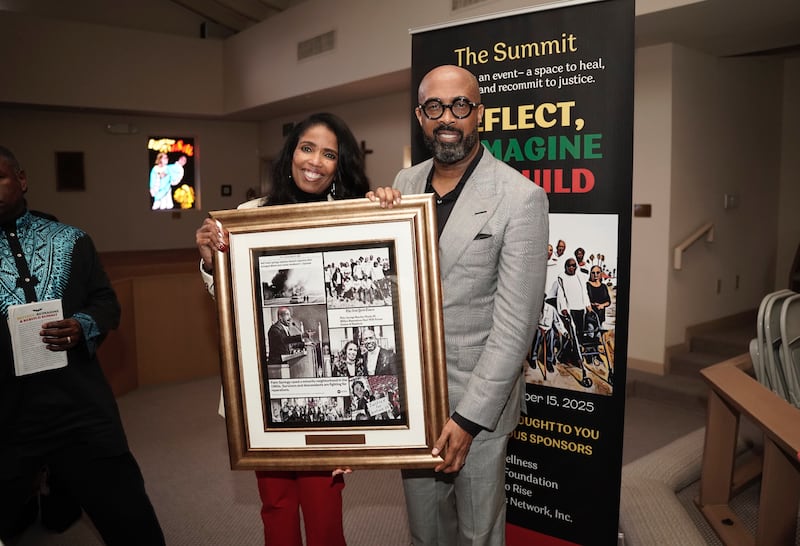
She also sees Palm Springs as a potential hub for national Black conferences again—like the NAACP and the Urban League, which used to meet there decades ago.
“Palm Springs has everything—hotels, weather, space,” she said. “But when you destroy a community, you also destroy its heart and agency. We’re rebuilding that.”
The work is now led by Section 14 Survivors, Inc., a nonprofit formed by elders who refuse to let the story fade again.
“They’re in their early stages—looking for volunteers, storytellers, and people who want to carry this forward,” Martin said. “They’re active on social media, and they’re building something that will outlast all of us.”
For the survivors who watched their homes burn more than half a century ago, the fight for justice is no longer about a settlement—it’s about restoring dignity, reclaiming history, and ensuring future generations never forget what happened in the heart of Palm Springs.