
As guests rolled into The Getty seeking shelter from the storm outside, they were transported to a different world. Suddenly, they were no longer in a museum, but the streets of New York City, where walls were lined with graffiti screaming for a new president in between alien doodles. This was the mark of the Guerrilla Girls.
The Guerrilla Girls are a collective of anonymous feminists who advocate for women’s rights in the art industry through political graphic design. After 40 years of protest, the Guerrilla Girls returned to the Getty on November 18 to share the processes behind the most popular works in their exhibit “How to Be a Guerrilla Girl.”
The exhibition was curated by the Getty’s largest curatorial team, including Thisbe Gensler, Zanna Gilbert, Alex Jones, Daniela Ruano Orantes, Megan Sallabedra and USC alum Kristin Juarez. The team reviewed The Getty’s archive of the Guerrilla Girls in curating the exhibit, offering an exclusive look into the first 15 years of the group’s activism.
“From 1985 to today, we have always had this motto: Do one thing. If it works, do another. If it doesn’t work, do another anyway,” a Guerrilla Girl under the pseudonym Käthe Kollwitz said. “We want you to know tonight, we are not giving up. Whether it’s our work about art and culture, or about what’s going on in our country, our fight will never be over.”
“The Guerrilla Girls invite you to criticize, apologize, analyze, canonize, and antagonize,” interim director of the Getty Research Institute Andrew Perchuk said at the exhibit’s opening ceremony.
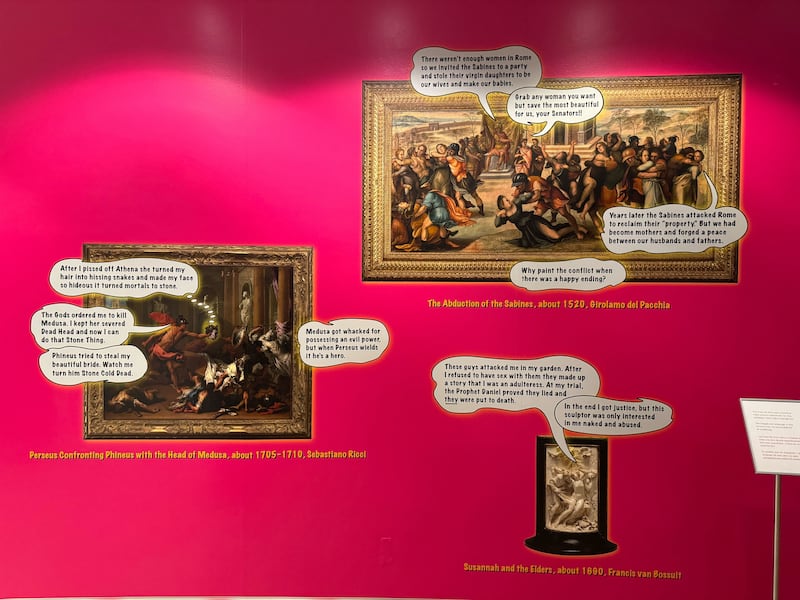
The exhibit opened to a bright, hot pink wall of vandalized art from the Getty archives. With the addition of cartoon speech bubbles, the women in each piece were given a voice, sprinkling jokes in between the grotesque narratives they are painted into.
“...This sculptor was only interested in me naked and abused,” read one of the speech bubbles next to the sculpture of Susannah and the Elders (1690).
As they explored, guests watched the Guerrilla Girls grow into the community they are now. Displayed were several framed pictures of the girls hugging and celebrating each other as if they were family. Between each photo, guests pause to listen in on the box television sets spread throughout the museum as they played home videos of the girls’ early days of picking out their pseudonyms, to their prime, protesting on the news.
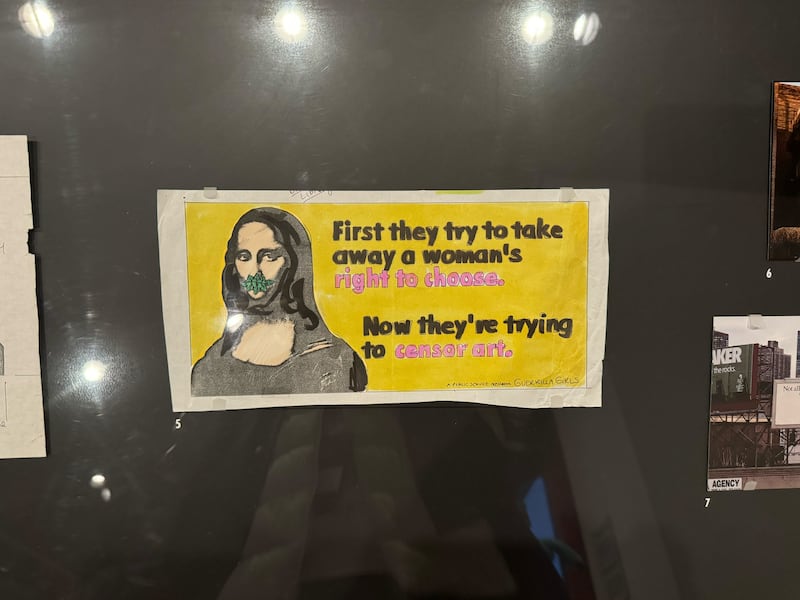
The highlight of the exhibit was the deconstruction of the Guerrilla Girls’ iconic posters. The exhibit featured the girls’ original mockups of their political advertisements paired with their drafts, wherein guests can see the intentionality of every penciled line. The statistics of the girls’ research on misogyny in the art world hung beside their art, cementing the girls’ belief that art cannot be separated from politics.
The exhibit not only highlighted the Guerrilla Girls, but also their supporters. Guests can see several letters from fans displayed in pristine condition, thanking the girls for promoting critical thinking to generations of girls told to stay silent.
At the end of the exhibit, there is a chalkboard wall where guests can write and draw whatever they want. Even at the exhibit’s opening, guests had already used the space to call for societal change. “Critical Response; Decenter the Professor,” one guest wrote in bold, while another said, “Intersectional Feminism is the only Feminism.”
Attendee Brandi Vorisek said this exhibit was her first introduction to the Guerrilla Girls. She said the exhibit was “super topical” for today’s political climate, especially when looking at the comments against the current administration left on the graffiti installation. Vorisek said that the exhibit’s message of gender equality is a needed reminder for people to speak out against prejudice.
Samyar Seifollahi, an attendee and USC alum, also appreciated the exhibit from a marketer’s point of view. He said the “hypnotic eye” imagery the Guerrilla Girls used throughout the exhibit shows the manipulative nature of media and encourages viewers to develop media literacy skills. Seifollahi said he wishes to eventually channel the Guerrilla Girls’ style for visual activism in his own work.
“The rule of white men in our administration should not be continuing. We should have a lot more equality, representation, equity, and overall improvement of the well-being of the people who live in our country.” Seifollahi said. “This is the perfect time to have an exhibit like this.”