
Allyson Felix’s documentary “She Runs the World” is going on tour and USC was its first stop.
Eleven-time Olympic medalist Allyson Felix returned home to USC for the screening of her documentary “She Runs the World.” Felix detailed her journey to becoming the most decorated U.S. track and field athlete in Olympic history.
In her quest for success, Felix chronicled obstacles she faced in navigating motherhood, contract negotiation challenges with Nike and fighting mega-corporations for maternal protection such as health and economic security of new mothers and infants. In this fight, one thing remains constant: Felix is a “quiet storm.”

Known for her reserved persona, Felix said it was initially difficult to be vocal and have bold opinions. Her unique sibling bond with her older brother, Wes Felix, propelled him to become her manager and protect her from the business side of sports. As a manager, Wes Felix fought alongside his sister in Nike contract negotiations and for maternal protection.
“It was brutal in the sense that these companies were just treating her like a commodity, not a human,” Wes Felix said. “She was just somebody’s entertainment. She was just a sales tool. It just felt so horrible.”
Allyson Felix said her brother encouraged her to use her voice for change. She credited her brother as a grounding force that turned her quiet storm into a profound thunder that changed the world.

During the Q&A with USC Annenberg School Dean Willow Bay, the sibling duo sat down to discuss further into their advocacy for maternal protection. They also explored how their time at USC shaped their professional career with Wes Felix being a former USC track and field star and Allyson Felix being a professional athlete in college. Allyson Felix said she never imagined the major impact she would make in her athletic career advocacy.
“It’s [USC] a place that means so much to me and gave me my foundation. When I think back on those hard moments, I don’t know if I would have gotten through them without the lessons that I learned here,” Allyson Felix said. “I don’t think I ever would have imagined that I could contribute to any type of change like that. I hope [my story] inspires young people to know they have the power to make things different and better.”
The conversation shifted to Allyson Felix’s work in advocating for maternal protections. She deemed her personal motherhood journey as a turning point for advocating for maternal protection. Allyson Felix described feeling isolated and stressed as she hid her pregnancy to avoid losing her Nike contract. She developed severe pre-eclampsia, a pregnancy complication from high blood pressure. Felix had an emergency C-section where both she and her daughter almost died.
After giving birth, Allyson Felix questioned if her words even mattered. However, she credited her daughter as an anchor in breaking cycles that repeatedly put women in demeaning positions.
“I started to question if anyone would listen to me? Is my only purpose to run fast and win medals?”Allyson Felix said. “Being faced with the situation that I felt deeply moved by and becoming a mother, I had a fight that was so intense. I was thinking this is just a cycle that’s going to continue to repeat.”
In 2023, Allyson Felix’s former teammate and Olympic gold medalist Tori Bowie died from complications of childbirth. Allyson Felix said Bowie’s death was a turning point in raising awareness and advocating for maternal protection.
Wes Felix added that one of his employees was a Black woman experiencing pregnancy complications and doctors couldn’t figure out why. Wes Felix encouraged her to ask the doctors about pre-eclampsia, which they later diagnosed her with.
“And that’s the reason why awareness is so important. Why did you have to go back and tell them to look for it?” Allyson Felix said. “You can say something’s wrong and they might tell you to go home. And unfortunately, these consequences can be fatal.”
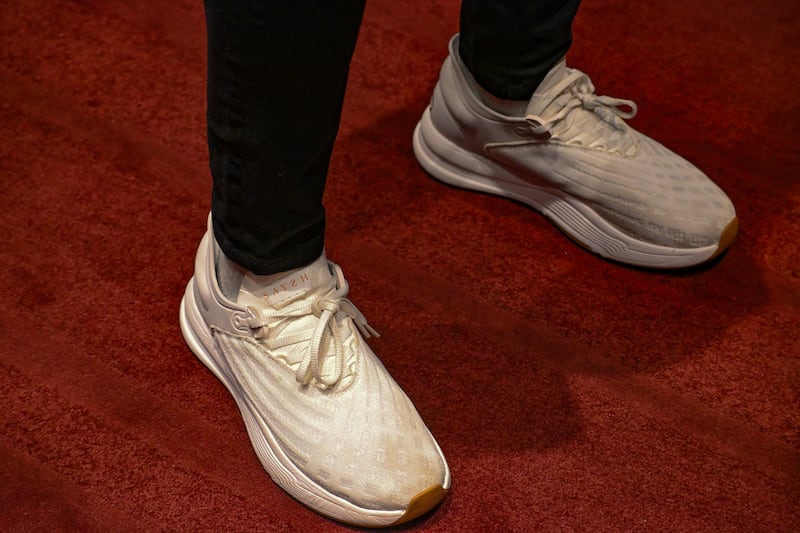
Allyson Felix said she was fearful to write her New York Times op-ed about Nike’s lack of maternal protection and her personal experience fighting for protections. She credited her brother as a grounding force in challenging Nike and other major corporations to provide maternal protection for women.
“Wes assured me that I don’t have to be scared and it’s okay to move through fear,” she said. “You can use your voice, even if it shakes.”
Allyson Felix’s advocacy led to Nike and large corporations guaranteeing maternal protection for women athletes. She is hopeful this will set a new precedent for how new mothers are supported.
“I’m really proud that the contracts are now changed. Today, there’s 18 months of maternal protection for female athletes who decide to start families and that’s incredible,” she said. “But I do think there’s a lot more that we can do, and I’m excited to continue.”
She acknowledged that being a private person, it was quite a journey for her to speak out loudly, but it was worth it.
“You might be one way today and ten years from now have a totally different outlook, so you have to honor that,” she said. “For me, it was definitely an evolution. I am still a private person but more vulnerable now.”
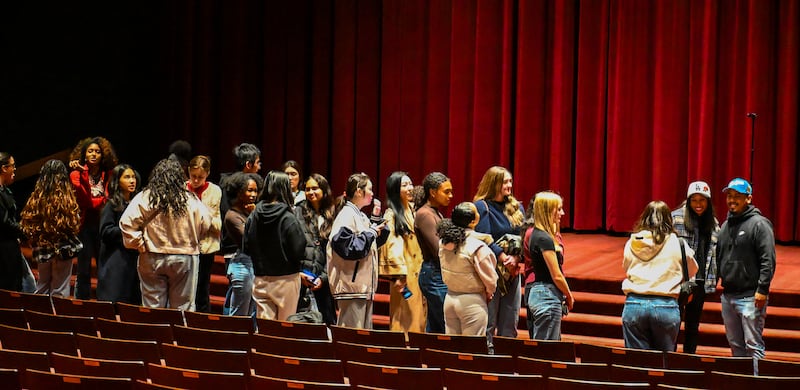
As the night ended, Allyson Felix’s grounded nature testified for itself as students lined up to meet and take photos with the Olympian. She spoke with every single person in line until the theater lights dimmed for closing.
As a global champion in track, advocacy and motherhood, Allyson Felix proves she indeed runs the world.