
Los Angeles is a city of fragments. Its reputation, often unfairly, is one of sprawl, isolation, and transience, freeways separating neighborhoods and a cultural map dotted with immigrant enclaves that rarely intersect. But come football season, something unusual happens in this asphalt desert. People gather in parking lots, lawns, and streets, igniting grills, staking out tents, and transforming anonymous blacktop into vibrant community spaces. Tailgating in Los Angeles isn’t just burgers and beer before kickoff. It’s one of the few rituals where the city’s car-centric sprawl turns into its greatest strength.
From USC’s pre-game crowds to Rams and Chargers fans filling the vast lots of SoFi, I’ve come to see tailgating as more than just fandom. It provides a sense of identity, tradition, and, for me, one of the few moments I’ve truly felt L.A. breathe as a unified city.
Tailgating isn’t even about the food or the game. It’s about arrival, turning up early and claiming a piece of asphalt as your own. In L.A., arrival is practically sacred. This is, after all, a city where people measure their lives in commute times and freeway exits. On game days, fans park their trucks, SUVs, or even vintage lowriders, pop open trunks, and transform vehicles into living rooms.
At USC, the scene around the Coliseum feels like a street festival. Alumni return with their families, folding tables groaning under the weight of coolers, barbecue spreads, and desserts in cardinal and gold. Students set up pong tables, blast music, and bounce between tents. There’s a generational rhythm: parents reminiscing about past seasons while freshmen experience their first true sense of belonging in a massive city.
For one family, tailgating at USC has bridged the gap between long-distance living. USC alum Scott Smith has been tailgating at the Coliseum for two decades, encouraging family and friends to join the Saturday tradition.
“Every USC home game, our extended relatives fly in to tailgate and watch the game,” said Smith. “It feels good to cook for everyone and create a space where people can catch up and reconnect. [...] It keeps this family closer.”
Smith has his special tailgate spot just to the right of the Coliseum, a prime spot for extended pregame fun. Smith has family across California and Chicago, with many making the trip every week. Matthew Smith, a USC senior studying business, grew up attending the coveted tailgate.
“All my life we would come down here to watch the game and spend time with other relatives,” said Matthew Smith, a San Francisco native. “Now as a student, it’s cool to have that history of coming here and being part of gameday. [...] I usually start at TKE then head to the tailgate for food and to see my family before the game.”
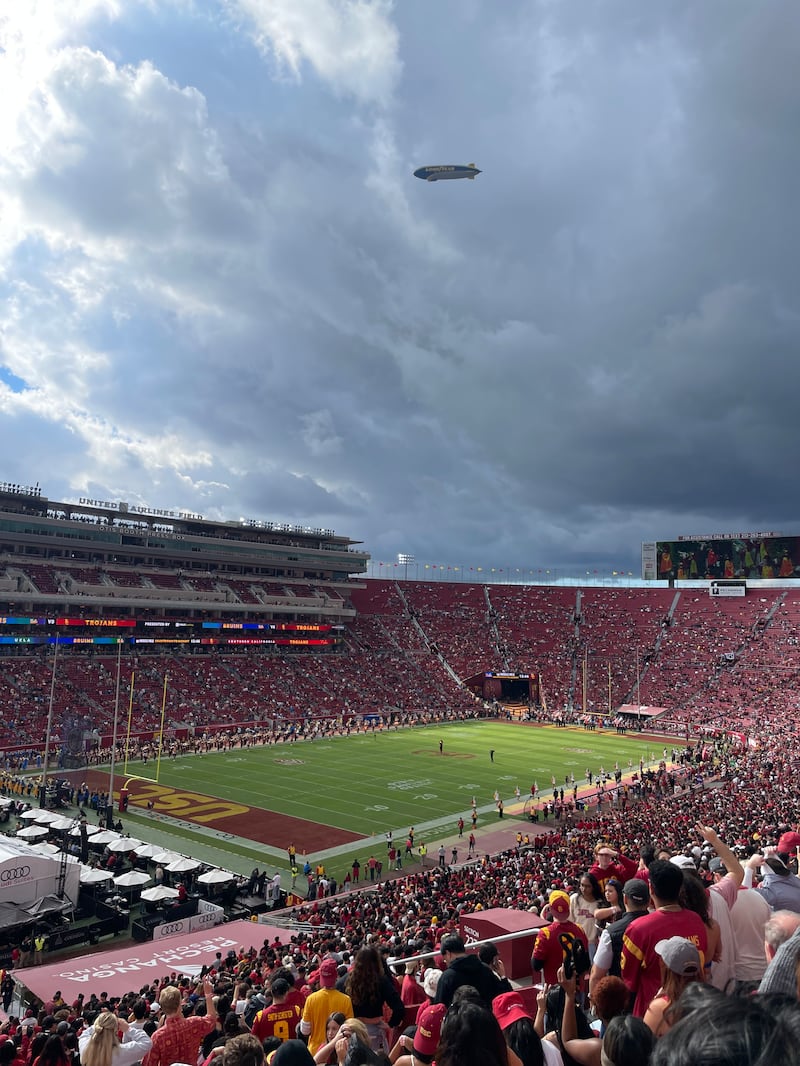
At SoFi, the arrival routine looks different. The Rams and Chargers draw a professional crowd: season-ticket holders in branded canopies, fan clubs that coordinate themed tailgates, and DJs blasting through speaker stacks. The stadium’s parking lots sprawl like a temporary city, where strangers share food and beer as easily as they share stories. The architecture of SoFi, gleaming, futuristic and expensive, contrasts sharply with the democratic energy of the lots, where anyone with a grill and a cooler can build community.
In Los Angeles, food is the glue of culture, and tailgating makes that clear. Unlike the requisite hot dogs and Bud Light of Midwestern or Southern tailgates, L.A. brings a world’s worth of cuisines to its pregame rituals.
I’ve wandered through SoFi’s lots on a Sunday, and the first thing that hits you isn’t the music, it’s the smell. Carne asada smokes on portable grills as Mexican-American families serve tacos to their entire section of the parking lot. Korean barbecue marinades sizzle on tabletop burners, sometimes paired with kimchi and soju shots. Filipino families bring lumpia trays, while Central American fans fry pupusas on makeshift griddles. Yes, there are burgers and chips, but they often sit beside sushi rolls, vegan sliders, or even artisanal charcuterie boards.
This diversity reflects Los Angeles itself. Each community brings its culinary heritage into the tailgate space, reshaping a Southern and Midwestern tradition into something uniquely Angeleno. Food becomes not just nourishment but a way to stake cultural pride in a shared, competitive environment. The best part? You don’t need to know the family or the fan group to be offered a plate. Sharing is part of the rite.
Chargers fan and avid tailgater Sofía Ramirez brings her “special carne asada mix” to her family’s tailgate at SoFi, along with other classic Mexican staples including tamales.
“I’ve become known for the different spices I use in my carne asada,” said Ramirez. “People come to our side of the parking lot to try it so I always try to prepare as much as I can.
Surrounding Ramirez are different friends’ tailgates: some Mexican, but also Korean, Cuban, and American. Camaraderie was built with the proximity of the car setups at SoFi.
“I really love our little corner of the lot,” said Ramirez. “It’s so special to see so many communities come together and be so open, we’ve met so many more people because of the time we spend out here [...] and I love trying all the different types of food.”
If there’s one constant at an L.A. tailgate, it’s generosity. I’ve walked through SoFi’s parking lots without knowing a soul and ended up holding a plate piled high. Someone always waves you over, insisting you try their family’s recipe. Food becomes the passport into someone’s community.
Unlike the scripted intimacy of a restaurant or the quick anonymity of a food truck, tailgate food is handed to you by the person who cooked it. It’s personal. The carne asada is seasoned with pride. The pupusas are served with family history. You taste not just the dish, but the identity behind it.
And it’s not just groups of adults. Whole families set up at SoFi. Kids chase footballs between rows of cars, parents sip beers under tents, and cousins line up for second helpings.
That sharing builds bonds faster than small talk. One plate can turn strangers into friends. In a city often stereotyped as cold or disconnected, those small acts of generosity feel radical.
The difference between USC tailgating and pro football tailgating in L.A. captures the split personality of the city’s sports culture.
At USC, the history runs deep. The Coliseum is a landmark, and Trojan football dates back to the 19th century. Tailgating here is multigenerational, a rite of passage. Alumni tents fly banners boasting graduation years from the ’70s and ’80s, while current students create Snapchat stories of the day’s scene. For families, tailgating is as important as the game, a chance to return to campus and renew connections. For students, it’s often their first encounter with L.A.’s larger community.
The Rams and Chargers, by contrast, are relatively new tenants in the city. The Rams returned from St. Louis in 2016, and the Chargers arrived from San Diego a year later. Their fan bases are still consolidating, still finding identity in a crowded sports market. Tailgating here becomes a way to build that identity, one party at a time. Fan clubs organize elaborate set-ups, full kitchens, coordinated music playlists, raffles, and giveaways. In some cases, tailgates are the glue that keeps these new fan cultures from scattering.
Los Angeles is often described as a city of newcomers, of short stays, of dreams pursued and abandoned. That narrative misses the roots many communities have laid here. Tailgating reveals those roots.
Parking lots become neighborhoods, if only for a few hours. People return to the same spot game after game, year after year. Friendships form across team allegiances, neighbors who never interact during the week share beers on Sundays. For many, these rituals become part of their calendar, anchoring them in a city that can feel overwhelming.
Here’s the thing about tailgating in Los Angeles: many people don’t even go inside. For them, the parking lot is the main event.
Televisions mounted in truck beds stream the game, but more often than not, people are still gathered around the grill, replaying stories, or sharing another plate of food. Cold tacos and lukewarm wings get passed around hours later, but nobody complains. The food is part of the experience, no matter its temperature. The game itself becomes background noise to the laughter, music, and conversation.
“Tailgating is the best part of game day,” said USC journalism student Cordelia Weld. “It’s fun to come together with all of your friends, head over to the events together and have fun before you even get to the Colosseum.”
Weld, now in her final year at USC, has been tailgating since her first home game as a freshman.
“The energy is always electric.”
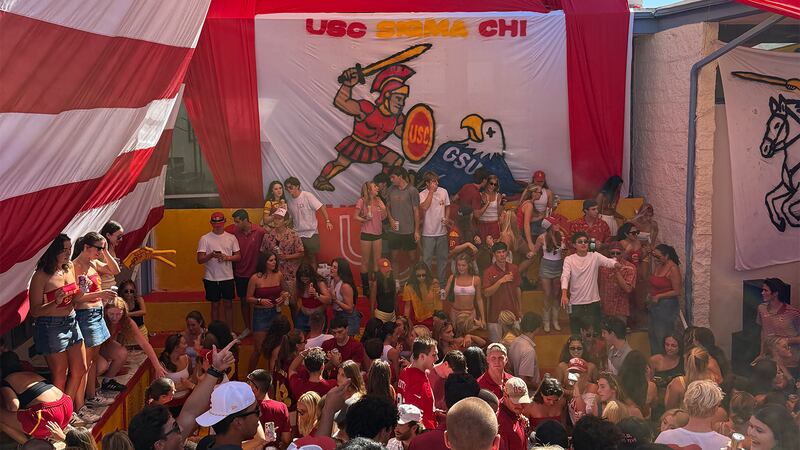
As football season ramps up, the grills are already firing, the tents going up, and the parking lots filling with laughter, music, and smoke. Los Angeles may not have the oldest football traditions, but its tailgating culture reveals something deeper: a hunger for community in a city where connection doesn’t always come easy.
Los Angeles finds itself where the grill meets the goal line.