
*Sound of Metro*
That’s the sound of the Metro A Line about to arrive in L.A.’s Chinatown. As I step onto the platform, I look around at the curved architecture painted in red, and walk towards the towering apartments with lanterns strung across the passageway.
The polished buildings decorated with “Now Leasing” signs make it clear that this is a new addition to the community, albeit with a few aesthetic choices to make it somewhat blend in.

But as Broadway street comes into view, I see a more familiar picture. I take a left, walking down the streets. At the bright and early time of 10:30 in the morning, the community is already active. Vendors selling fruits and vegetables set up their booths while customers haggle in Cantonese.
But once in a while, the look of the street is interrupted. In between the traditional medicine shops and hole-in-the-wall restaurants lie some newer spots like a boba shop and other trendy restaurants with neon signs.
I reach my destination: the massive gate with a pair of dragons sitting on clouds. Underneath it, I meet up with Helen Hua, a docent for the Chinatown Business Improvement District.
Since 2008, Hua has come here about once a month to host something unique: a two and a half tour of Chinatown.
Helen Hua: Ever since I was young, I’ve been in Chinatown at various points with my family to eat. Later on after college, I got more involved with Chinatown.
Other members of the tour come from all walks of life: some new residents in L.A. and others have been trying to schedule a time to join the tour for years. I tag along, as Hua guides us through spots like the Dynasty Center.
*Sound of Hua’s tour*
It’s a bit of a hidden swap meet, where fellow shopkeepers greet each other ahead of a long day of work.
*Dynasty Center ambient sound*
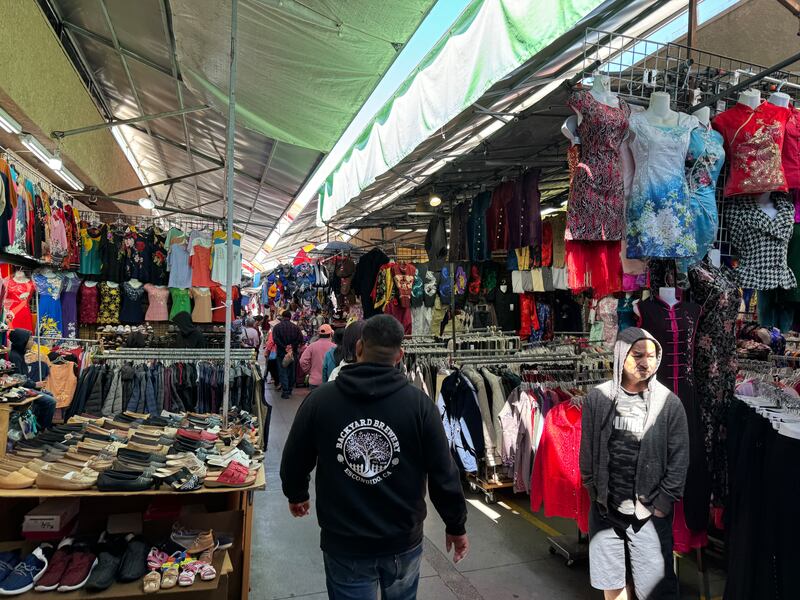
As well as Thien Hau Temple.
*Sound of Hua’s tour*
Here, followers of Taoist tradition make offerings in hope of good fortune.
*Thien Hau Temple ambient sound*
And of course, Central Plaza, where much of the traditional architecture has been preserved, complete with signs bearing wonton font and statues of Bruce Lee and Sun Yat-sen, the first president of the Republic of China.
But after doing this for over 15 years, Hua has seen this community’s evolution, and now with the arrival of new businesses, apartment buildings, among other developments, the landscape is changing.
Hua: Over a decade now of doing the tour, I’ve seen a lot of changes, for better and for worse. I think in general, Chinatown, you know, the whole gentrification conversation does come into play. I see a lot of that as sort of just the evolution of a community.
Historically, Chinatown was a product of gentrification. Old Chinatown was originally built where Union Station is today, but because of that construction in 1938, the immigrants were forced to move. Where Chinatown stands today is actually where Little Italy used to be.
In more recent years, Chinatown has seen the rise and fall of businesses, changes in clientele, and of course, a pandemic that shook most of these independent shops. But one place has been holding their ground since 1938.
*Sound of the bakery’s kitchen*
This is Phoenix Bakery, an iconic Chinatown landmark best known for their strawberry cream cakes, almond cookies, and sugar butterflies. During the tour, Hua mentioned the long-running bakery, so I took it upon myself to pay them a visit.
Versus other businesses in the community, Phoenix still gets lines trailing out their door over the weekend and part of that is because they own the property, with the founders having actually built the building in the 70s. I step inside, and I see cakes and croissants displayed in glass cases while a Chinese dragon costume hangs overhead.
Kathryn Chan Ceppi currently owns the bakery alongside her brother. She grew up in Chinatown, having eventually taken over her parents’ business. I walked into the kitchen, briefly catching the sweet smell of freshly-baked pastries, before Ceppi took me to a quiet room upstairs. Overlooking their sign featuring their mascot, I heard her story.
Kathryn Chan Ceppi: Chinatown has changed immensely since I was very young. It used to be a hub of activity. People used to come here, this was a destination spot for dinner, and for socializing, and for having a good time. With the development of Monterey Park and the San Gabriel Valley, the shift in population has gone out there.
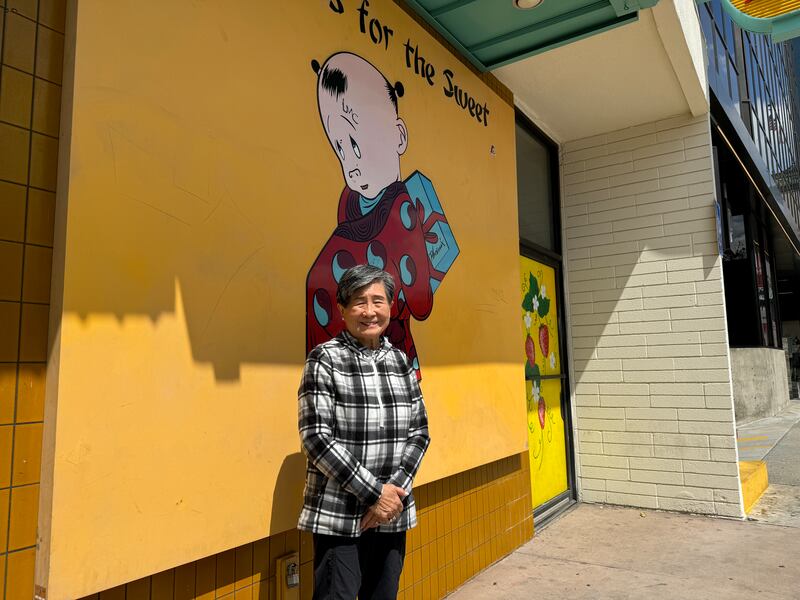
Ceppi says there’s also other obvious reasons for these shuttered stores.
Ceppi: We survived the pandemic because we own this property and we own the building. If we would have had to pay rent, which a lot of businesses had to, we would not have survived… The problem with a lot of the businesses that have closed here is that the next generation is not interested and doesn’t want it. Also, there are other venues that people go to now for entertainment. So Chinatown has changed immensely from a place that used to be open until midnight, one, two in the morning to many empty storefronts.
Still, she’s optimistic, as there’s new blood in Chinatown. Recently, several young business owners are moving in to make their mark.
Ceppi: I salute the young people that are opening up little boutique shops here, little coffee shops, little gift shops. It’s a tough business. And this is not a time when doing business, especially for a small business, it’s not a good time to survive. It’s very difficult… We’re hanging in there.
With these new entrepreneurs is also the growth of new immigrant communities, a shift Ceppi welcomes with open arms.
Ceppi: Asian covers a huge population now, you know, it didn’t used to. Asian, you’re either Japanese or Chinese, and now, we’ve got a lot of Vietnamese people here. We have Thai, we have Filipinos, you know, I think it’s great. The diversity is good. And then because of our proximity to East L.A., we have a lot of Latino customers, regulars. So we must be doing something right.
Back at the tour, Hua continues to guide us down the street. We make it down to Far East Plaza, which today, has become a hub of multicultural cuisine, from Taiwanese food to Vietnamese pho to even Nashville hot chicken.
Hua pointed me towards a restaurant in the corner with its pastel turquoise and oranges and the empty alcohol bottles lining the windows.
Steff Valencia is the CFO and co-owner of Lasita, a Filipino rotisserie and a natural wine bar that just started up in 2020. I sat down briefly with Valencia ahead of a busy night for her, and we chatted about why they started their business here in Far East Plaza.
Steff Valencia: We all have our own memories of this plaza. My mom and I would come here. She would get her hair done at the salon in the plaza. This used to be a pho place, like my gosh, I don’t even remember how many years ago, and so we all have our own memories of this place.
Then I began to wonder, if in some hypothetical future the name “Chinatown” becomes nothing more than arbitrary, will it, at some point, transform into something new, like what happened to Little Italy in the past?
Valencia reflects on this. Coming into this Chinatown as a Filipino American, she hopes that Lasita can support the existing community while also fitting into the greater L.A. landscape.
Valencia: We also identified this place as a more Angeleno place too, and Chinatown is a staple of Los Angeles. So it’s a way to celebrate L.A. in general… We want to be able to say we’re a part of something that celebrates the community here. It’s a varying degree of ages. The demographic is changing. There’s different challenges coming on board to this area, and we want to be respective of it, but we also want to make sure that we’re part of a positive movement in the community.
But however this community ends up, to Hua, at least for the time being, Chinatown still looks and feels Chinese.

Hua: L.A. is such a melting pot. It’s just going to be a diverse community of all types of ethnicities, but I think Chinatown for now, and since I’ve been involved in Chinatown, is still distinctly Chinatown. You know, a lot of buildings that have Chinese language on there. The Golden Dragon gateway has Chinese on it.
And if it’s anything to show for it, a lot of people did not want to talk with me for this story, mainly because they were uncomfortable doing interviews in English, and because my Cantonese is shaky.
But in any case, regardless of what it will look like, Hua hopes that she can play a role in continuing the story of Chinatown, and that these tours can serve as her way of passing it on to the next generation.
Hua: One of the biggest things that I’ve seen, that I really feel hopeful about, that Chinatown will continue to exist, is the younger generation coming in to start businesses, live here. And actually, with my tours, I’ve seen more Chinese, Asian people join my tours. So that’s been really great to see. But yeah, ultimately, Chinatown could face the same situation that Little Italy and the French community, where eventually they moved out, and there’s really not much left of those communities that are at least visible here. But at least on the tour, I tried to continue to tell their stories, and maybe, you know, God forbid, if Chinatown were to eventually officially end that it would have had such a long history that people in the future will still talk about it.
I get back to the train platform, and reflect on my visit. Chinatown is still one of the oldest immigrant communities in America, and while much of its look has been frozen in time, the culture is evolving. But those left behind and those coming in for the first time hope to have a role in shaping the identity of Chinatown for the future. For Annenberg Media, I’m Ethan Huang.