
The future was a big topic on the red carpet at the 2022 Sentinel Awards on Tuesday. The gala and awards ceremony was presented by Hollywood, Health & Society, part of the USC Annenberg Norman Lear Center, which provides resources and guidance to television creators and writers to ensure accuracy on social and health issues. The honorees included “Abbott Elementary,” “Never Have I Ever,” “Dopesick,” “Reservation Dogs” and other groundbreaking series that highlighted these topics through their work.
Annenberg Media spoke with celebrities in attendance at the red carpet about their appreciation for diversity in storytelling, their thoughts on the future of television and media and their advice to future creators. Attendees and honorees alike expressed excitement for the colorful future of television that lies ahead.
Advice for future media creators
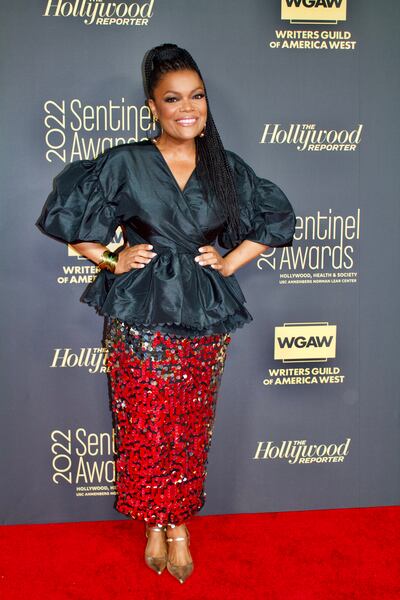
“Fame is a mist; it’s vapor. It’s not real. It’s nothing to aspire to. You want to aspire to do good work. You want to aspire to make your living as a performer. Fame is nothing to chase. You don’t want people following you around and in your trashcan. You want to do good work, and you want to go home. So don’t chase that because the thing is, when you chase fame, you end up compromising because there’s always one more thing you can do to give a little bit more fame, to get a few more likes. And usually, that’s over the line you set for yourself. So don’t chase fame, be professional and kind. You’ll get more opportunities from being kind than from even being talented or beautiful, and beauty fades, so be kind.”
— Yvette Nicole Brown, actor and Sentinel Awards host

“You guys are at USC. You’re already ahead of the curve; good for you. It’s just to write and collaborate. It’s really a matter of just sticking with it and finding your voice, and connecting with other people who are doing the same thing. And, you know, a rising tide lifts all boats. So that’s really what it is.”
— Elizabeth Laime, honoree and writer for “A Million Little Things”
Reflections on the future of storytelling with digital media
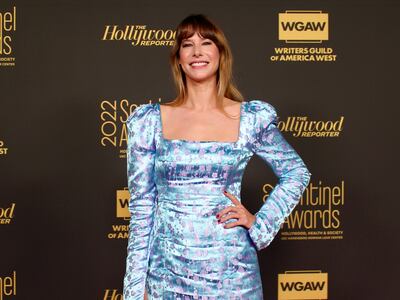
“Most writers are on their phones and on social media while they’re in the writers’ rooms the whole time anyway. We’re constantly taking in the news from it, or are ourselves addicted to it. So when you’re writing or coming up with stories, you’re hearing with the world all the time, and it’s constant and instant scroll, and it’s also the way that we know what’s going on and what are the trends and how I make sure that I adapt to the stories to not just my own small perspective.
Emerging technologies and artificial intelligence and all that kind of stuff is a very juicy thing to write about because it has so many benefits, and with those benefits come so many social disadvantages, too. It's very, very juicy because it also represents ways that the community can be helped.”
— Megan Neuringer, honoree and writer for “Upload”
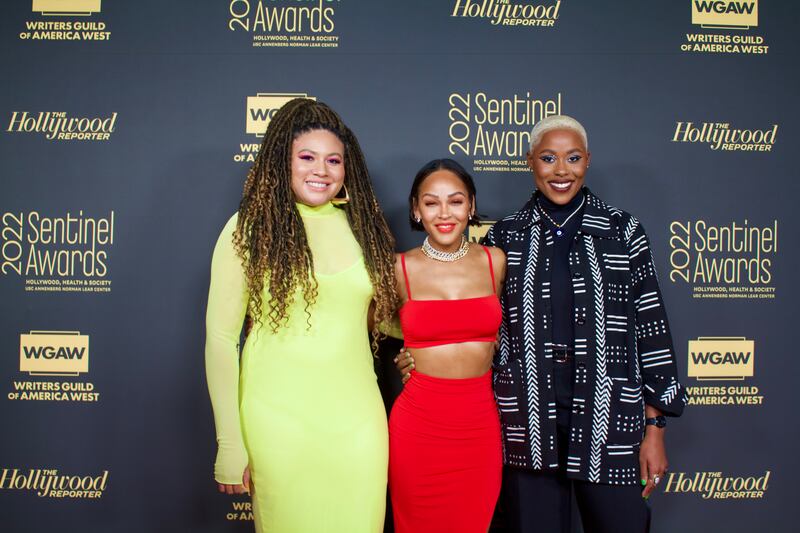
“The good thing is, more people are being seen. The adverse effect is that a certain aesthetic that Instagram or social media that develops. And it’s hard when you see that aesthetic on social media. And then we also see that in our TV shows, and then people don’t feel seen then. But thankfully, I’m on a show where there’s lots of different aesthetics.”
— Jerrie Johnson, actor on “Harlem”
“I think that [social media] does inform what people are interested in hearing, knowing about, exploring, what they’re going through, what is trendy right now. But I think it’s been a great information tool to set you on your path to do the research and know things that you wouldn’t previously know had we not had social media.”
— Meagan Good, actor on “Harlem”
Reflections on representation and diversity in storytelling
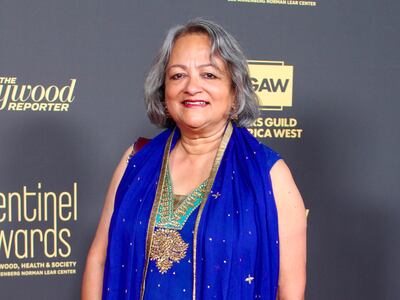
“I think ‘Never Have I Ever’ is definitely one that has represented the South Asian community, but the good thing about ‘Never Have I Ever’: it represents many people across cultures. I play the grandmother and, you know, there’s not a lot of Indian grandmothers on television. So I was proud to do that.”
— Ranjita Chakravarty, actor on “Never Have I Ever”
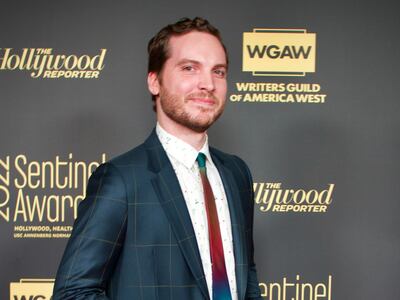
“I think mental health care in our society is seen as something only for people who are privileged or a lot of these people who are white. And we show that it’s something that a South Asian girl is going through that her family supports. And even though she’s resistant to it, really gets compassionate patient care. I think [we are] showing a lot of people who didn’t think therapy was for them that it can be for them, and it maybe isn’t as scary as they thought.”
— Chris Schleicher, honoree and writer for “Never Have I Ever”

“I had anxiety at a really young age, and I didn’t really know what it was. I didn’t understand it. And I think it’s so important to see that on screen to allow you to feel less alone, especially being a teenager, you don’t really know what’s going on. It’s so important to talk about mental health, and I am glad that ‘Never Have I Ever’ talks about it.”
— Lee Rodriguez, actor on “Never Have I Ever”
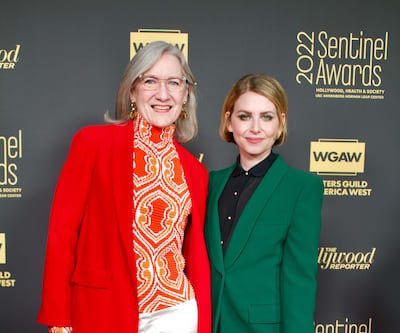
“My father [Jim Henson] had very high aspirations that this was gonna be the show that was going to bring world peace. It was gonna make him be able to [help people] communicate when they come from completely different worlds. In this case, different sizes, different environments, but they actually have to coexist and communicate. So that was the core idea of the series.”
— Lisa Henson, honoree and executive producer of “Fraggle Rock: Back to the Rock”

“The dominant culture that has been portrayed in the media for so long hasn’t been minorities and marginalized communities. And I think for a long time, we were all trying to kind of be different to fit in. And I think now we’re finally in a place where everyone is embracing our differences. Keep your authentic self alive and nurture that.
We are setting out to show these stories and these characters in our communities and to see other people embrace it and then also realize that these are universal stories. These characters [from “Reservation Dogs”] help viewers just open up their minds about the Indigenous community, living on a reservation and living in these communities. When we have diversity in media, you know, it changes the way people see people, the way people vote. It opens up this part of your mind because you feel empathy towards characters and you feel connected to them, in a way, because you're sharing experiences. It's been really amazing to see this show have such a reach and such an impact and that our stories are written by Indigenous writers and directed by Indigenous directors, and acted by Indigenous people. Like, it's just crazy. It's historic. So I think that that's the most important thing, is just that we're finally able to thrive and show our talents, and people love it. That’s the great thing!”
— Sarah Podemski, actor on “Resident Alien” and “Reservation Dogs”