
Nearly a year into the pandemic, I’m still learning how to balance safety concerns with a desire to connect with my peers.
The first time I ventured to my college campus – after California Gov. Gavin Newsom eased lockdown restrictions last summer – I met a classmate who I’d only known on Zoom. “Have you been tested?” he asked awkwardly, right off the bat. I fumbled through my coffee order, embarrassed, then realized he was talking about COVID-19.
My mother is still setting ground rules about social visits. She expects honest conversation about possible COVID-19 exposures before I show up at her door expecting a home-cooked meal and cautious hugs. My invitation home exists on a rolling basis, and consent can be withdrawn at any time.
As the pandemic continues and new virus variants emerge, I’ve started visiting a small circle of close friends. But as caution fatigue sets in, I’ll catch myself forgetting to ask: “Are you seeing other people?”
“We’re starting to have safe-sex type conversations in our daily lives,” said Dr. Brenda Ingram, a relationship counselor and the director of sexual violence prevention at the University of Southern California. “Suddenly, we’re having to communicate more openly about our needs and values — with romantic interests as well as friends, family, coworkers, and classmates.”
Ingram explained that effective, diplomatic communication (whether it’s about sex or the pandemic) is “a learned skill set.” People who haven’t received formal training or counseling, she said, often communicate in extremes. They’re either overly passive or resort to aggression when stressed.
Whether you’re at a gathering where people are violating distancing rules or getting intimate with someone who goes too far, it can be hard to say “no” in the moment.
“We don’t want to hurt anyone’s feelings,” Ingram said, “so we tolerate a certain behavior to the point of being upset and anxious, at which point it becomes harder to calmly assert a boundary.”
Assertive communication, she said, is the middle-ground we should aim for.
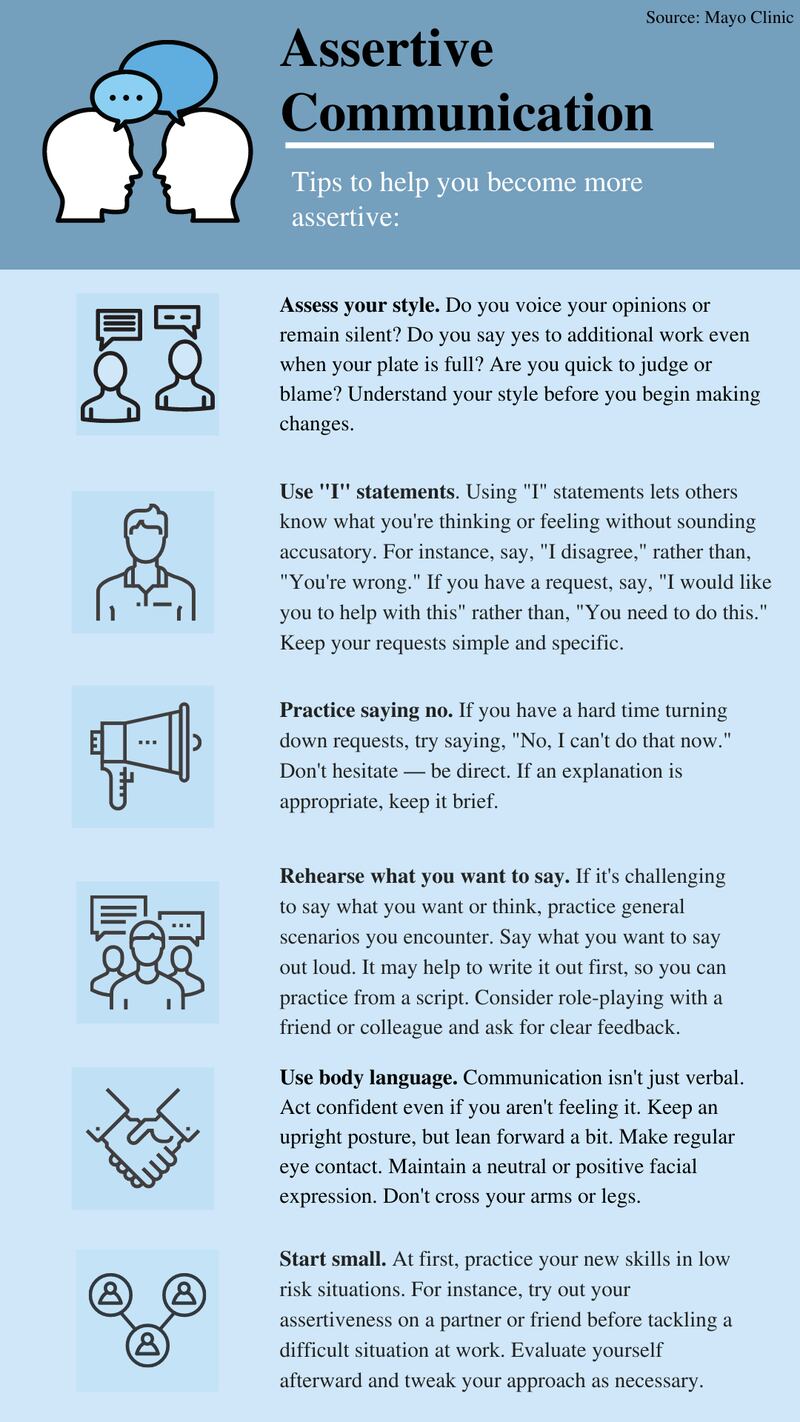
In a pandemic environment, Ingram said, assertiveness can look like asking someone to keep their mask on while you share physical space, starting a “social bubble” and honoring your agreement to only see those people, and making your vulnerabilities – like asthma, pre-existing conditions, or other factors that put you at risk – known ahead of time.
“Stating things up front is helpful because it makes people feel safe,” Ingram said. “It’s predictable. It’s the easiest way to prevent boundary violations that not only lead to emotional turbulence, but could result in bigger consequences, like contracting the virus.”
She also stressed the importance of identifying your own needs first. If you haven’t thought about what you’re willing to do, where you’re willing to go and with whom, or what safety precautions make you feel safe, then you can’t communicate those boundaries to someone else.
On the flip side, “you can’t assume someone else’s comfort levels are the same as yours,” she said.
Hoping to help young people navigate “pandemic communication,” Guadalupe Mejia, sex educator at USC’s Keck School of Medicine, integrated “a COVID-19 environment” into her safe-sex workshops for incoming freshmen and rising sophomores this fall.
She recognized the parallels between negotiating safe-sex and “safe-socializing” early on. “When we talk about consent we talk about asking, listening for a response and respecting that answer. The same goes for social interactions during the pandemic,” she said.
These days, consent can be granted or denied for something as simple as a hug, or stepping within 6 feet of a person.
Mejia echoes Ingram’s sentiments about starting with yourself. She believes self-awareness is the “key” to all of this. Once you are familiar with your own needs, you can create a “game plan” going into any social interaction.
Grace Barsis knows this better than most. Back in June, she hosted a 90-person outdoor wedding in Anchorage, Alaska. Having a wedding game plan meant sitting down with her partner, Levi Barsis, to discuss what they were and weren’t comfortable with.
They made a list of non-negotiable rules for wedding guests to follow: wear a mask at all times, remain in socially distanced clusters for the ceremony, and use the customized hand sanitizer on each dinner table.
0 of 4


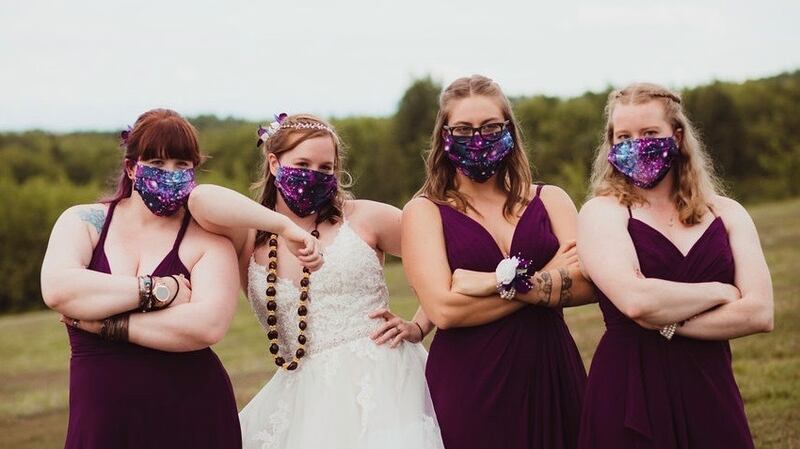

Beyond these physical safety measures, Barsis said, “expressing expectations” about mutual respect helped the day run smoothly. Currently a Los Angeles resident, Barsis votes blue, but many of her Anchorage-based family members hold the largely Republican view that the virus is overhyped and less dangerous than the media makes it out to be.
Hoping to create an environment where liberal-minded guests wouldn’t feel judged for their precautionary behaviors, she sent a series of emails and Facebook blasts with a bullet point list of wedding-day rules, along with reminders to be mindful of differing viewpoints.
She found out the hard way that the conversation wouldn’t end there.
“Once people started drinking, and getting more comfortable, they started taking off their masks and doing normal wedding things,” Barsis said. More and more family members approached her for hugs as the night went on.
Barsis said it was hard to “reprimand” people in those moments. “When you’re in a celebratory atmosphere, you just don’t want to be the bad guy.”
That’s why she’s grateful to have a supportive partner of six years who she could “talk things through” with. The couple’s lengthy discussions about pros, cons, strategies and fears helped them navigate the day with confidence.
“Ultimately, everyone who came felt comfortable doing so, and consented to be there” Barsis said. “All you can really do is take every possible precaution, and we knew we communicated the rules as clearly as we could.”
For people starting new relationships during the pandemic, open rapport about personal values can take time to build.
“Dating and sex is an arena where people, especially young people, learn about who they are and identify their core beliefs,” Los Angeles-based dating expert Monique Kelley said. “It’s where many of us practice basic communication skills.”
In a pandemic, the learning curve is even steeper.
Undergraduate journalism student Isabel Castillo began a monogamous relationship at the beginning of the pandemic. She met her partner on a dating app called Hinge, and said their initial communication was “awkward” at times. Being clear with each other, though, paid off in the end.
Asking her date to get tested was the first big hurdle. “I felt like it wasn’t my place, I was a complete stranger,” she said. “It was a weird conversation to navigate.”
The silver lining, though, was that having these “tough conversations” at the beginning of the relationship brought Castillo closer to her partner. Seven months later, they’re still “going strong” she said.
Kelley emphasizes that, when it comes to dating, there might be increased pressure on young people to rush into things or to be sexual during this time.
“Millennials and Gen Z, they’re out here kickin’ it at rooftop parties,” she said. “But in defense of young people, their experience of their twenties is totally screwed – I see why people need to break free for a little bit and find some sense of normalcy through dating.”
Singles share their experiences:
Cy Statham
Francesca Mastrianni
Austin Lukondi
When reflecting on her role as an educator and counselor during the pandemic, Dr. Brenda Ingram noted: “our health and safety didn’t depend on communication the way it does now.”
She said many people saw the COVID-19 crisis as a “short-term endeavor” when it first broke out, which meant strengthening our assertive communication skills wasn’t a big concern. But now, as we’re closing in on a year of the pandemic, it’s forcing us to relook at how we navigate our relationships.
“We used to just go with the flow, and the flow worked. Now, we’ve had a shift in the flow. The world hasn’t ended, but it has changed,” she said.
Navigating boundaries in a global pandemic can be uncomfortable, Ingram admits — even for an expert. But “growth is never not painful.”